Scott Smolen Maryland real estate blog with market updates, community spotlights, and home buying tips

Maryland Real Estate Blog

Scott Smolen's Anne Arundel County and Bowie, Md. Real Estate Blog

Local real estate updates, market insights, community spotlights, and practical home buying and selling advice for Odenton, Gambrills, Crofton, Bowie, Piney Orchard, Two Rivers, and the surrounding Maryland real estate market.

Latest Market Trends

Stay current on mortgage rates, local inventory shifts, pricing trends, and buyer demand across the Maryland real estate market.

Home Selling Advice

Learn how to prepare, price, market, and negotiate when selling a home in today’s local market.

Home Buying Tips

Get practical guidance on affordability, inspections, offers, financing, and buying with confidence.

Community Spotlights

Explore local neighborhoods, market reports, lifestyle features, and community insights throughout the area.

July 9, 2023

Strategies to Minimize Capital Gains on the Sale of Your Investment Property

As business investors, we are all hoping to make a tidy profit. But when it comes to selling investment property, we must be mindful of the capital gain tax that the government will collect on any profits we make. Depending on the size of those profits, this tax can bite off a hefty chunk of our earnings - anywhere from 10% to 37%. Fortunately, there are some legal strategies you can use to reduce or eliminate this tax altogether. We will look at some of these tactics and show you how you can protect your investment property from excessive capital gains taxes.

1. Use a 1031 Tax Deferred Exchange

Want to defer capital gains taxes? Section 1031 of the US tax code is the way to go. This rule lets you sell your investment property and use the proceeds to buy a property of the same or higher value without paying capital gains taxes on the property sold. Simple, right? Just keep in mind these important rules:

- Only investment real estate properties qualify for Section 1031. Not your primary or vacation home.

- You have 45 days after selling your property to find up to three like-kind properties.

- Your new property must be closed before your tax return is due or 180 days after selling your old property.

It is important to follow these guidelines -- missing a step will disqualify you from using Section 1031. So, if you're looking to manage your taxes better, keep Section 1031 in mind.

2. Use the IRS Section 121 Primary Residence Exclusion

You can reduce your capital gains taxes on residential properties by taking advantage of the Section 121 exclusion. As a single individual, you can exclude up to $250,000, and as a married couple, up to $500,000. To qualify, the property must have been your primary residence for at least two of the past five years leading up to its sale while you owned it. Keep in mind, this tax reduction strategy is not available for investors with multiple investment properties on the market simultaneously.

3. Short-Term and Long-Term Capital Gains Differences

If you plan on selling an investment property within a year, be aware that the government considers any profits made as short-term capital gains which are subject to a high tax rate of up to 38%. However, if you hold onto the property for a longer period, any profits made will be classified as long-term capital gains and taxed at a lower rate of around 10%. To take advantage of this reduced tax rate, it is important to hold onto your investment properties for an extended period.

Do not let capital gains taxes eat into your investment property profits! With some smart strategies, you can reduce and defer these payments. And for even more expert guidance, consider teaming up with a tax professional. Keep more of your hard-earned money where it belongs – in your bank account!

July 8, 2023

The Evolution of Lending Standards Prior to the Crash: A Drastic Shift

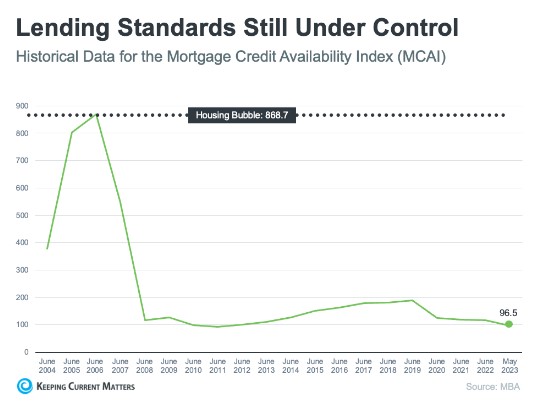
Don't worry about a housing crash, this market is different from 2008. One major reason is the change in lending standards. Let's look at the data to see why. The Mortgage Bankers Association (MBA) releases the Mortgage Credit Availability Index (MCAI) every month. According to them, this index is the most reliable measure of mortgage credit availability. It shows how easy or difficult it is to get a mortgage.

When lending standards are less stringent, it's easier to secure a mortgage, resulting in a higher index value (shown by the green line on the graph). On the other hand, stricter lending standards make it harder to get a mortgage, resulting in a lower index value. This data proves that lending standards today are different from what they were in 2008.

In just two years, from 2004 to 2006, the index skyrocketed from 400 to over 850. However, the landscape has changed drastically since then. Tighter lending standards after the crash have caused the index to decline, making it more difficult to obtain a mortgage in today's market.

Easy Mortgages and Risky Borrowers: The Causes of the Housing Bubble

During the early 2000s, getting a home mortgage was a breeze. Lending standards were lax, allowing many individuals to secure loans even if they lied about their income or couldn't afford homeownership. The result? A housing bubble. This graph clearly shows the peak leading up to the housing crisis, indicating the relaxed nature of credit availability and low requirements for loan approval. Lenders were handing out loans without thoroughly verifying if borrowers could repay them. This led to a higher risk of borrowers defaulting on their loans.

The Current Stringency of Loan Approvals in Comparison to the Past

Getting a loan today is not as easy as it used to be. Lending standards have changed significantly, with banks imposing strict requirements on borrowers. In fact, most people who are approved for a mortgage now have excellent credit. If we look at a graph illustrating these changes, it's clear that lending standards have dropped significantly since the housing crash. The current standards are even lower than what they were in 2004, and they're continuing to decline.

Joel Kan, the Vice President and Deputy Chief Economist at MBA, reports that mortgage credit availability has decreased for the third consecutive month, reaching its lowest level since January 2013. These decreasing standards indicate a much tougher lending environment, showing that we are taking steps away from the risky lending practices that led to the crash.

Final Takeaway

During the housing crash, lending standards were lenient and little effort was made to assess a borrower's ability to repay their loan. However, the current housing market has stricter standards, benefiting both lenders and borrowers by reducing risk. It is crucial to recognize that today's market is distinct from the previous one.

Posted in Mortgage Tips
July 7, 2023

Columbia, Maryland Earns Recognition as a Premier Family-Friendly Living Destination in the Nation

Exciting news for families looking for a great place to call home! Columbia, Maryland has been recognized as one of the "Best Places to Raise a Family" and ranks high among the "Best Places to Live in the U.S." In fact, Columbia proudly holds the 13th spot on both WalletHub's and Livability's 2023 studies. This outstanding achievement makes Columbia the only city in Maryland to make or surpass the list. Join us and discover why Columbia is an ideal location for your family's future.

WalletHub analyzed over 180 cities using 45 important factors like housing costs, school quality, healthcare options, and recreational opportunities. Livability also evaluated cities with populations between 75,000 and 500,000, considering nearly 100 data points including economy, housing, amenities, transportation, environment, safety, education, and health.

Columbia has also been recognized as one of the top cities in the United States in various categories, including jobs, safety, happiness, disability-friendly, and summer jobs. These accolades speak to our commitment to our community's well-being and quality of life.

County Executive Calvin Ball expresses his gratitude for being named the best place in Maryland to raise a family and live. He emphasizes that these honors reflect the ongoing investments made in our families and overall community. Having personally experienced the specialness of Columbia as a resident and parent, Ball understands its value to all who reside here.

A major highlight of the county's budget is the historic allocation of $1.1 billion to the Howard County Public School System. This funding will support salary increases for teachers and staff, as well as the opening of a new high school, the first since 2005. Additionally, $22 million has been allocated to expand pre-K services at the Faulkner Ridge Center.

Furthermore, the county is prioritizing the well-being of its youth by establishing the Youth Engagement Leadership Workgroup. This group will tackle issues faced by young people in Howard County and provide advice on how the county can better engage and support its younger constituents.

In collaboration with the Regional Transportation Agency of Central Maryland and HCPSS, the county is making free RTA bus access available to students. This initiative aims to provide students with safe and independent transportation options. Through these efforts, Columbia is dedicated to promoting health, fostering growth, and creating safer communities. We are committed to continuously improving the lives of our residents and visitors.

Does Columbia sound like your kind of city? Are you thinking of making a move? Find out more about Columbia Maryland Homes here.

July 6, 2023

Understanding Realtors' and Real Estate Agents' Compensation

Finding the perfect Realtor or real estate agent for your situation will make a significant impact on your home buying or selling journey. They have the expertise to gather essential information about the local housing market and help you create a winning strategy to attract buyers. With their guidance, you can navigate negotiations with confidence.

Although people often use the terms Realtor, real estate agent, and real estate broker interchangeably, it is important to know that they are not the same. To understand how these professionals are compensated, it is crucial to grasp the distinction between each designation.

  • Real Estate Agent: Real estate agents acquire state licensure through the successful completion of a licensing exam and fulfilling specific educational course hour requirements. It’s important to note that not all agents are automatically brokers or Realtors unless they meet specific criteria.
  • Real Estate Broker: Brokers in the real estate industry are agents who have successfully passed the broker's license exam. Typically, they operate their own firms and employ real estate agents under their broker's license. Brokers have the vital responsibility of ensuring that contracts for their transactions, as well as those of their agents, are compliant and accurately processed. It's important to note that while all real estate brokers are agents, not all brokers are considered Realtors unless they meet specific criteria.
  • Realtor: Realtors encompass both agents and brokers who hold membership in the National Association of Realtors (NAR). It is customary for Realtors to operate within the framework of a national or regional real estate brokerage. While all Realtors are real estate agents, it's important to note that not all agents hold the distinction of being Realtors.

How Do Realtors and Real Estate Agents Earn Their Income?

The majority of Realtors and real estate agents operate either as in-house professionals or independent contractors affiliated with a real estate brokerage. Their earnings primarily come from commissions or referral fees.

How Do Real Estate Commissions Work?

Once a home sale is finalized, the commission is shared between the seller's and buyer's Realtors/agents, through their respective brokerages. The commission payment is initially received by the brokerages, who then distribute a predetermined percentage to the agents responsible for closing the home purchase. The way in which the commission is divided depends on the agreed-upon commission splits between each Realtor/agent and their brokerage.

How Much Is Real Estate Commission?

Commissions typically range from 5% to 6% of the final sales price, but you can negotiate in some cases. Both the seller's and buyer's Realtor or agent receive between 2.5% to 3% of the sales price. However, when it comes to land sales, things can get even more lucrative. The commission can skyrocket to as high as 10% to 20% because selling land requires additional time and effort to market to potential buyers.

Who Pays the Real Estate Commission?

When selling a home, the seller is responsible for paying the real estate commission during the closing process. This means that the amount owed to any Realtors, real estate agents, and brokers is deducted from the final sales price of Real estate commissions are documented in the contracts that buyers and sellers sign when they hire their respective Realtors or agents.

In conclusion, the role of a competent Realtor or real estate agent cannot be underestimated when it comes to buying or selling a house. Their expertise and knowledge of the local housing market conditions play a significant role in guiding clients through the process. From providing crucial background information to devising effective strategies for attracting buyers and assisting in negotiations, their contributions are invaluable. While the terms Realtor, real estate agent, and real estate broker are often used interchangeably, it is essential to recognize the distinctions between each designation before delving into the topic of how they get paid. By understanding these differences, you can make more informed decisions and better navigate the real estate landscape.

July 5, 2023

"The American Dream Lives On: Homeownership Continues to Hold Value for Americans"

Discovering the concept of the American Dream can be deeply personal and individualistic to each person. However, for a significant number of individuals, it revolves around the ideas of achievement, freedom, and wealth. Interestingly, owning a home plays a crucial role in attaining these aspirations, as revealed by a recent survey conducted by Bankrate. The survey asked participants to identify the achievements that best embody the American Dream, and the results clearly demonstrate the enduring significance of homeownership in the lives of many Americans. This is further illustrated in the graph below.

A recent report sheds light on the reasons why homeownership is held in such high regard by many. According to the report, nearly two-thirds of Americans view owning a home as a pathway to building wealth that can be passed down through generations.

The concept behind this is simple - as you gradually reduce your home loan and property prices increase, your equity and net worth soar. This plays a pivotal role in creating intergenerational wealth and long-term financial stability.

To emphasize the impact of homeownership even further, Fannie Mae's report highlights that a majority of consumers (87%) believe that owning a home is essential for living a good life. Interestingly, more individuals perceive a significant reduction in stress as a benefit of owning a home compared to renting.

Especially in today's uncertain times, owning a home with a fixed-rate mortgage can be a game-changer. By stabilizing your largest monthly expense - your housing cost - you can effectively combat the rising costs caused by inflation.

What Does This Mean for You?

Although purchasing a home may appear daunting in today's market, characterized by elevated mortgage rates and soaring home prices, rest assured that when the timing aligns with your circumstances, a multitude of remarkable benefits awaits you upon completion of this transformative journey.

Ready to make your homeownership dream a reality? Take the first step today by contacting Scott & the Smolen Team today! Buying a home is a powerful choice that represents the foundation of the American Dream. Don't wait any longer - start the process now.

July 4, 2023

July 4th Festivities in the Area

We hope that everyone has a safe, and Happy July 4th Holiday!  Here is a list of Independence Day festivities in our area that you might want to check out today.  Happy 247th Birthday America!!!

July 3, 2023

The Top 7 Recommended Paint Colors

Whether you're a DIY expert or prefer to hire a professional, painting is an easy and affordable way to give your home a makeover. The right paint color can completely transform the atmosphere of a room. According to top interior designers, choosing neutral colors like white, beige, taupe, and grays can also make your home sell faster. These colors are also more attractive to potential buyers who want the freedom to add their own personal touches. On the flip side, bold and vibrant paint colors can be risky as they may not appeal to everyone's taste.

In a recent survey, gray and beige emerged as the most popular colors for a home's exterior, with 30% and 26% of respondents favoring these shades, respectively. Clearly, neutrals hold the key to unlocking the full potential of your home. Whether you are preparing for a sale or simply looking to refresh your walls, there is a shade out there that is perfect for you.

1. Sherwin-Williams Agreeable Gray (SW 7029) A very neutrally “greige” color that works with any décor style

2. Sherwin-Williams Alabaster (SW 7008) A light & airy color which will give you a nice, soft white

3. Benjamin Moore Gray Mist (OC-30) A great mix between tan & gray and is a lovely contract to your white trim

4. Sherwin-Williams Iron Ore (SW 7069) A very crisp, black color that is great for shutters and exterior accents

5. Benjamin Moore Chantilly Lace (OC-65) A warm, but bright, white that is extremely popular with stagers & interior designers.

6. Sherwin-Williams Accessible Beige (SW 7036) A lovely, warm tone that looks great in most interiors and is very universal

7. Sherwin-Williams Snowbound (SW 7004) A very pure white, but not stark white


July 2, 2023

The Impact of Recreational Marijuana on Property Values in Maryland

Recreational marijuana use is now legal in Maryland as of July 1st, 2023.  This blog post will take a look on how law change could impact property values in our state. 

The impact of recreational marijuana on property values can vary depending on various factors, including local regulations, market dynamics, and community attitudes. While it is challenging to provide a definitive answer as the effects can differ from one location to another, I will outline some general considerations and potential influences.

Demand and Market Factors: The introduction of recreational marijuana can lead to an increase in demand for real estate in areas where it is legalized. This increased demand can drive property values up, especially in locations with limited availability of suitable commercial spaces for cannabis-related businesses. In the early stages, there might be a surge in demand from entrepreneurs looking to establish dispensaries or other related businesses, potentially leading to a temporary increase in property values.

Neighborhood Perception: The perception of a neighborhood can be a significant factor affecting property values. Some individuals may have concerns about the presence of marijuana businesses, associating them with potential negative impacts such as increased crime rates or a decrease in the overall quality of life. This perception can lead to a decline in property values in certain areas. However, as recreational marijuana becomes more normalized and accepted, these concerns might diminish over time.

Zoning and Regulations: Local zoning and regulations play a crucial role in determining where cannabis-related businesses can operate. If there are strict zoning restrictions that limit the locations of dispensaries or cultivation facilities, it can lead to localized effects on property values. Properties within the designated zones might experience an increase in value due to the limited availability of suitable spaces, while those outside the zones might not see a significant impact.

Economic Effects: The cannabis industry can have positive economic effects on a community, such as job creation and increased tax revenues. These economic benefits can indirectly contribute to property value appreciation. A thriving industry can attract new residents, businesses, and investments, potentially boosting the local economy and real estate market.

Research Limitations: It's worth noting that research on the direct impact of recreational marijuana on property values is still relatively limited, mainly due to the recent nature of legalization in various jurisdictions. Consequently, it can be challenging to isolate and quantify the specific effects of recreational marijuana on property values from other market dynamics and factors influencing real estate prices.

Overall, the impact of recreational marijuana on property values can be influenced by a complex interplay of factors specific to each location.  We will need to keep an eye on this change to see how everything plays out and post updates as they are warranted.  


July 1, 2023

Is a Composite Deck the Right Choice for Your Home?

When it comes to outdoor living spaces, a deck can be a wonderful addition to any home. With a multitude of materials available, one popular option is a composite deck. Composite decking combines the look and feel of natural wood with the durability and low maintenance of synthetic materials. In this blog post, we will explore the advantages and disadvantages of installing a composite deck, helping you make an informed decision about whether it's the right choice for your outdoor oasis.

Advantages of Composite Decking:

1. Low Maintenance: One of the biggest advantages of composite decking is its minimal maintenance requirements. Unlike traditional wood decks, composite decking does not require staining, sealing, or painting. It is resistant to fading, staining, and mold, making it an excellent choice for homeowners who prefer a hassle-free outdoor space.

2. Durability: Composite decking is designed to withstand the elements. It is resistant to rot, warping, and splintering, making it ideal for areas with high humidity or harsh weather conditions. With proper installation and regular cleaning, composite decks can maintain their appearance and structural integrity for many years.

3. Variety of Colors and Textures: Composite decking offers a wide range of colors, textures, and finishes, allowing you to customize your deck to suit your personal style and complement your home's exterior. Whether you prefer the classic look of wood grain or a contemporary, sleek finish, composite decking provides options to match any aesthetic.

4. Eco-Friendly: Many composite decking products are made from recycled materials, such as reclaimed wood fibers and plastic. By choosing composite decking, you contribute to reducing the demand for virgin wood and promote sustainable practices.

Disadvantages of Composite Decking:

1. Higher Initial Cost: Compared to traditional wood decking, composite decking typically has a higher upfront cost. However, it's important to consider the long-term savings in maintenance and replacement expenses. While the initial investment may be higher, composite decks often prove to be more cost-effective in the long run.

2. Heat Retention: Composite decking can retain heat more than natural wood. In hot climates or areas exposed to direct sunlight, the surface of a composite deck may become uncomfortably hot. However, selecting lighter-colored composite materials or using rugs and shading solutions can help mitigate this issue.

3. Susceptible to Scratching: While composite decking is exceptionally durable, it can be prone to scratching, particularly from sharp objects or heavy furniture. To minimize the risk of scratches, using furniture pads and avoiding dragging heavy items across the deck surface is recommended.

4. Limited Reparability: Unlike natural wood, composite decking cannot be sanded or refinished to remove scratches or stains. If damage occurs, the affected area may need to be replaced or repaired by a professional.

Are you looking for a deck that requires minimal maintenance, is built to last, and offers a wide range of design options? Look no further than a composite deck. Not only is it environmentally friendly, but it also boasts impressive durability. While the initial cost may be higher compared to other decking materials, it will pay off in the long run. However, it's important to keep in mind that composite decks can retain heat and may be prone to scratching. Additionally, repairs may be limited. To ensure you make the best decision for your outdoor space, take into account your specific needs and preferences. Consider consulting with a professional contractor or decking specialist who can offer tailored guidance based on your unique circumstances.

June 30, 2023

The Difference Between a House Title vs. a Deed

Understanding ownership of a property can be confusing, as there is a distinct difference between the concept of one's legal title and an official deed. To help remember this distinction, think about how you own physical copies of books but not their titles: Just like a book title cannot be held in your hands – neither can owning rights to real estate; this requires something tangible - namely the deed. So while both notions are essential to convey rightful possession over land or home, only deeds provide concrete proof that it belongs to someone!

What Is A House Deed?

A house deed is the ultimate declaration of property ownership. By signing it, both buyer and seller officially transfer possession from one to another - making legal a new chapter in their respective lives! The document itself outlines all details concerning the transaction, including a detailed description of its physical boundaries.

  • General Warranty Deed

When purchasing a new home, it is essential to understand the level of protection you will receive from your seller. A General Warranty Deed provides peace-of-mind that confirms full title and rights ownership with no previously undisclosed issues by the grantor/seller. Plus, added security can be found in title companies who oversee these contracts for all parties involved - ensuring proper disclosure according to local laws on items such as structural damage risks like flooding – allowing buyers protect their investment.

  • Special Warranty Deed

A special warranty deed is an agreement that guarantees a buyer the title to property only for as long as its seller owned it. This type of document is not typically used when buying homes but can be extremely helpful in commercial real estate transactions.

  • Quitclaim Deed

Quitclaim deeds are a powerful legal tool often used when transferring property between parties without money exchanging hands. Common scenarios include parents passing ownership to their children, spouses gifting properties between each other, and individuals placing real estate into trusts or Limited Liability Companies (LLCs). Additionally, quitclaims can be utilized for name changes on existing deed documents as well; however they do not afford the same set of securities that traditional sales involve.

What Is A Title?

When you purchase a property, big or small, the legal title is yours - whether it be to your dream home or that new boat. Not only do titles verify ownership and transfer rights of something valuable such as land, but they are also essential in transferring possession upon sale. A title guarantees potential buyers that there will not be any surprises down the road when making their investment!

  • Title Insurance

Owning a property is an incredibly exciting experience but can also involve serious risks. Title Insurance provides protection against ownership disputes and potential losses of both the home itself as well as your mortgage investment should worst come to worst. This coverage secures lenders' investments while also offering buyers additional peace-of-mind through their own owner's title insurance policy purchased at their own cost - something most experts highly recommend for added security when buying a new home!

  • Title Search

Uncovering the full story of a property has never been more important. A title search is your key to make sure everything about a potential purchase comes with crystal clarity - from their legal right to transfer ownership, all the way down to any restrictions on use or unpaid debts attached like easements and liens. If you are considering real estate, consulting an expertise in titles such as lawyers and companies specializing in insurance can help give that extra assurance before finalizing decisions!

  • Abstract of Title

An abstract of title reveals a rich history about a property, detailing its prior owners and any associated encumbrances. It is the culmination of extensive research conducted by a title company to create an unbroken chain of ownership back to the original owner - including information such as liens, foreclosures, or transfers. The intricacy behind understanding each document in this sequence makes it difficult for titles to remain consistent across multiple parties; hence why professional assistance is recommended when making investments into real estate assets.

Securing ownership of a house requires more than just signing your name - an understanding of legal terminology and best practices is essential. Have you received the physical deed, checked local laws regarding disclosure requirements, opted for title insurance if applicable, conducted a search to uncover any potential obstacles? Beyond these steps with regards to the paperwork itself lies additional considerations such as deciding whether it's prudent to possess an abstract that can help ensure protection against future conflicts down the road. Navigating this complex process pays off in spades however through successful homeownership!

Posted in