Scott Smolen Maryland real estate blog with market updates, community spotlights, and home buying tips

Maryland Real Estate Blog

Scott Smolen's Anne Arundel County and Bowie, Md. Real Estate Blog

Local real estate updates, market insights, community spotlights, and practical home buying and selling advice for Odenton, Gambrills, Crofton, Bowie, Piney Orchard, Two Rivers, and the surrounding Maryland real estate market.

Latest Market Trends

Stay current on mortgage rates, local inventory shifts, pricing trends, and buyer demand across the Maryland real estate market.

Home Selling Advice

Learn how to prepare, price, market, and negotiate when selling a home in today’s local market.

Home Buying Tips

Get practical guidance on affordability, inspections, offers, financing, and buying with confidence.

Community Spotlights

Explore local neighborhoods, market reports, lifestyle features, and community insights throughout the area.

July 20, 2023

Adjusting to the New Normal: Embracing Change in the Homebuying Process

Get informed about the current housing market before selling your house. A positive trend is that homebuyers are adjusting well to today's mortgage rates, which they now see as the new norm. According to Freddie Mac, the 30-year fixed mortgage rate has remained steady between 6% and 7% since last October.

Mortgage rates hold significant sway over buyer demand and, consequently, home sales, according to Lawrence Yun, Chief Economist at the National Association of Realtors (NAR). Yun emphasizes the positive effects of stable rates, stating that consistent home sales have been observed over several consecutive months.

This is great news for sellers, as it indicates an active market with motivated buyers. Let's delve further into how recent mortgage rates have influenced demand. Last year, a dramatic surge in mortgage rates from around 3% to 7% caused potential buyers to experience sticker shock and delay their home buying plans. However, as time has passed, the initial shock has faded. Buyers have become more accustomed to current mortgage rates and have come to terms with the fact that the historically low rates of the past few years are behind us. Doug Duncan, SVP and Chief Economist at Fannie Mae, explains that consumers are adjusting to the idea that higher mortgage rates are here to stay.

In fact, a recent survey conducted by Freddie Mac reveals that 18% of respondents are likely to purchase a home in the next six months. This means that almost one out of every five people surveyed plans to buy a home soon, demonstrating a strong intention among buyers to be active in the upcoming months.

While mortgage rates are not the sole driving factor behind buyer demand, regardless of their status, people still have various reasons to move, such as job relocation or changing households. As a seller, take comfort in knowing that there is a market for your house today, and the demand remains robust as buyers adapt to the current rate environment.

Now that you know how buyers’ perception of mortgage rates is changing, you can capitalize on this new trend. With rates remaining stable, there is a surge in buyer demand and a steady stream of home sales. Don't miss out on this golden opportunity - connect with Scott and the Smolen Team today to get your house on the market and attract these eager buyers!

July 19, 2023

The Resurgence of Home Prices: A Promising Outlook

If you've been keeping up with the news, you might be feeling uncertain about the current state of home prices. The headlines can make things seem bleak and make you worry about what the future holds. However, it's important to remember that these headlines are creating an unnecessarily negative narrative.

Let's take a step back and look at the bigger picture. While it's true that home prices have dropped nationally compared to an extraordinary peak year, we must consider that this peak was an anomaly. To make a fair assessment, we need to focus on monthly data.

When we analyze the monthly data, we see a completely different and much more positive story. While local trends may still vary depending on the market, the national data provides encouraging insights.

By examining recent reports from three reliable sources, the graphs below reveal that the worst declines in home prices are now behind us. In fact, prices are appreciating on a national level.

The housing market over the past year can be divided into two clear parts. In the first half of 2022, home prices were on the rise, but starting in July, they began to decline. However, recent data for early 2023 shows that prices are once again increasing.

This is an encouraging sign for the housing market, as all three reports indicate that prices have been consistently rising for three or more months. The month-over-month data suggests a positive shift is occurring nationally, with home prices on the rise. According to Craig J. Lazzara, Managing Director at S&P Dow Jones Indices, the data from April supports the argument that the decline in home prices that started in June 2022 has definitively ended by January 2023.

Limited housing supply is keeping home prices from crashing, contrary to some expectations. The demand for homes outweighs the available options for buyers, contributing to the upward pressure on prices. Although higher mortgage rates can slow down price growth, they are not causing a complete collapse in the housing market. Experts emphasize the continued imbalance between supply and demand, which is driving the pressure on house prices. As a result, home price growth is surpassing predictions, and the strong demand driven by demographic factors is a significant factor in this impressive performance.

How Does This Affect You?

Buyers: The value of homes is on the rise after a temporary dip. Now is the perfect time to make a purchase and invest in something that will continue to appreciate over time.

Sellers: If you've been hesitant about selling due to fluctuating home prices, it's time to act. Partnering with Scott and the Smolen Team to list your house can result in a favorable outcome, as recent data suggests a positive market shift.

Don't let concerns about plummeting home prices hold you back from pursuing your moving plans any longer. The most recent data indicates that home prices are steadily appreciating across the country. To stay informed about the specific trends in your area, call or email Scott! By doing so, you'll gain valuable insights into the current state of home prices and make informed decisions for your next move.

July 18, 2023

Living in Bowie, Md.

Located in central Maryland, Bowie provides the perfect blend of big-city amenities and quaint small-town charm. From its historical roots dating back to pre-Revolutionary War America to modern times where it became an esteemed horseracing hub, there is no shortage of both cultural experiences and opportunities for growth that makes this distinctive city a place you won't want to miss! With such accessible transportation options alongside strong community resources all around - locals can enjoy their vibrant homes while visitors enjoy exploring all that Bowie has to offer.

The heart of Bowie was developed by William Levitt beginning in 1960.  This portion of Bowie is known as Belair at Bowie.  The Levitt company purchased the nearly 2,300 acre historic Belair estate that was once home to Maryland governors.  Here is some additional information about William Levitt and Bowie, Md.

The historic Belair Mansion was built circa 1745 and still welcomes visitors today.  Bowie has continued to grow over the years and it is now the home to nearly 60,000 residents.

For commuters looking for a central, convenient home in Bowie, MD – the options are unbeatable. From single-family homes to condominiums and townhomes located close to train stations and U.S Route 50 - you’ll have easy access not only major roadways but also WMATA's Orange Metrorail out of New Carrolton that quickly connects you with Northern Virginia & DC!

Bowie is a town that celebrates its uniqueness through exciting festivals and diverse recreational facilities. From sharpening your skates at the local ice arena or taking a leisurely stroll around Allen Pond, to shopping up a storm at the Bowie Town Center Mall - there's something for everyone! When you're done exploring, have an unforgettable evening out with loved ones watching plays and concerts from renowned performers at the Bowie Center for Performing Arts.

Click here for Bowie Homes for Sale at this time.  

July 17, 2023

The Advantages of Homeownership Over Renting in Today's Market

Considering whether to continue renting or buy a home this year? Here's something to think about. Rental affordability has been a persistent challenge for years, with rents consistently increasing over time. Census data from 1988 onwards shows a steady climb in rents.

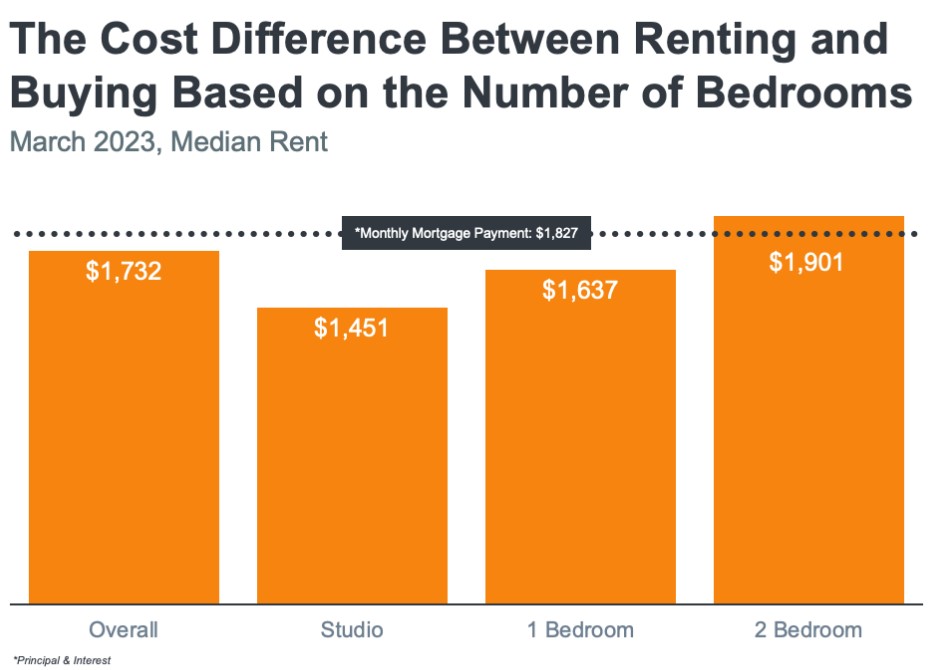
Even today, the latest rental report from Realtor.com reveals that rents are still on the rise, albeit at a slower pace compared to the peak of the pandemic. In March 2023, the U.S. rental market saw single-digit growth for the eighth consecutive month, with the median asking rent at $1,732 – a $15 increase from the previous month. Although it's $32 lower than the peak, it remains $354 (25.7%) higher than the same time in 2019 before the pandemic hit.

Given the significant increase in rents from pre-pandemic years, it may be advantageous to consider homeownership. Homeowners with a fixed-rate mortgage can secure a predictable monthly payment for the entire duration of their loan, typically spanning 15 to 30 years. If the trend of increasing rents each year persists, owning a home could be a more favorable option.

Owning a Home Could Be More Affordable if You Need More Space

We've gathered national data from Realtor.com and the National Association of Realtors (NAR) to create a graph that compares the median rental payment to the median mortgage payment. The results may surprise you. If you require two or more bedrooms, our graph clearly shows that owning a home is typically more affordable than renting. It's time to weigh your options and make an informed decision.

If you need more space for your household, belongings, or hobbies, homeownership may be the perfect solution for you. Find a place with two or more bedrooms and enjoy the freedom to spread out and make it your own.

Owning a Home Allows You to Build Equity

Owning your home has several benefits beyond just providing shelter. Not only does it protect you from increasing rent costs, but it is also a more affordable option when you require more space. Additionally, owning a home allows you to start building equity, which in turn increases your net worth.

As time goes on, home values tend to rise, and as you pay off your mortgage, you continue to build equity. This equity can be advantageous in the future as it can be used to support a move to a larger living space. In fact, according to Zonda, the top reason why millennial homeowners purchased their homes in the past year was to build their own equity rather than someone else's.

If you're pondering the decision between buying a home or renting, it would be wise to consult with Scott Smolen and he can help you explore your options. With rental prices on the rise, pursuing homeownership to fulfill your dream might be a more sensible choice.

July 15, 2023

The Maryland Real Estate Market: A Thriving Landscape of Opportunity

Maryland, known for its charming landscapes, rich history, and bustling cities, is not only a wonderful place to call home but also a prime destination for real estate investments. With its diverse economy, strong job market, and excellent quality of life, Maryland offers a range of opportunities for both homebuyers and investors. In this blog post, we will explore the current state of the Maryland real estate market and delve into the reasons why it continues to be a thriving landscape of opportunity.

1) Strong and Diverse Economy:

Maryland boasts a robust and diverse economy that contributes to a stable real estate market. With a strong presence of government institutions, defense contractors, biotech firms, and renowned academic institutions, the state offers a wide range of employment opportunities across various sectors. This strong job market attracts a steady influx of professionals, driving the demand for housing in the area.

2) Prime Location and Transportation Infrastructure:

Situated in close proximity to major metropolitan areas like Washington, D.C., and Baltimore, Maryland benefits from its prime location. The state offers easy access to a vast network of transportation options, including highways, railways, and international airports. This accessibility enhances the appeal of Maryland as a desirable place to live, work, and invest.

3) Diverse Housing Options:

Maryland offers a diverse range of housing options to suit different lifestyles and budgets. From historic townhomes and charming suburban neighborhoods to modern high-rise condominiums and waterfront properties, there is something for everyone in the Maryland real estate market. Whether you're a first-time homebuyer, a growing family, or an investor looking for rental properties, Maryland's housing market provides ample opportunities to fulfill your needs.

4) Excellent Education and Healthcare Facilities:

The state of Maryland is renowned for its excellent education and healthcare systems. The presence of prestigious universities, such as Johns Hopkins University and the University of Maryland, attracts students, faculty, and researchers from around the world. This creates a strong demand for housing, particularly in areas surrounding these institutions. Additionally, the state's top-notch healthcare facilities and medical centers contribute to the overall appeal of Maryland as a desirable place to live and invest in real estate.

5) Cultural Attractions and Natural Beauty:

Maryland offers a vibrant cultural scene and an abundance of natural beauty. From the picturesque Chesapeake Bay to the historic landmarks in Annapolis, the state offers a wealth of recreational activities, including boating, hiking, and exploring its rich history. These attractions, combined with a variety of arts and entertainment options, make Maryland an appealing place to settle down or invest in vacation properties.

Conclusion:

The Maryland real estate market continues to thrive due to its strong and diverse economy, prime location, excellent education and healthcare facilities, and a wide range of housing options. Whether you're seeking a new home or considering real estate investments, Maryland presents a wealth of opportunities. However, as with any investment, it's essential to conduct thorough research, and stay updated on market trends. By doing so, you can navigate the Maryland real estate landscape and make informed decisions to maximize your investment potential in this vibrant and promising market.  Feel free to reach out to us at The Scott Smolen Team if you would like some additional information about the Maryland real estate market.  

July 14, 2023

Keep Your Home Comfortable and Well-Maintained: Essential Summer Home Maintenance Tips

With the official start of summer, it is the perfect time to tackle those seasonal home maintenance tasks. Prioritize tasks that will make your summer more enjoyable or those that are best done before the heat sets in. Get ahead of the game and make the most of the season by focusing your energy on these tasks.

Battle the Mosquitos

Enjoying a meal outdoors can quickly turn unbearable when mosquitoes invade. Burning candles may offer some relief, but only if you are lucky to sit in the smoke. Bug spray is an option, but the odor can be unpleasant and who wants to wear pesticide to dinner? However, there is an almost foolproof solution that works wonders: installing a fan above or beside your outside dining area. Mosquitoes tend to avoid flying in strong winds, so if you and your guests are in the path of the breeze, you are in good shape. Be sure to use an outdoor-rated fan if you are installing it on a permanent dining porch or other structure. Eradicating mosquito breeding grounds helps curb their population. Standing water is where mosquitoes lay their eggs, so be sure to clear any buckets, toys, or plastic tarps around your space. If you must have standing water, such as a birdbath, refresh it every five days to disrupt the mosquito lifecycle.

Feel the Breeze

Did you know that ceiling fans can be used to keep you cool even indoors? If you're still using your fan in the wintertime mode, it's time to switch it up! Change the direction of the blades so that they push air downwards when you’re standing directly underneath. It's an easy process - most fans have a button on the remote or switch to do it. If you have an older fan, you might need to use a step stool or a ladder to reach a switch on the fan itself.

Using a ceiling fan can save a lot on your electricity bill. But it's important to adjust the thermostat as well so the air conditioner switches on at a higher temperature. Be sure to use energy-efficient lights (if your fan includes them) and turn the fan off when no one is in the room. While ceiling fans cool people by helping sweat evaporate, the air temperature does not actually change. So, leaving the fan running when no one is around just wastes electricity and adds the motor and lightbulb heat to the room.

If you're in the market for a new ceiling fan, be sure to purchase one with an Energy Star rating. They move air more efficiently than other models, so you'll be cooler and save even more on your electricity bill.

Tidy up the Garage

Clear out clutter and spruce up your living space by taking some time to sort through boxes and eliminate any dirt that accumulated during the winter months. But don't just randomly divide items into piles anymore. Enhance the efficiency of your decluttering process by creating more specified categories. Label boxes for things that your friends might find helpful, items you plan to donate to a thrift shop or a local Freecycle group, and those you might sell. Streamline your decluttering process and make a difference in your community.

Purge any Toxic Materials

Do you have old containers of finishes, pesticides, or other chemicals lingering in the back of your garage? If you don't plan on using them, it's best to get rid of them properly. Luckily, your local household hazardous waste program can help. The Environmental Protection Agency provides links for programs in every state, and most state webpages offer a search tool to help you find a program close to your home. For advice on recycling or disposing of specific items, simply search for "household hazardous waste" on Earth911.com or call 800-CLEANUP (800-253-2687).

Deal with Ice

Summer is ice season, but is your freezer up to the challenge? Keep your ice and water tasting great by maintaining your ice maker with these easy cleaning and filter replacement tips from GE Appliances. Before starting, make sure to unplug the refrigerator or switch off power at the circuit breaker. For cleaning, use a little hand dishwashing soap and water mixed together to wipe the ice chute and crevices clean. Soak mineral deposits in undiluted vinegar if necessary. Changing the filter is a breeze once you locate it and find the right replacement; search online for your refrigerator model's manual or check the old filter label. Finally, keep your ice tasting fresh by storing it in sealed containers and covering food before storing to minimize odor transfer.

Take Care of the Weeds Keeping a weed-free yard is important for both aesthetic and safety reasons in many communities. Not only can tall, dry weeds become a fire hazard, but their seeds can easily spread and create more weeds. While permanently removing weeds can be difficult due to their adaptability, there are several effective options to control them. Pulling them out by the roots or using a flame-throwing burner or herbicide are all possibilities, but for a faster and more eco-friendly approach, mowing or using a strong trimmer is recommended. Follow up with repeat treatments or add a layer of wood chips or cardboard to shade out weed growth and keep soil moist. While some stubborn weeds may still emerge, they will be easy to remove thanks to the mulch layer.

Test Your Outlets

Ensure your safety before using outdoor electrical appliances like electric weed cutters or barbecues. Take a moment to test the ground fault circuit interrupters (GFCIs) on your outdoor outlets, as well as those in the basement, garage, bathrooms, and kitchen. Simply plug in a night light or other lamp and turn it on, then press the “test” button on the GFCI. If the GFCI is working correctly, the “reset” button should pop out and the light should turn off. Press “reset” to restore power to the outlet.

If the reset button does not pop out, it’s time to replace the GFCI (but remember to turn off the circuit breaker or call an electrician). If the reset button pops out but the light stays on, your GFCI isn’t properly wired, and an electrician can help you fix it. Stay safe and take the time to test your GFCIs before using any outdoor electrical appliances.

July 13, 2023

Considering Buying a Home? Ask Yourself These Two Questions

Are you in the market for a new home? If so, you're probably bombarded with information from various sources. From the news to social media, everyone seems to have something to say about the housing market. It's overwhelming, to say the least. But don't worry, we're here to help you make sense of it all.

When it comes to home prices and mortgage rates, there are two key questions you need to ask yourself. By taking a closer look at the data, you'll be better equipped to make an informed decision. Let's break it down for you. Are you in the market for a new home? If so, you're probably bombarded with information from various sources. From the news to social media, everyone seems to have something to say about the housing market. It's overwhelming, to say the least. But don't worry, we're here to help you make sense of it all.

1. Where Do I Think Home Prices Are Heading?

According to the latest release, from the National Home Price Expectation Survey by Pulsenomics, which gathers insights from over one hundred economists, real estate experts, and market strategists, experts predict a slight decrease in home prices this year. However, it's important to note that the worst price declines have already happened, and many markets are seeing an increase in prices. In fact, the predicted 0.37% depreciation for 2023 is far from the crash that was initially feared.  We have not experienced any significant price decreases in our area.  This is mainly due to the stable job market around Washington DC and Baltimore.  

After this year, the survey forecasts a return to more normal levels of home price appreciation for the following years.  Discover the untapped potential of your home! Invest now and watch your property value soar while gaining valuable home equity for the future. Don't delay, as waiting could mean paying a higher price down the road. Make a wise decision and seize the opportunity today.

2. Where Do I Think Mortgage Rates Are Heading?

In the face of economic uncertainty, inflation, and other factors, mortgage rates have been on the rise over the past year or so. However, recent reports indicate that inflation is starting to cool off from its peak, which is great news for the market and for mortgage rates.

When inflation cools down, it usually leads to a decrease in mortgage rates. This is why many experts are predicting that mortgage rates will slightly pull back in the coming quarters, settling at an average of around 5.5% to 6%. Overall, this is encouraging news for those in the market for a mortgage and suggests a more favorable rate landscape on the horizon.

Want to know what's in store for mortgage rates in the future? Well, even the experts can't say with absolute certainty. There are just too many factors at play. But don't worry, we're here to give you a glimpse into the possible outcomes. Here's what you need to consider:

  • Buy now and rates stay the same: good move! Home prices are expected to rise, so you'll beat the price increase.
  • Buy now and rates drop (as projected): Still a smart decision. You'll get your dream home before prices go up even more. And if rates go even lower, you can always refinance.
  • Buy now and rates rise: Congratulations! You've made a brilliant move. You've avoided the increase in both home prices and mortgage rates.

Stay informed about home prices and mortgage rates before buying a house. Expert projections can provide valuable insights into the future, helping you make informed decisions. Feel free to reach out anytime and we will be happy to discuss your particular circumstances.  

July 12, 2023

If Your Next Home has a Septic System, Make Sure You Plan to Inspect It

When purchasing a house with a septic system, it's crucial to have a thorough inspection. Septic systems are intricate "systems" with multiple potential issues. Discovering problems before closing the deal is vital, as repairs or replacements can be extremely costly, reaching tens of thousands of dollars. Don't risk it - get a septic inspection to ensure a smooth and worry-free home buying process.

How The Septic System Works

Did you know that 25% of homes in the United States rely on septic systems instead of municipal sewer systems? These decentralized systems are permanent fixtures in our wastewater infrastructure, as noted by the EPA.

So, how does a septic system work? It all starts with a sanitary pipe that carries wastewater from the house to a buried septic tank. This tank, typically made of concrete, fiberglass, or steel, is designed to hold the wastewater, and allow the breakdown of solids while safely disposing of liquids.

Inside the tank, solid waste settles at the bottom, creating a "sludge" layer, while grease and oils float to the top, forming a "scum" layer. This scum layer acts as a seal, keeping air out and allowing bacteria to thrive, breaking down the solid waste.

Between the sludge and scum layers is the effluent, a mostly clear layer of liquid. T-shaped outlets and baffles in the tank prevent scum and solids from entering the leach field, while allowing the effluent to flow through gravity into the leach field.

From the tank, the effluent moves into a distribution box, which evenly distributes it into the leach field's chambers. Various distribution methods, such as distribution boxes, septic tank outlet lines, and effluent distribution lines, ensure proper dispersal.

In the leach field, the effluent percolates down into the soil, where bacteria continue breaking down materials from the tank. As the effluent filters through sand and rock, it eventually returns to the groundwater.

Maintaining a septic system is crucial for its longevity and functionality. Homeowners should have their systems inspected every three to five years and consider pumping the tank if necessary. While the cost of maintenance may range from $300 to $500, it's much more affordable than costly repairs or replacements.

Now that you understand how a septic system works, remember the importance of ongoing maintenance to keep it functioning properly.

The Septic Inspection

Preparing for a septic system inspection should coincide with your general property inspection when buying a home. This allows any plumbing issues to be addressed and noted in the inspection report. It also helps with meeting inspection contingency deadlines.

The initial phase of the septic system inspection involves gathering information and addressing any concerns before the actual inspection. This helps the inspector determine what to look for during the inspection.

Due to the system being underground, a complete inspection is not possible without excavation, which is impractical. However, during this phase, the goal is to identify potential issues based on installation and maintenance.

Before the inspection, it is important to answer these questions:

  1. Has the septic system ever been pumped? This is crucial because it's the main maintenance task the seller should have done.
  2. Do you know the location of the septic system? If the seller doesn't know, it's likely they haven't provided proper maintenance.
  3. Is there a septic location map? The governing body overseeing septic systems should have a map provided by the home builder. This document is important for the inspection as it shows the tank's location, leach field, and the number of chambers.
  4. Do you have any maintenance history? This includes how often the system has been pumped, the contractor used, and any available records of maintenance. It's also important to know if there have been any problems and if they were repaired.
  5. Where are the tank covers? The tank should have manhole covers over the chambers for access during testing and cleaning.
  6. Assembling this information serves two purposes: it helps the technician conducting the inspection know what to look for, and it gives you an idea of how well the seller maintained the system.

The On-Site Inspection

Investigating a residential septic system is essential before purchasing a property. With the potential for various issues, it is wise to include septic testing as part of the inspection process, enabling the home seller to address any needed repairs through the inspection objection contingency. According to the 1995 U.S. Census data, over 10 percent of septic systems experience backups or wastewater surfacing, and more than half of these systems are over 30 years old. The inspection involves multiple tests, starting with a flow test to ensure the sanitary pipe supplying liquid to the system is functional.

Additionally, the technician will assess the levels of scum, effluent, and solids in the tank, ensuring they are properly distributed. Lastly, the leach field is visually inspected for signs of water accumulation or unpleasant odors, and a probe test is conducted to check for hydraulic stress. Any problems found may indicate potential failure points in the system, such as the distribution box. By conducting these tests, you can identify and address any septic system issues before finalizing the property purchase.

July 11, 2023

Utilizing Discount Points and Credits to Optimize Mortgage Rates

Mortgage rates play a significant role in the home buying and refinancing process. While these rates are primarily influenced by factors like credit score and down payment, there are additional tools at your disposal to manipulate them. Discount points and credits provide opportunities to secure a higher or lower interest rate in exchange for certain trade-offs, such as reduced closing costs. If you are preparing to purchase a home or refinance, understanding how points and credits work can be advantageous. Let's explore these concepts further.

Discount Points:

Discount points offer the ability to "buy down" your interest rate. By paying an upfront fee, you can secure a lower mortgage rate for the duration of your loan. This reduction not only decreases your monthly payment but also lowers your long-term interest costs.

Typically, points amount to around 1% of your loan and are due at closing. It is important to evaluate whether you plan to stay in the home long enough to break even on the cost of acquiring points. In other words, the savings from the lower interest rate should outweigh the expense of obtaining the points.

Lender Credits:

Conversely, lender credits work in the opposite direction. Instead of securing a lower interest rate, you can opt for a higher one, resulting in lower closing costs. This can be a favorable choice if you have limited savings but can manage a slightly higher monthly payment.

However, it is crucial to consider that a higher interest rate also entails greater long-term costs. If you do not anticipate residing in the home for an extended period, the trade-off may still be a prudent decision.

Clarifying Your Mortgage Application:

If you have any inquiries regarding discount points, credits, or how they may impact your mortgage application, do not hesitate to seek clarification. Reach out today to gain a comprehensive understanding of these concepts and how they can influence your mortgage terms.

Understanding the role of discount points and credits in manipulating mortgage rates is vital for optimizing your home buying or refinancing experience. By leveraging discount points, you can lower your interest rate and reduce long-term costs, whereas lender credits offer a trade-off with lower closing costs but a higher interest rate. It is essential to evaluate your financial situation and long-term plans to determine the most suitable approach. If you require further guidance or have questions about points and credits, don't hesitate to reach out to Scott so he can connect you with one of our trusted lenders for expert assistance.

Posted in Mortgage Tips
July 10, 2023

Exploring Financing Options for Your DIY Home Projects

Embarking on do-it-yourself (DIY) projects can significantly enhance the value of your home without straining your budget. Regardless of whether you're renovating a rental property or your primary residence, there are various financing options to consider. By leveraging these options, you can unleash your creative potential and transform your home. In this article, we will explore four financing avenues that can help you fund your DIY endeavors effectively.

Option 1: Home Equity Line of Credit (HELOC):

A Home Equity Line of Credit (HELOC) provides an excellent way to access the equity you have built up in your home. Acting as a revolving line of credit, a HELOC allows you to withdraw funds as needed. This flexible financing solution is particularly useful for long-term projects or when you're uncertain about the total cost involved. It is essential to carefully evaluate the terms and conditions of a HELOC before proceeding.

Option 2: Cash-Out Refinance:

If your home has substantial equity, a cash-out refinance might be an appealing choice. By refinancing your mortgage, you can receive a lump sum of cash, which can then be utilized to finance your DIY projects. Compared to personal loans or credit cards, cash-out refinancing often offers a lower interest rate. It is crucial to consider the long-term implications and carefully weigh the pros and cons before pursuing this option.

Option 3: Personal Loans:

When undertaking smaller-scale DIY projects, personal loans can provide a convenient financing solution. These loans are unsecured, meaning you won't need to use your home as collateral. However, it is crucial to note that interest rates and terms can vary significantly. Therefore, it is advisable to thoroughly compare different loan offers to secure the most favorable terms.

Option 4: Credit Cards:

While credit cards may not be the most cost-effective option due to higher interest rates, they can still serve as a useful means of financing smaller projects or covering unexpected expenses. To maximize benefits, consider credit cards with low introductory rates or rewards programs. However, it is essential to exercise caution and avoid accruing excessive credit card debt.

Making an Informed Decision

Each financing option discussed has its own advantages and disadvantages. It is vital to evaluate your financial situation and project requirements before selecting the most suitable option. Consider factors such as interest rates, repayment terms, and the overall impact on your financial stability. Engaging with a mortgage professional can provide valuable guidance in making an informed choice that aligns with your goals and budget.

Financing your DIY home projects can unlock endless possibilities for enhancing your property's value. By exploring options such as a HELOC, cash-out refinance, personal loans, or credit cards, you can find a financing solution that suits your needs. Remember to assess the terms and conditions, compare offers, and evaluate the impact on your financial stability. With careful consideration and professional advice, you can embark on your DIY adventure with confidence and turn your house into the home of your dreams. If you have any other questions at all, reach out to Scott today and he can direct you to one of our trusted mortgage professionals who can provide expert guidance tailored to your specific circumstances.