Scott Smolen Maryland real estate blog with market updates, community spotlights, and home buying tips

Maryland Real Estate Blog

Scott Smolen's Anne Arundel County and Bowie, Md. Real Estate Blog

Local real estate updates, market insights, community spotlights, and practical home buying and selling advice for Odenton, Gambrills, Crofton, Bowie, Piney Orchard, Two Rivers, and the surrounding Maryland real estate market.

Latest Market Trends

Stay current on mortgage rates, local inventory shifts, pricing trends, and buyer demand across the Maryland real estate market.

Home Selling Advice

Learn how to prepare, price, market, and negotiate when selling a home in today’s local market.

Home Buying Tips

Get practical guidance on affordability, inspections, offers, financing, and buying with confidence.

Community Spotlights

Explore local neighborhoods, market reports, lifestyle features, and community insights throughout the area.

April 16, 2023

Debt-to-Income Ratio: Understanding Your Financial Health

What Is Debt-to-Income Ratio and Why Does It Matter When Buying a Home?

Your debt-to-income ratio, often called DTI, is one of the key numbers lenders review when deciding how much mortgage you may qualify for.

If you are thinking about buying a home in Odenton, Crofton, Gambrills, Bowie, or anywhere in the surrounding Maryland area, understanding your debt-to-income ratio is an important first step. This number helps lenders evaluate how much of your monthly income is already committed to debt payments.

In simple terms, DTI helps answer one major question: can you reasonably handle a mortgage payment on top of your existing financial obligations?

What Is Debt-to-Income Ratio?

Debt-to-income ratio compares your total monthly debt payments to your gross monthly income. It is expressed as a percentage and gives lenders a snapshot of how much of your income is already being used to pay debt.

Monthly debt payments may include your mortgage or rent, car loans, credit card minimum payments, student loans, personal loans, and other recurring debt obligations.

Income may include salary, bonuses, commissions, self-employment income, retirement income, or other qualifying income sources that a lender can document.

How Is DTI Calculated?

The formula is straightforward:

Monthly Debt Payments ÷ Gross Monthly Income = Debt-to-Income Ratio

For example, if you have $2,000 in monthly debt payments and $5,000 in gross monthly income, your DTI would be 40%.

Example DTI Calculation

Monthly Debt Payment
Mortgage or Rent $1,200
Car Loan $300
Credit Card Payment $150
Student Loan Payment $200
Total Monthly Debt $1,850

If your gross monthly income is $5,000, your DTI would be 37%.
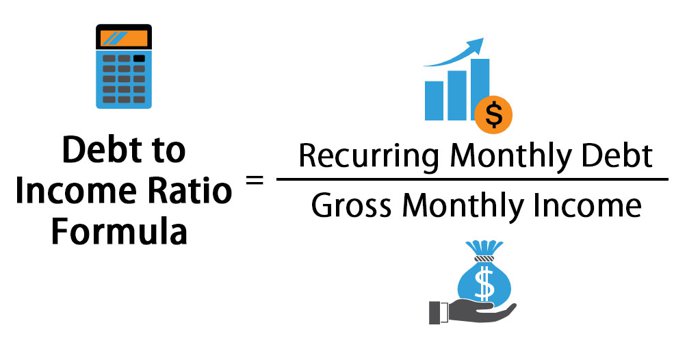
Debt-to-income ratio formula for Maryland homebuyers

Why Does DTI Matter to Mortgage Lenders?

Lenders use DTI to evaluate risk. A lower DTI generally suggests that you have more room in your budget to handle a mortgage payment. A higher DTI may make loan approval more difficult or may limit the loan amount you qualify for.

While every loan program is different, many lenders use 43% as an important guideline. Some loan programs may allow higher ratios depending on credit score, down payment, reserves, loan type, and other compensating factors.

Why DTI Matters for Buyers

Your DTI does more than affect loan approval. It also helps you understand what monthly payment may be realistic. Just because a lender says you can qualify for a certain amount does not always mean that payment will feel comfortable in your actual budget.

Before starting your home search, it is smart to review your debts, income, estimated taxes, insurance, HOA fees, utilities, and maintenance costs. For a deeper look at the real cost of ownership, visit our True Monthly Home Cost Calculator.

Ways to Improve Your DTI

  • Pay down credit card balances.
  • Avoid opening new debt before applying for a mortgage.
  • Increase documented income when possible.
  • Consider paying off smaller monthly obligations.
  • Review your budget before choosing a target home price.

The Bottom Line

Your debt-to-income ratio is one of the most important numbers in the mortgage process. It affects how much you may be able to borrow, what loan options may be available, and whether your future payment will be manageable.

If you are planning to buy a home in Odenton, Crofton, Gambrills, Bowie, or the surrounding Maryland area, understanding your DTI early can help you make smarter decisions before you start touring homes.

Thinking About Buying a Home?

The Scott Smolen Team can help you understand the local market, evaluate your buying power, and connect you with trusted mortgage professionals.

Contact The Scott Smolen Team

April 15, 2023

Decrease in US Home Listings by 25% Making it Harder for Buyers to Find Homes

There has been a decrease in new listings of US homes for sale by 25% compared to last year, continuing an eight-month trend of double-digit declines, which is making it difficult for buyers to find homes, but giving sellers a competitive edge. The reluctance of people to sell their homes is due to a variety of reasons, including the difficulty in finding another home to buy, many Americans having recently moved, and not wanting to give up their low mortgage rate.  Pending home sales are down more 19% nationwide.

Early-stage homebuying demand is slightly increasing, with mortgage-purchase applications up by 8% from a week earlier. Buyers in some areas, such as Nashville, TN, have more options, with new listings and pending sales down about 14% from a year earlier. The median U.S. home-sale price fell by 2.3% year over year to roughly $364,000, the largest decline in more than a decade, with sale prices dropping in more than half of the 50 most populous U.S. metros.

Leading indicators of homebuying activity include average 30-year fixed mortgage rates dropping to 6.27%, the fifth straight week of declines. Mortgage-purchase applications during the week ending April 7 increased 8% from a week earlier, seasonally adjusted. Purchase applications were down 31% from a year earlier.

Desirable, well-priced homes are being snapped up quickly. Some homeowners are reluctant to sell because they don't want to give up their low mortgage rates, and it can be challenging to find another home to buy. Home prices have fallen in more than half of the 50 most populous U.S. metros, with the biggest decline in Austin, Texas (-13.9% year over year). However, prices have risen in some other areas, such as Fort Lauderdale, Florida (11.6% YoY).

While mortgage rates have been dropping for the past five weeks, the average rate for a 30-year fixed mortgage is still relatively high at 6.27%. This has contributed to holding back home sales in some areas. Despite the recent drop in mortgage rates, the limited supply of homes for sale remains a significant obstacle for would-be buyers. Rates dipping below 6% would probably pique the interest of more buyers, but enough homeowners have rates in the 3% or 4% range that a big uptick in new listings is unlikely.

Posted in
April 14, 2023

A Guide to Understanding Contingencies in Real Estate Transactions

Everyone wants a perfect real estate transaction, but the reality is that there are some potential hiccups we should be aware of. That is where contingencies come in! It is essential for buyers and sellers to understand what this term means, so let us provide you with an informative guide on all things contingency related when it comes to buying or selling your home.

What is a contingency?

In simple terms, a contingency is a condition that must be met before a real estate transaction can be completed. Contingencies are typically included in the purchase agreement and serve to protect the buyer and seller in the transaction. They allow both parties to back out of the deal if certain conditions are not met.

There are many different types of contingencies that can be included in a real estate transaction. Some of the most common include:

1. Financing contingency: This contingency states that the buyer's offer is contingent upon them being able to secure financing for the purchase. If the buyer is unable to obtain financing, they can back out of the deal without penalty.

2. Appraisal contingency: This contingency states that the buyer's offer is contingent upon the property appraising for a certain value. If the property appraises for less than the agreed-upon purchase price, the buyer can back out of the deal or renegotiate the purchase price.

3. Inspection contingency: This contingency states that the buyer's offer is contingent upon the property passing a home inspection. If the inspection uncovers any major issues with the property, the buyer can back out of the deal or negotiate repairs with the seller.

Why are contingencies important?

Contingencies are important because they protect both the buyer and the seller in a real estate transaction. They allow the buyer to back out of the deal if certain conditions are not met, such as being unable to secure financing or if major issues are uncovered during a home inspection. On the other hand, they also provide protection for the seller by ensuring that the buyer is committed to the transaction and can fulfill their obligations under the purchase agreement.

Contingencies also provide flexibility for both parties. If unforeseen circumstances arise during the transaction, contingencies can provide a way to renegotiate the terms of the deal or back out of the deal altogether.

Contingencies are a must-have in any real estate transaction - they offer both the buyer and seller protection while allowing for necessary flexibility. Knowing how contingencies work is key to ensuring an efficient and effective deal.

Posted in
April 13, 2023

Understanding Real Estate Property Taxes: What Homeowners Need to Know

Real estate property taxes are a type of tax that homeowners must pay on their real property. This includes any land and structures that they own, such as houses, apartments, and commercial buildings. These taxes are imposed by the local government, such as the city or county, and are used to fund public services such as schools, roads, and parks.

Property taxes are based on the assessed value of the property, which is determined by the local government. The assessed value is the value of the property as determined by the government, which is typically lower than the market value of the property. This is because the assessed value is used to calculate the amount of property tax that the homeowner must pay.

The property tax rate is expressed as a percentage of the assessed value of the property. For example, if the assessed value of a property is $200,000 and the property tax rate is 1%, then the homeowner would owe $2,000 in property taxes each year.

One of the most important things to understand about property taxes is that they are recurring expenses. Unlike some other taxes that are paid once, such as sales tax or income tax, property taxes must be paid every year if the homeowner owns the property. Failure to pay property taxes can result in penalties and even the loss of the property through foreclosure.

While property taxes can be a burden for homeowners, they also play an important role in funding public services that benefit the community. Property taxes pay for schools, libraries, parks, and other public facilities that are used by everyone in the community. Without property taxes, it would be difficult for local governments to provide these services.

It's important for homeowners to understand their property tax obligations and to plan for them accordingly. This means budgeting for property taxes as part of the cost of owning a home and being aware of any changes to the property tax rate or assessed value of the property. Homeowners should also be sure to take advantage of any tax exemptions or deductions that they are eligible for, which can help to lower their property tax bill.

Posted in
April 12, 2023

Exploring the Intersection of Cryptocurrency and Real Estate

The intersection of cryptocurrency and real estate is an exciting space that has gained increasing attention over the years. While real estate has traditionally been a slow-moving and opaque industry, the emergence of blockchain technology and cryptocurrencies has opened up new opportunities for investors and homebuyers alike. In this blog post, we’ll explore the benefits and drawbacks of using cryptocurrencies to invest in real estate. 

There are several cryptocurrencies on the market today.  I suspect that in time these cryptocurrencies will consolidate similar to what happened during the early stages of the Internet.  For the purposes of this particular post, we will look at the entire field of cryptocurrency as a whole.  In future posts, we will focus on particular cryptocurrencies such as Bitcoin and Ethereum

Benefits of using cryptocurrency for real estate Fast transactions:

  1. One of the primary advantages of using cryptocurrencies for real estate transactions is speed. Compared to traditional methods like wire transfers or checks, cryptocurrency transactions are processed quickly and without the need for intermediaries.
  2. Lower fees: Another benefit of using cryptocurrencies is the low transaction fees. Traditional real estate transactions can involve significant fees and commissions, but cryptocurrencies offer a cheaper alternative.
  3. Security: Blockchain technology provides a high level of security and transparency, making it an attractive option for real estate transactions. Transactions are recorded on a public ledger, making it difficult to manipulate or commit fraud.
  4. Global accessibility: Cryptocurrencies provide access to a global market, allowing investors to buy and sell real estate properties from anywhere in the world.

Drawbacks of using cryptocurrency for real estate Volatility:

  1. The value of cryptocurrencies can be highly volatile, making it difficult to predict the value of an investment. This can be a significant risk for those looking to invest in real estate using cryptocurrencies.
  2. Limited acceptance: Although the use of cryptocurrencies is growing, they are not yet widely accepted as a form of payment in the real estate industry. This limits the options for those looking to use cryptocurrencies to buy or sell real estate properties. Regulatory uncertainty:
  3. The regulatory landscape surrounding cryptocurrencies is still evolving, which can create uncertainty for those looking to invest in real estate using cryptocurrencies.

Conclusion:

Overall, the use of cryptocurrencies for real estate transactions offers several benefits, including speed, security, and lower fees. However, the volatility of cryptocurrencies and limited acceptance in the real estate industry can be significant drawbacks. As the regulatory landscape evolves and more real estate transactions are conducted using cryptocurrencies, we may see these drawbacks diminish, making it an even more attractive option for investors and homebuyers.

Posted in
April 11, 2023

Selling a Home through an Estate Sale: Legal and Financial Considerations

Selling a home through an estate sale can be a complex process, as it involves several legal and financial considerations. When someone passes away, their assets, including their home, become part of their estate.  You do not always need to sell a home when a person passes away.  For example, if a house has been titled as Tenants by the Entirety in Maryland then the surviving spouse will automatically take ownership without the probate process.  However if this is not the case and the house needs to be sold, then there are some steps that should be followed to make the process go as smoothly as possible.  

Estate sales are typically held when a homeowner passes away, and their assets (including their home) are sold to settle debts or distribute the proceeds among heirs. The estate sale process involves determining the value of the home and other assets.  If you would like to consult an attorney prior to moving too far into the process, then this can be a good resource - Best Maryland Trust and Estate Lawyers.

If you are tasked with selling the home as part of the estate, there are several steps you need to take.  Working with an experienced real estate professional can help ensure that the process runs smoothly and that you receive the best price for your property.

  1. Obtain the necessary legal documents: Before you can sell the home, you will need to obtain the necessary legal documents, such as the death certificate and the will (if there is one). If there is no will, the court will appoint an executor to handle the estate. Determine who has legal authority to sell the home: The executor of the estate typically has the legal authority to sell the home. If there is no will, the court will appoint an administrator to handle the estate. 
  2. Consult with a Realtor to help determine the value of the home.  In addition to determining the value, it is essential to know what the current mortgage balance(s) so you are able to have an idea what the anticipated equity position of the property is.  
  3. It is usually best that you hire an estate sale professional who can assist you in preparing and conducting the sale. They can help with tasks such as selling items within the home and removing other items that do not sell, or are no longer needed.  Contacting a company such as Caring Transitions can make this process much smoother.
  4. Prepare the home for sale: Once the personal items have been removed, there maybe some work required in order to prepare the house for the market.  This may involve hiring contractors, cleaners, or other professionals to help prepare the property for sale.  We have an extensive list of contractors that can help in this process of preparing the house for the market when you are working with The Scott Smolen Team at RE/MAX Leading Edge.  We understand that your time is limited and this entire situation can be very emotional, so we do our best to coordinate as much as you would like done for you if you would like us to help.
  5. Once the house is prepared for sale, then we go to work marketing the home for you.  This includes professional photography, aerial photos, a virtual tour, current home floorplan and much more.  
  6. After a contract has been accepted and processed to a successful settlement, the proceeds from the sale will need to be distributed to the estate.  The proceeds maybe used to settle outstanding debts associated with the estate and then the remaining funds are usually distributed to the heirs according to the will or trust that is in place.  

Since selling a home as part of an estate can be a complex process, especially if you are not familiar with the legal and financial aspects of the sale. Working with an experienced estate attorney and Realtor can help ensure that the sale runs smoothly and that you receive a fair price for the property.  Please feel free to let us know if you have any questions at all.

April 10, 2023

Arnold, MD Home Statistics for Detached Homes, Townhouses, and Condominiums - Monthly Updates

If you are curious about the home statistics for detached homes, townhouses, and condominiums in Arnold, Md. then you have come to the right place.  There are several charts below that provide a comparison to the data from last year.  These charts are updated on a monthly basis, so you will be able to keep an eye on the trends in the market.

This first chart shows the closed sales in Arnold month-by-month compared to the same time last year.


This next chart provides the data for the median days on the market for homes in Arnold.  


This chart provides a look into the Supply and Demand of homes located in Arnold.  This showing the monthly supply of homes in the city.  This Economists' Article explains what this data means in general.  The lower the number, the more skewed the market is to Sellers.  It is the opposite for a Buyer's market.


This last chart displays the median sales price to original list price ratio for homes located in Arnold, Maryland over the last year. 


Please feel to to send us a message if you have any questions about any of this data, or if you would like some additional information about the housing market in Arnold, or some other areas that interest you.  We will be happy to do anything we can to help!


Arnold, Md. - Recently Listed Arnold Homes for Sale

Posted in
April 9, 2023

Easter and Selling Your Home

Happy Easter!

Easter is not only a religious celebration, but it's also a time for family gatherings, Easter egg hunts, and enjoying the arrival of spring.

Here are a few ways that Easter and real estate can intersect:

  • Spring Cleaning and Home Staging Easter is the perfect time to give your home a deep clean and refresh before the summer months. As the flowers bloom and the weather warms up, home sellers can use the holiday as an inspiration to declutter, depersonalize, and stage their homes to appeal to potential buyers.
  • Highlight Outdoor Features As spring arrives, many buyers are looking for outdoor living spaces, such as patios, gardens, and pools. Sellers can use Easter to showcase their home's outdoor features by highlighting their landscaping, flower beds, or outdoor dining areas.
  • Add Seasonal Scents Sellers can add seasonal scents to their home to create a welcoming and inviting environment. Consider adding scents like fresh flowers, citrus, or lavender, which can evoke the feeling of spring and relaxation. This can help create a positive and memorable experience for potential buyers.
  • Showcase Natural Light With longer days and more sunshine, sellers can showcase their home's natural light during Easter. This can be achieved by opening up curtains and blinds to let the light in and highlighting any windows with scenic views. This can create a bright and airy feel that can make the home more appealing to buyers.

In conclusion, there are several things that sellers can do during Easter to make their home more appealing to potential buyers. Highlighting outdoor features, preparing your home for the spring market, adding some seasonal scents, and being available for showings, sellers can take advantage of the Easter season to attract more buyers and increase their chances of selling their home.

We wish you and your family a safe and enjoyable Easter holiday.

Posted in
April 8, 2023

Why Aren’t Home Prices Dropping?

The housing market has experienced significant shifts recently, including a rise in mortgage rates last year that affected many people's ability to buy homes. Home prices, which had rapidly appreciated for several years, finally peaked last summer, leading to concerns about a price crash. However, despite the end of the buyer frenzy seen during the pandemic, national home prices have remained relatively flat and continued to increase in many markets.

According to Lawrence Yun, the Chief Economist at the National Association of Realtors (NAR), this trend is likely to continue, with only minor changes to the national median home price. Low inventory is a key factor in the current market, and while some markets may experience a price decline, the lack of supply means that a significant crash is unlikely. The ongoing lack of inventory is leading many buyers to bid up prices, and it is unlikely to change significantly in 2023, according to industry expert Rick Sharga.

With homeowners holding plenty of equity and low mortgage rates, distressed sales are unlikely. Therefore, partnering with The Scott Smolen Team who understands the local market and can navigate the current volatility is essential for anyone considering moving this spring. In addition to the low inventory, there are other factors that are keeping the housing market strong.

The pandemic had led many people to reassess their living arrangements and prioritize their housing needs. As a result, there has been increased demand for larger homes and homes in suburban and rural areas with more space and outdoor areas. This trend is likely to continue, as remote work and virtual learning become more common and desirable.

Furthermore, the overall economy has been relatively strong, with low unemployment rates and historically low interest rates. This has allowed many people to maintain their financial stability and continue to invest in real estate. The continued growth of the economy and relatively low-interest rates are expected to keep the housing market prices in the coming months.

There are many homeowners who not only have significant equity in their current homes, but they also have mortgages that are at the historically lowest rates ever.  This has allowed many of those homeowners to keep those homes and use them as rental properties with very high positive cash flows from day #1.  When homeowners decide to move without selling their current home, the housing supply does not increase.  

It's also important to note that the housing market is highly localized, and conditions can vary significantly from region to region and even neighborhood to neighborhood. Therefore, it's essential to work with experts in your area who have a deep understanding of the local market and can provide tailored guidance and advice. In summary, while there have been shifts in the housing market, the low inventory and ongoing demand for larger homes and suburban/rural living are keeping the market strong.

These charts below show the months of housing supply across many of our local counties during the past 10 years.  As you can see, the inventory is very thin right now.  As long as that continues, there will be upward pressure on pricing instead of a downward trend.  

Bottom Line:

With the overall economy remaining stable and interest rates remaining low, the housing market is expected to continue to perform well in the coming months. If you would like to get an idea of what your housing options might be, reach out to The Scott Smolen Team who can provide personalized guidance and advice that is essential for anyone looking to buy or sell a home in the current market.

Posted in
April 7, 2023

Homebuyers Benefit from Fourth Consecutive Week of Falling Mortgage Rates

30-Year Fixed National Average Rates, as of April 6th - Per Freddie Mac

Conventional 6.18%

FHA 5.78%

VA 5.87%

Jumbo 5.95%

According to data released by Freddie Mac on April 6th, homebuyers enjoyed another week of declining mortgage rates, with the average rate dropping for the fourth consecutive week. "As we enter the traditional spring homebuying season, mortgage rates are continuing to decrease," said Sam Khater, Freddie Mac's chief economist. However, there are numerous challenges faced by those seeking to buy a home, including low inventory levels, particularly for first-time homebuyers.

Rates had started to decline in early 2023 after reaching a high of 7.08% in November 2022. Nonetheless, they started to rise again in February, following indications that the Fed still had work to do in cooling the US economy and was likely to increase its benchmark lending rate once again.

"This week's rate decline is an opportunity for potential buyers to enter the market while rates are slightly lower. Pent-up demand for housing is apparent with every improvement in affordability, whether it's softer prices or lower mortgage rates," stated Hannah Jones, economic research analyst at Realtor.com, adding that home prices are displaying signs of softening, which is good news for buyers.

Posted in