Scott Smolen Maryland real estate blog with market updates, community spotlights, and home buying tips

Maryland Real Estate Blog

Scott Smolen's Anne Arundel County and Bowie, Md. Real Estate Blog

Local real estate updates, market insights, community spotlights, and practical home buying and selling advice for Odenton, Gambrills, Crofton, Bowie, Piney Orchard, Two Rivers, and the surrounding Maryland real estate market.

Latest Market Trends

Stay current on mortgage rates, local inventory shifts, pricing trends, and buyer demand across the Maryland real estate market.

Home Selling Advice

Learn how to prepare, price, market, and negotiate when selling a home in today’s local market.

Home Buying Tips

Get practical guidance on affordability, inspections, offers, financing, and buying with confidence.

Community Spotlights

Explore local neighborhoods, market reports, lifestyle features, and community insights throughout the area.

June 19, 2023

Exploring the Pros and Cons of Conventional Mortgages

Conventional mortgage

A conventional mortgage is a popular type of home loan that is offered by traditional financial institutions, such as banks and credit unions. It is a type of mortgage that is not guaranteed or insured by the government, unlike FHA, VA, or USDA loans. While conventional mortgages offer several benefits, they also come with a few disadvantages. In this blog post, we will discuss the advantages and disadvantages of a conventional mortgage.

Advantages of Conventional Mortgage

  1. Lower interest rates: Conventional mortgages usually offer lower interest rates than other types of loans, such as FHA or VA loans. This means that you will pay less interest over the life of the loan, which can save you thousands of dollars in the long run.
  2. Flexible terms: Conventional mortgages offer a range of term options, from 10 to 30 years, which means that you can choose the term that suits your financial situation best. This flexibility allows you to make lower monthly payments or pay off the loan faster.
  3. No mortgage insurance requirement: Unlike FHA loans, conventional mortgages do not require mortgage insurance if you put down a 20% or higher down payment. This means that you can save money on your monthly mortgage payments by avoiding mortgage insurance premiums.
  4. Higher loan limits: Conventional mortgages offer higher loan limits than FHA or VA loans. This means that you can borrow more money to buy a higher-priced home.

Disadvantages of Conventional Mortgage

  1. Higher credit score requirement: Conventional mortgages typically require a higher credit score than other types of loans. If you have a low credit score, you may not qualify for a conventional mortgage or may have to pay a higher interest rate.
  2. Down payment requirement: Conventional mortgages require a down payment of at least 3% of the purchase price of the home. If you cannot afford to make a down payment, you may not be able to qualify for a conventional mortgage.
  3. Strict eligibility criteria: Conventional mortgages have strict eligibility criteria that borrowers must meet, including income and debt-to-income ratio requirements. If you do not meet these criteria, you may not qualify for a conventional mortgage.
  4. Appraisal requirements: Conventional mortgages require an appraisal of the home to determine its value. If the home is appraised for less than the purchase price, you may have to pay a higher down payment or renegotiate the purchase price.

In conclusion, a conventional mortgage offers several advantages, including lower interest rates, flexible terms, and no mortgage insurance requirement. However, it also has some disadvantages, such as a higher credit score requirement, down payment requirement, and strict eligibility criteria. Before applying for a conventional mortgage, it is important to consider your financial situation and the pros and cons of this type of loan.

June 17, 2023

Homeowners Insurance: Understanding the Basics for Peace of Mind

Homeowners insurance is a convenient and comprehensive package policy that offers protection for your property and minimizes your liability for any injuries or property damages caused by you, your family, or even your pets.

While most disasters are covered, it is crucial to note that there are a few exceptions. Commonly, homeowners’ policies do not provide coverage for flooding, earthquakes, and poor maintenance. In the event of a flood, you can purchase coverage from federal government's National Flood Insurance Program. Alternatively, an endorsement or separate policy can be obtained for earthquake protection. It is the responsibility of homeowners to handle maintenance-related problems.

The standard homeowner’s insurance policy covers four primary types of insurance, providing homeowners with peace of mind. These include:

  1. Coverage for your home's structure: Covers repair or rebuilding costs in case of damage caused by fire, hurricanes, hail, lightning, or other disasters listed in the policy. Structures not attached to the home such as garages, sheds, or gazebos are also covered.
  2. Coverage for personal belongings: Covers stolen or destroyed items, including furnishings, clothes, and sports equipment. Expensive items may have limited coverage, but special endorsements can be purchased for their full value. Trees, plants, and shrubs are also covered up to a certain dollar limit.
  3. Liability protection: Covers lawsuits resulting from bodily injury, property damage, or pet-related incidents caused by the policyholder or family members. Coverage extends beyond the home and can be increased with an umbrella or excess liability policy.
  4. Additional living expenses: Covers temporary living expenses if your home is uninhabitable due to damage from a fire, storm, or other disaster.

Types of Homeowners Insurance Policies

When it comes to protecting your home, there are different types of policies available. While most states require policies to meet certain standards, individual companies may have variations in their offerings. As a homeowner, you have the option to choose which policy suits your needs best.

The most popular policy is the HO-3, which offers comprehensive coverage for the structure of your home, personal belongings, and personal liability. This policy protects against 16 different disasters or perils, including fire, theft, and vandalism.

For owners of multifamily homes, there is an HO-3 endorsement available to cover the additional risks of having renters in the property. There are also other policy options available, such as the more limited HO2 and the bare bones HO-1, as well as a specialized policy for older homes (HO-8) and for mobile homes (HO-2).

Renters can benefit from the HO4-policy, which covers personal belongings against all 16 perils and provides liability coverage for damages to third parties. Condo or co-op owners can opt for the HO-6 policy, which covers both belongings and structural parts of their unit and provides liability coverage. Both policies also include coverage for additional living expenses.

Different Levels of Coverage

As a homeowner, it is important to understand your coverage options when it comes to protecting your home and possessions. There are three main types of policies available:

Actual Cash Value:

This policy pays for the replacement of your home or possessions, minus a deduction for depreciation.

Replacement Cost:

This policy pays the full cost of repairing or rebuilding your home or replacing possessions without any deduction for depreciation.

Guaranteed/Extended Replacement Cost:

This policy offers the highest level of protection. A guaranteed replacement cost policy pays whatever it costs to rebuild your home as it was before the disaster – even if it exceeds your policy limit. This offers protection against sudden increases in building costs due to unexpected situations. An extended policy pays a certain percentage over the limit to rebuild your home. Generally, it is 20 to 25 percent more than the limit of the policy.

While guaranteed and extended replacement cost policies may be more expensive, they offer the best financial protection against disasters for your home.

It is important to note that these coverages may not be available in all states or from all companies. Replacement cost coverage is available for the structure of the home, but only actual cash value coverage is available for possessions. Make sure to review your options carefully and choose the policy that best suits your needs.

June 16, 2023

Renting to Homeownership: 10 Essential Questions to Ask Before Taking the Plunge

Ready to transition from renting to owning your own home? It's a thrilling time, but one that needs to be approached thoughtfully. To ensure a successful transition, renters should educate themselves on what to expect and what questions to ask before taking the plunge. We can help guide you through the process and provide answers to the top 10 essential questions renters should ask when buying a home. Let's get you ready to make your homeownership dreams a reality.

How Much House Can I Afford?

When budgeting for a new home, it's important to consider your current income, debts, and future expenses. The key factor in determining affordability is your gross monthly income (before taxes) minus all monthly expenses, like credit card payments, car loans, student loans, and estimated monthly mortgage payments including taxes, insurance, mortgage insurance, and HOA/Condo dues. Use a mortgage calculator to assess how much house you can afford based on these factors.

Once you've determined a comfortable payment amount, start shopping for a loan that fits within your budget. There are many loan options available to help make your homeownership dreams come true, and your mortgage lender can guide you through the process and help you make an informed decision. Don't let unexpected expenses derail your homeownership goals - take the time to budget thoroughly so you can enjoy your new home without financial stress.

What Kind of Loan Should I Get?

Buying a home can be overwhelming due to the multitude of loan options available to prospective homeowners. Knowing about the different types of loans and which suits you best can simplify the process. Here are some popular loan options for you to consider.

Conventional Loans: This is the most popular loan option, offering lower interest rates on fixed rate loans and favored by those with good credit and a sizable down payment.

FHA Loans: A government-backed mortgage loan that requires only a 3.5% down payment from the borrower. This loan program is popular with first-time homebuyers and those with limited financial resources, but it also has certain restrictions like limits on borrowing and higher mortgage insurance costs.

VA Loans: This government-backed loan is only available to veterans and active-duty military members. This type of loan typically requires no down payment or mortgage insurance, making it a popular option.

USDA Loans: Designed to help borrowers in rural areas, this loan requires no down payment and offers competitive interest rates.

How Much Money Do I Need for a Down Payment?

When choosing a loan, your down payment can be as little as nothing, but it all depends on the type of loan you choose. Certain loans, however, may need up to 20% down. If you can manage depositing at least 20% down, you won't have to pay for private mortgage insurance (PMI). Don't fret if you're a first-time homeowner in a financial bind though, there are programs that can assist you with your down payment.

What Are the Additional Costs of Homeownership?

As a homeowner, it's important to anticipate the additional expenses that come with owning a home. Your mortgage payment may cover some costs, but others will be paid out-of-pocket. These expenses include mortgage insurance for those putting down less than 20%, property taxes that may be due in one lump sum or broken up into payments, and homeowners’ insurance that covers property damage and liability. Additionally, you'll need to budget for utilities and maintenance/repairs. If purchasing a house in a development or neighborhood with an association, you may also need to pay association fees. Be prepared for these costs and plan accordingly.

How Long Will the Process Take?

Owning a home can be expensive, but it’s important to plan ahead. Some costs may be included in your mortgage payment, while others may be out-of-pocket. When considering purchasing a home, it’s crucial to know how long the process will take. It can vary from as little as 8 days to up to 60 days, depending on the specific circumstances.

Here are the three parts of the home-buying process: pre-approval and home search, loan processing, and closing. The first step involves researching mortgage options and talking to lenders about loan terms. Getting pre-approved for a loan can help identify what kind of house you can afford. This process includes researching properties online, scheduling tours, and making offers. The length of this part is variable and depends on inventory and your specific needs.

Once a contract is ratified, the loan processing starts. Ideally, you would have already submitted all the necessary documents during the pre-approval stage. After an underwriter reviews the file, there may be additional documents required to finalize the approval. Finally, the closing process concludes the timeline, which typically includes signing the paperwork and transferring funds.

With an understanding of the home-buying process timeline, you can plan. With the right preparation and advice, buyers can navigate the process confidently and make their dream of homeownership a reality.

What Does it Mean to Lock a Loan?

Locking in a loan is a crucial step in the home-buying process, as it guarantees a specific interest rate and points for a set duration of time. This ensures that borrowers are protected from any rate increases during the loan process, which can alleviate some of the stress that comes with buying a home.

The process of locking in a loan starts when a lender or broker receives an application and finishes once they have reviewed all necessary paperwork and locked in the loan. Lock-in periods vary between 15 and 45 days, depending on the lender, their policies, and the time until settlement. During this time, the lender will process the loan, including pulling credit reports, obtaining appraisals, and verifying income.

It's important for borrowers to research their options and understand the costs associated with locking in a loan before deciding. With the right information and guidance, borrowers can ensure they make the best decision possible when it comes to locking in a loan, so they can confidently move forward with the home-buying process.

What is Private Mortgage Insurance (PMI)?

Private Mortgage Insurance (PMI) is a type of third-party insurance that lenders require to protect against potential losses if the borrower defaults on their home loan. If you have less than 20 percent of the home's purchase price as a down payment, PMI is usually required. The borrower is typically responsible for paying PMI premiums, which are often included in the monthly mortgage payment.

The main advantage of PMI is that it enables borrowers with smaller down payments to purchase homes.

How Can I Get the Best Interest Rate?

Looking to buy a house? Don't jump into a mortgage without doing your research first! Here are some tips to help you get started:

  1. Shop around for the best rates. Ask family and friends for recommendations and do your own online research to compare lenders.
  2. Check your credit score. Your credit plays a big role in the interest rate you'll qualify for. Make sure there are no errors on your credit report that could be dragging down your score.
  3. Consider fixed-rate vs adjustable-rate mortgages. While fixed-rate offers stability, adjustable-rate mortgages usually come with a lower initial rate.
  4. Get pre-approved for a mortgage. This will help you determine exactly how much you can borrow and what interest rate you'll be eligible for.
  5. Negotiate with your lender. Don't be afraid to ask for a better rate if you've done your research and have good credit. Your lender may be willing to work with you to earn your business.

What are the HOA fees?

If you're considering buying a home in a community with a Homeowners Association (HOA), it's worth knowing what the fees cover. Usually, the fees go towards maintaining amenities like parks, swimming pools, and walking trails. The size of your property, the amenities provided, and the age of your home will impact the HOA fee you'll pay. Generally, HOA fees also include annual assessments for maintenance, utilities, and other expenses.

Before making an offer, ask the seller if the HOA fees have changed in the past year or if any upcoming assessments are planned. This way, you'll know what to expect. It's also important to budget for these costs when considering if you can afford a mortgage payment. Owning a home with HOA fees may have its perks, but it's essential to have all the information so you can make an informed decision.

Get Informed, get a Loan: Purchase a Home!

Are you a renter considering buying a home? It's essential to do your research and ask the right questions before taking the plunge. Fortunately, The Smolen Team is here to help. With decades of experience, they can guide you through the complexities of homeownership and help you avoid costly mistakes. Don't hesitate to reach out and get started on the path to owning your own home.
June 15, 2023

Crunching the Numbers: The Issue of Housing Affordability and Supply in Today's Market

To address the housing affordability problem, experts have been recommending the solution of building more homes. This makes economic sense since when the demand for housing is greater than the supply, prices go up. Currently, although there has been a slow increase in housing inventory since last year, the supply still falls short of demand. In fact, despite the sluggish market conditions due to affordability issues, the number of home sales has had multiple offers, making it evident that building more houses is necessary to cater to the demand. According to the National Association of REALTORS®, the number of homes available for sale has surpassed one million units, which is a promising sign for future housing supply.

Understanding the Connection Between Affordability and Housing Shortage

It is important to keep in mind that not everyone can afford the same type of home when estimating how many homes are needed in the housing market. Depending on their income, buyers can only afford homes at different price levels. For example, households earning $75,000 or less can afford to buy homes that are priced up to $256,000. Therefore, it's crucial to specify the number of missing homes based on price range.

The analysis shows that the current housing affordability and shortage issues wouldn't be as severe if there were enough homes available for all income levels. There are over one million homes available for sale, but they are not equally distributed based on income level. This disparity exacerbates the mismatch between housing supply and demand, especially for middle- and lower-income households. For instance, households earning $75,000 or less represent 51% of all households, but only 23% of the available homes are priced within their budget.

To address both the shortage of affordable homes and the housing supply shortage, a two-fold approach is necessary. Building homes for all income levels could be a solution.

The Report from NAR (National Association of Realtors)

The Housing Affordability & Supply report highlights the pressing issue of the shortage of affordable housing. Economic theory dictates that when demand for housing exceeds supply, housing prices surge. While the number of homes available for sale has increased by over five percentage points compared to previous years, the market still struggles to keep up with the slow rise in inventory. Home sales are trying to recover, but multiple offers are still common, indicating a dire need for increased housing supply to accommodate demand.

To achieve a balanced market, it's important to estimate the number of homes needed at different price ranges. A recent study by NAR Research and Realtor.com® identified the number of missing homes for each income level. Buyers' income determines the price range of homes they can afford. The current market fails to cater to middle- and lower-income households. Nearly 51% of households earn $75,000 or less, but only 23% of listings are priced to accommodate them. On the other hand, for buyers earning $250,000, 85% of listings are currently affordable to purchase.

To address the issue of low affordability and the housing supply shortage, building homes for all income levels could help. The report also reveals that inequalities in housing availability among income levels are more prominent in expensive big city centers. Therefore, identifying the number of homes missing for each income level could aid federal and local governments in tackling the two-fold challenge of low affordability and low supply of homes.

NAR Affordability Report

June 14, 2023

Beyond the Headlines: Understanding Foreclosures and Overcoming Fear in Today's Market

Are you feeling uncertain about buying a home due to headlines about rising foreclosures? You are not alone. However, rest assured that the data shows that there is not a foreclosure crisis in the housing market. It is important to understand what this means to have a clear understanding of current market trends. Let's take a closer look at the facts.

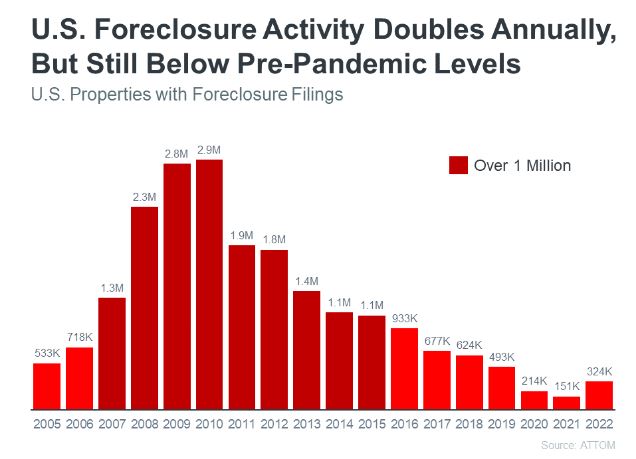
The Year-End 2022 U.S. Foreclosure Market Report from ATTOM reveals a 115% increase in foreclosure filings from last year, but a 34% decrease from 2019. While this may sound alarming, it's important to put this percentage into context.

In 2020 and 2021, the number of foreclosure filings hit record-low levels due to government programs such as forbearance options for homeowners. Thus, any increase in filings last year was expected. Market intelligence experts note that these programs and a healthy economy have helped to prevent millions of unnecessary foreclosures.

Moreover, current foreclosure levels are still far below the 2.9 million record-high reports from 2010. Homeowners facing financial difficulties have been able to leverage their home equity and sell their homes instead of facing foreclosure.

Overall, while there has been an increase in foreclosure filings, we need to remember the bigger picture and how these government programs have helped millions of struggling homeowners stay in their homes during challenging times.

Although foreclosures are increasing, it is important to keep things in perspective. According to Bill McBride, Founder and Author of Calculated Risk, there will be a rise in foreclosures over the next year, but not to the extent of the housing bubble. Unlike the past, there won't be a large wave of distressed sales causing cascading price declines. So, while foreclosures will go up, it won't have the same negative impact on prices. The importance of contextualizing data has never been greater. Although an anticipated increase in foreclosures has hit the housing market, it is far from the level of crisis during the housing bubble burst. Thus, there is no need to worry about a collapse in home prices.

The graph below reveals that foreclosures have dropped significantly since the housing market crash in 2010. In fact, current numbers are a far cry from the record high of 2.9 million.

June 13, 2023

Understanding Real Estate Zoning: A Key Factor Shaping Communities

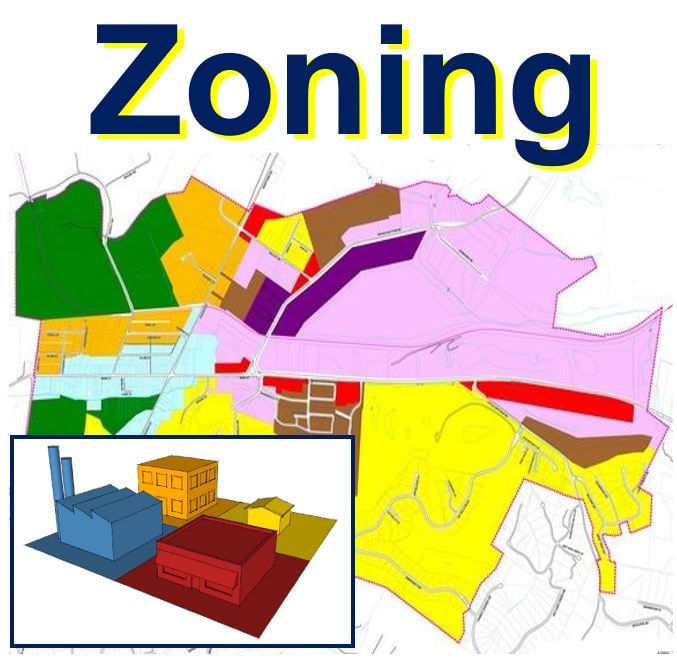
When it comes to real estate, one crucial aspect that often goes unnoticed is zoning. Real estate zoning refers to the division of land into different designated areas, each with specific regulations and permitted uses. It is an essential tool used by local governments to manage and control the development of communities. In this blog post, we will delve into what real estate zoning entails, why it is important, and how it influences the way our cities and neighborhoods are structured.

  • Defining Real Estate Zoning:

Real estate zoning is the process of dividing land into distinct zones or districts based on certain characteristics such as land use, density, building height, and setbacks. These zones can include residential, commercial, industrial, agricultural, and mixed-use areas. Zoning regulations typically outline the permitted uses, building requirements, and other restrictions within each zone.

  • Maintaining Order and Protecting Interests:

The primary purpose of real estate zoning is to maintain order and protect the interests of the community. Zoning regulations help prevent incompatible land uses, such as locating heavy industries next to residential areas. By separating different land uses, zoning aims to minimize conflicts, maintain property values, and promote a harmonious living and working environment.

  • Promoting Public Health and Safety:

Real estate zoning plays a crucial role in ensuring public health and safety. Zoning regulations often include guidelines related to building codes, setbacks, and access to amenities such as parks, schools, and emergency services. These regulations help create safe and healthy environments by preventing overcrowding, promoting adequate infrastructure, and addressing potential hazards.

  • Managing Growth and Preserving Character:

Zoning is a powerful tool for managing urban growth and preserving the unique character of communities. It helps guide development by determining where different types of buildings and businesses can be located. Through zoning, cities can shape their identity, preserve historic districts, and promote a mix of land uses that support economic vitality and community cohesion.

  • Balancing Interests and Stakeholder Engagement:

Real estate zoning decisions involve a careful balance of various interests and stakeholder engagement. Local governments often conduct public hearings and engage with community members to gather input and address concerns related to zoning changes. This participatory approach allows for a more inclusive decision-making process that reflects the needs and aspirations of the community.

Real estate zoning lays the groundwork for shaping our built environment in a sustainable and structured manner. By setting guidelines and regulations, zoning supports cities in balancing growth, safeguarding public welfare, and preserving neighborhood character. Gaining a grasp of real estate zoning is of paramount importance for homeowners, developers, and community members alike, as it provides valuable insights into city planning and future evolution.

June 12, 2023

Housing Market Update: Decreasing Supply Drives Price Stability as Mortgage Rates Restrict Homeowners

The current state of the housing market reveals a worsening shortage of available homes for sale, resulting in limited home sales and sustained price levels. However, there is a strong indication of pent-up demand among buyers, which is expected to be unleashed once mortgage rates decrease and the supply of homes improves.

During the four weeks ending June 4, new listings of homes for sale dropped by 25% compared to the previous year, reaching the lowest level for early June in recorded history.  The persistent lack of new listings has led to a 5% decline in the total number of homes on the market compared to the previous year, reaching the lowest level for early June ever recorded.

The scarcity of homes on the market is primarily due to high mortgage rates, with the daily average reaching 6.94% on June 7, which is close to the highest level in the past two decades. The majority of homeowners have mortgages with rates below 6%, which discourages them from listing their homes and giving up their relatively low rates.

The limited inventory has contributed to relatively modest declines in national home prices. The median price of homes in the United States decreased by 1.6% compared to the previous year, representing the smallest decline in three months and only half the size of the 3.2% drop observed in April, which was the largest decline in at least ten years. However, home prices are still rising in certain parts of the country. The median asking price in the U.S. remains unchanged from a year ago after several weeks of decline, indicating that sellers in some metropolitan areas are recognizing their ability to command favorable prices.  The prices in the Maryland market have not declined compared to other parts of the country.

Leading indicators of homebuying activity are as follows:

  • On June 7, the daily average 30-year fixed mortgage rate stood at 6.94%, down from a seven-month high of 7.14% two weeks earlier, but higher than approximately 6.6% a month earlier. The average 30-year fixed mortgage rate for the week ending June 1 was 6.79%, representing the largest weekly increase since October and the highest rate since November.
  • Seasonally adjusted mortgage-purchase applications decreased by 2% during the week ending June 2 compared to the previous week, and were down by 27% from the previous year.
  • Google searches for "homes for sale" increased by 7% compared to the previous month during the week ending June 3, and remained relatively stable compared to the previous year.
  • According to home tour technology company ShowingTime, touring activity as of June 4 increased by 16% since the beginning of the year, in contrast to a 2% decline observed at the same time last year. Last year, tours declined as mortgage rates soared. Redfin's analysis of the 50 most populous U.S. metros indicates that some metro areas may be excluded at times to ensure data accuracy.

Key highlights of the housing market include:

  • The median home sale price was $379,463, marking a 1.6% decrease compared to the previous year, which is the smallest decline in three months. Over the past six weeks, price declines have been gradually shrinking.
  • The median asking price for newly listed homes remained unchanged at $397,475 compared to the previous year. The monthly mortgage payment for a home at the median asking price reached a new record high of $2,651 with a 6.79% mortgage rate, reflecting a 14% increase ($320) compared to the previous year.
  • Pending home sales declined by 16.6% compared to the previous year, consistent with the declines observed over the past month.
  • Active listings (the number of homes listed for sale at any given time) decreased by 4.6% compared to the previous year, marking only the second decline in 12 months. The first decline occurred a week earlier, when active listings decreased by 1.7%. Active listings also experienced a slight decrease compared to the previous month, while typically, they show month-over-month increases at this time of year.
  • The months of supply, which measures the balance between supply and demand by calculating the number of months it would take for the current inventory to sell at the current sales pace, reached 2.6 months, up from 2.1 months compared to the previous year. A balanced market is typically represented by a supply of four to five months, with a lower number indicating seller's market conditions. 

June 11, 2023

Achieving a healthy summer lawn in Maryland requires proper care and maintenance.

I personally owned and operated a lawn and landscaping company prior to becoming a full time Realtor in 1999.  Lush lawns and healthy landscapes are a topic that has interested me for decades.  Hopefully you will find some of these "pro tips" beneficial if you are currently maintaining your own lawn.  If you are looking for some professional help, I have included links to 3 reputable companies below as well.  

Here are some steps to help you maintain a lush and vibrant lawn during the summer months.  

  1. Mowing: Set your lawn mower blade to the appropriate height, typically around 3 inches. Regularly mow your lawn to ensure it stays at the desired height. Avoid cutting the grass too short as it can stress the turf and make it more susceptible to damage from heat and drought.
  2. Watering: Deep, infrequent watering is key to promoting healthy root growth. Water your lawn in the early morning to minimize evaporation. Aim for about 1 inch of water per week, including rainfall. Use a rain gauge or empty tuna can to measure the amount of water applied.
  3. Fertilization: Apply a slow-release or controlled-release fertilizer specifically formulated for lawns in Maryland. Follow the manufacturer's instructions for application rates and timing. Fertilizing in early summer can help promote healthy growth and enhance the lawn's ability to withstand stress.
  4. Weed Control: Monitor your lawn for weeds and take appropriate action to control them. Spot-treat weeds using a suitable herbicide or pull them manually. Be cautious when using herbicides and follow the instructions to avoid damaging your lawn or surrounding plants.
  5. Aeration: Consider aerating your lawn during the summer to improve air and water circulation in the soil. Core aeration involves removing small plugs of soil from the turf, allowing better nutrient absorption and root development.
  6. Pest and Disease Management: Keep an eye out for common lawn pests and diseases such as grubs, chinch bugs, or fungal infections. Consult with a lawn care professional or your local extension office for proper identification and treatment options.
  7. Regular Maintenance: Remove debris, such as leaves and twigs, from your lawn regularly. This allows better airflow and prevents the development of disease-prone areas. Additionally, periodically rake or dethatch the lawn to remove excessive thatch build-up.
  8. Shade Management: If you have trees or structures casting shade on parts of your lawn, consider pruning or trimming them to allow more sunlight to reach the grass. Adequate sunlight is crucial for maintaining a healthy lawn.
  9. Avoid High Traffic: Limit heavy foot traffic on your lawn, especially during hot and dry periods. Excessive use can compact the soil and damage the turf. Encourage family members and guests to stay on designated pathways.
  10. Overseeding: If your lawn has bare or thin areas, consider overseeding in the late summer or early fall when conditions are favorable for seed germination. Choose a suitable grass seed variety for your region and follow proper seeding techniques.

Remember, the specific needs of your lawn may vary based on factors such as grass type, soil composition, and local climate conditions. It's always beneficial to consult with local lawn care experts for tailored recommendations.

These are some great local experts that we have had good luck with in the past:

TLC - Lawn Irrigation and Professional Lighting

On The Green

Lawn Doctor

June 10, 2023

The Worst Home Price Declines Are Behind Us

Don't be misled by today's headlines about home prices. While it is easy to feel uncertain, the truth is that national home prices are not in a freefall. According to the latest data, there is good reason to be optimistic. While local markets may vary, the national trend remains positive. In fact, when we compare year-over-year data, home prices have continued to appreciate, albeit at a slower pace than during the peak of the pandemic. For a more detailed view, take a look at the monthly data and you'll see that home prices have already bottomed out and are on their way back up nationwide.

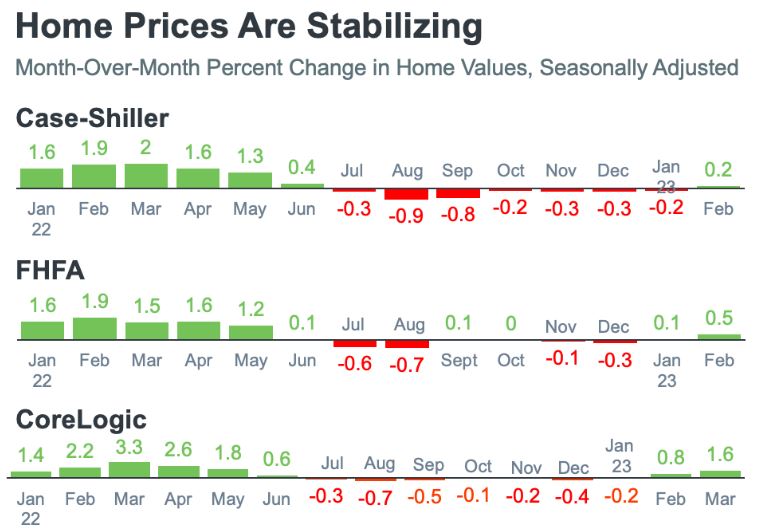
Based on recent reports from three reputable sources, the graphs show that the most severe home price declines are now in the rearview mirror, and prices nationwide are slowly but surely heading upward.

The housing market in the past year can be divided into two parts, as revealed by a more detailed monthly view. In the first half of 2022, home prices rose steadily and reached their peak in June. However, they began to decline in July and started stabilizing around August or September. Recent data for early 2023 indicates a rebound in momentum, with prices picking up as we head into the busier spring season. Despite the fluctuations, all three reports show that prices have stabilized, which bodes well for the housing market. This suggests that a national shift is taking place and prices are starting to tick back up, although it's still too early to draw conclusions based on one to two months of data.

According to Andy Walden, Vice President of Enterprise Research at Black Knight, home prices have rapidly reversed course in only five months. From declining in 92% of major U.S. markets on a seasonally adjusted month-over-month basis in October 2022, to rising in 92% of markets in February 2023.

The positive turn in prices can be attributed to the limited availability of homes for sale. As Selma Hepp, Chief Economist at CoreLogic suggests, the lack of inventory in this housing cycle is causing prices to rebound. The monthly gains in home prices in many large metros indicate a turning point in the market.

Here’s What This Means for You

Sellers: Are you ready to sell your house but are worried about home prices impacting its value? Don't hold back any longer! Recent data suggests the tables have turned in your favor, so go ahead and make your move happen.

Buyers: If you have been holding off on purchasing due to the fear of decreasing home values, now is the time to act. The market is on an upward trend and buying now means you can get in before prices rise even higher. Plus, owning a home is an asset that typically increases in value over time, so don't miss out on this chance to invest in your future.

June 9, 2023

Why Real Estate Continues to be Regarded as the Optimal Long-Term Investment

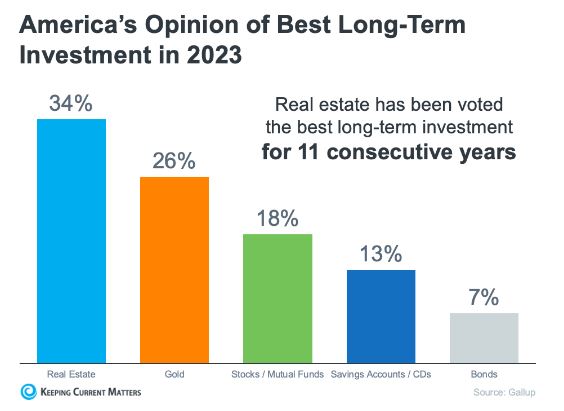
Are you concerned about the headlines on fluctuating home prices and rising mortgage rates? Wondering if homeownership is still a wise financial move? The results from a recent Gallup poll offer an emphatic response: Invest in real estate! For the 11th consecutive year, real estate came out on top as the most preferred long-term investment, consistently outpacing gold, stocks, and bonds. Get a clearer picture from the graph below.

Thinking about buying a home? Take comfort in this poll that proves Americans still see homeownership as a smart financial move, despite current events.

Understanding the Ongoing Optimism of Americans Regarding Home Investments

Buying real estate in America has always been a great way to build long-term wealth. According to Lawrence Yun, the Chief Economist at the National Association of Realtors (NAR), owning a home is an excellent catalyst to grow your net worth. In fact, a monthly mortgage payment can work as a kind of "forced savings account," leading to a net worth growing 40 times higher than that of renters from all walks of life.

As property values increase and you chip away at your mortgage, your net worth can increase considerably. To maximize your wealth-building potential, it is best to start as early as possible. If you keep renting instead of buying, you will miss out on the chance to build home equity with every monthly payment.

Deciding to buy a home can be life changing. With real estate being considered the best long-term investment, it is no surprise that many individuals opt for this path. Ready to embark on your journey to become a homeowner? Connect with Scott and the Smolen Team - they will guide you every step of the way!