Scott Smolen Maryland real estate blog with market updates, community spotlights, and home buying tips

Maryland Real Estate Blog

Scott Smolen's Anne Arundel County and Bowie, Md. Real Estate Blog

Local real estate updates, market insights, community spotlights, and practical home buying and selling advice for Odenton, Gambrills, Crofton, Bowie, Piney Orchard, Two Rivers, and the surrounding Maryland real estate market.

Latest Market Trends

Stay current on mortgage rates, local inventory shifts, pricing trends, and buyer demand across the Maryland real estate market.

Home Selling Advice

Learn how to prepare, price, market, and negotiate when selling a home in today’s local market.

Home Buying Tips

Get practical guidance on affordability, inspections, offers, financing, and buying with confidence.

Community Spotlights

Explore local neighborhoods, market reports, lifestyle features, and community insights throughout the area.

April 17, 2024

Decoding the Timeline of Mortgage Pre-Approvals: How Long Do They Last?

When it comes to purchasing a home, obtaining a mortgage pre-approval is a crucial step in the process. This pre-approval not only gives you a clear understanding of your budget but also establishes you as a serious contender in the eyes of sellers. However, it's essential to be aware of the validity period of a mortgage pre-approval and the factors that can influence its duration. In this article, we will delve into the details of mortgage pre-approvals, their typical timelines, and key considerations to keep in mind.

What is a mortgage pre-approval?

A mortgage pre-approval is an evaluation by a lender to determine the amount they are willing to lend you for a home purchase. Unlike a prequalification, which is a preliminary assessment, a pre-approval involves a comprehensive review of your income, credit history, assets, and debts. This process demonstrates to sellers that you are a serious buyer, adding weight to your offers and enhancing your position in the home buying process.

Pro tip: "Before you start your home search, it's crucial to determine your affordability. A loan officer can provide comprehensive guidance in advance, helping you make informed decisions throughout the home buying journey." - Vision Home Mortgage

How long does a mortgage pre-approval last?

On average, a mortgage pre-approval typically remains valid for about 60 to 90 days. However, the specific duration can vary based on factors such as the lender's policies and your individual financial circumstances. It's important to remember that a pre-approval doesn't guarantee final loan approval and maintaining a stable financial situation during the pre-approval period is vital.

Factors influencing the validity of a pre-approval

Changes in your financial situation: Major changes in your financial circumstances, such as job loss, significant debt increase, or a decrease in income, can impact the validity of your pre-approval. Promptly informing your lender about any such changes is crucial to avoid potential issues or delays in the home buying process.

Expiration and renewal: The typical validity of a mortgage pre-approval is around 60 to 90 days. If your pre-approval expires before finding a home or making an offer, you'll need to renew the pre-approval process with updated financial information. This usually involves submitting updated documentation and undergoing a new credit check. Market conditions and interest rates: Fluctuations in the housing market and mortgage interest rates can influence the duration of your pre-approval. If interest rates experience significant changes during your pre-approval period, your lender may require additional steps or a reevaluation before finalizing your loan.

Benefits of obtaining a pre-approval

Clear understanding of your budget and affordability: A pre-approval provides you with a precise idea of the price range you can afford, allowing you to focus your home search on properties within your budget.

Increased credibility and negotiating power: A pre-approval demonstrates to sellers that you are a serious and credible buyer, having already undergone vetting by a lender. This can boost your negotiating power and give you an advantage in competitive markets.

Quick response to opportunities: With a pre-approval in hand, you can act swiftly when you find the right home, reducing the risk of losing out to other buyers. Sellers often prioritize buyers with pre-approvals, as they are more likely to secure financing. A final note on mortgage pre-approvals Understanding the timeline of a mortgage pre-approval is crucial for homebuyers. Pre-approvals usually last for 60 to 90 days, but this can vary depending on the lender and your personal situation.

It's important to note that any changes in your financial circumstances or credit history during this time can impact the validity of your pre-approval. To ensure a successful home buying journey, it's best to stay proactive, keep in touch with your lender, and promptly provide any necessary documentation.

 

April 15, 2024

Why Today’s Seller’s Market Spells Profit for You

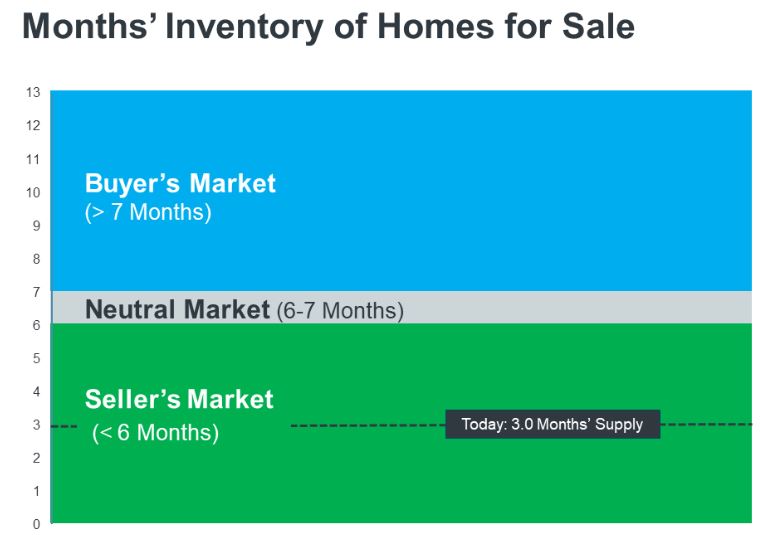
Considering listing your home but unsure about the timing? Let's delve into it. Despite a slight increase in available homes for sale this year, there's still a significant shortage to meet eager buyer demands.

So, what's the takeaway for you? It means we're still in a seller's market. Here's the breakdown:

- In a neutral market, supply and demand are balanced, keeping home prices steady.

- A buyer's market occurs when there are more homes for sale than buyers, giving buyers more negotiating power and potentially leading to price reductions. However, this scenario has been rare due to the shortage of homes.

- Conversely, in today's seller's market, with a shortage of homes, buyers face tough competition, potentially leading to bidding wars and higher sale prices.


What's the impact on you?

The market dynamics are in your favor. With the guidance of a skilled agent, your listing can attract eager buyers, resulting in multiple offers and a swift sale at a premium price. As stated in a recent article from Ramsey Solutions, "A seller’s market occurs when the demand for homes exceeds the supply of homes."

In summary, today's housing market favors sellers. Ready to sell? Contact Scott and the Smolen Team to get started on your selling journey.


April 13, 2024

Considering Tapping Into Your 401(k) for a Home Purchase?

Are you envisioning your own home and pondering how to save for a down payment? Many people find themselves in a similar situation, contemplating the possibility of using their 401(k) savings to make their dream home a reality. However, before taking the plunge into your retirement fund to buy a house, it is crucial to explore alternative avenues and seek advice from a financial expert. Here is why:

The Temptation of Numbers

Statistics reveal that numerous Americans have diligently saved substantial sums for their retirement. When you have a sizable balance in your 401(k) and your dream home is within reach, the idea of using these funds can be alluring. But it's vital to remember that dipping into your retirement savings for a home purchase may incur penalties and have long-term financial repercussions. Therefore, it's wise to thoroughly investigate all your options when it comes to saving for a down payment and securing a home. As Experian advises:

"While it's possible to utilize 401(k) funds to buy a house, the decision should take into account various factors, including tax implications, penalties, your existing savings, and your unique financial situation."

Exploring Alternatives for Home Purchase

Utilizing your 401(k) is one method to finance a home, but it's not the sole option. Before deciding, it's worthwhile to consider a couple of alternative approaches, as suggested by Experian:

1. FHA Loan: FHA loans enable eligible buyers to put down as little as 3.5% of the home's price, contingent on their credit scores.

2. Down Payment Assistance Programs: Numerous national and local programs are available to assist first-time and repeat homebuyers in securing the necessary down payment.

Above All, Craft a Thoughtful Plan

Regardless of the path you choose for acquiring a home, it's imperative to consult with a financial expert before taking any action. Collaborating with a team of professionals to formulate a well-defined plan before embarking on your homeownership journey is the key to success. Kelly Palmer, Founder of The Wealthy Parent, emphasizes:

"I have observed parents temporarily halting their retirement plan contributions in favor of affording a larger home, often with the intention of refinancing in the future... As long as there is a tangible plan in place to resume saving for their retirement goals, I encourage families to explore all available options."

In Conclusion

If you are still contemplating using your 401(k) for a home down payment, it is essential to thoroughly explore all possibilities and seek guidance from a financial expert before making any decisions. And as always, don't hesitate to reach out to Scott and the Smolen Team with any questions!


Posted in Mortgage Tips
April 11, 2024

The Remarkable Surge in Homeowner Net Worth

If you are in the process of weighing the pros and cons of renting versus buying a home in today's real estate market, there is one crucial piece of data that might tip the scales in favor of homeownership. Every three years, the Federal Reserve Board releases the Survey of Consumer Finances (SCF), which examines the disparities in net worth between homeowners and renters. Here is the spoiler: the contrast between the two is staggering.

The average homeowner's net worth is nearly 40 times greater than that of a renter.

The Main Driver Behind the Surge in Homeowner Net Worth

In the previous iteration of this report, the typical homeowner's net worth stood at approximately $255,000, while that of the average renter was only $6,300. However, in the most recent release, the gap has widened significantly due to a remarkable increase in homeowner net worth. According to the Survey of Consumer Finances (SCF) report:

"…the 2019-2022 growth in median net worth was the largest three-year increase over the history of the modern SCF, more than double the next-largest one on record."

One of the primary factors responsible for the surge in homeowner net worth is home equity. In the past few years, often referred to as the 'unicorn' years for the housing market, home prices experienced a meteoric rise. This was the result of a shortage of available homes for sale, coupled with a surge in homebuyers taking advantage of historically low mortgage rates. The imbalance between supply and demand pushed home prices to new heights, causing most homeowners to witness substantial growth in their home equity. If you are currently grappling with the decision of whether to rent or buy, you may be wondering if you missed the boat on this significant boost in net worth.

However, it is essential to understand that, as noted in a recent article in The Ascent: "Whether your net worth increased in recent years or not, there are steps you can take to boost that number in the coming years… buying a home can be a great way to grow your net worth since home values have a tendency to rise over time."

Historically, home prices tend to appreciate over time. Even now, with mortgage rates hovering around 7-8%, prices are still on the rise in many parts of the country due to the ongoing disparity between supply and demand. Expert forecasts for the next few years also predict continued appreciation, albeit at a pace more in line with the typical housing market. While it may not match the extraordinary surge of the past few years, individuals who make the decision to buy a home today are likely to see their equity grow in the years to come. This means that if you're prepared and able to purchase a home now, you're making an investment that will significantly enhance your net worth over time.

In the words of Jessica Lautz, Deputy Chief Economist at the National Association of Realtors (NAR): "When deciding to rent vs. buy, one must calculate the total cost of homeownership (maintenance, utilities, commuting, etc.) and the total financial benefit. Based on new Fed data…the median net worth of homeowners was $396,200 vs. renters at $10,400. There is no question about the wealth gains that homeownership provides."

In Conclusion

If you are teetering on the fence between renting and buying a home, remember that homeownership has the potential to substantially boost your net worth over time. To learn more about this and the myriad other advantages of owning a home, don't hesitate to reach out to Scott and the Smolen Team today!


April 9, 2024

Insights into the Spring Housing Market: What Experts Are Saying

If you are gearing up for a move soon, you’re likely curious about the availability of homes, the trajectory of prices and mortgage rates, and how to navigate the current market landscape. Here is a roundup of insights from industry experts on what to expect this season:

Odeta Kushi, Deputy Chief Economist at First American, notes, “It seems our general expectation for the spring is that we will see a pickup in inventory. In fact, that already seems to be happening. But it won’t necessarily be enough to satiate demand.”

Lisa Sturtevant, Chief Economist at Bright MLS, emphasizes, “There is still strong demand, as the large millennial population remains in the prime first-time homebuying range.”

Danielle Hale, Chief Economist at Realtor.com, highlights, “Where we are right now is the best of both worlds. Price increases are slowing, which is good for buyers, and prices are still relatively high, which is good for sellers.”

Skylar Olsen, Chief Economist at Zillow, observes, “There are slightly more homes for sale than this time last year, and there is still plenty of competition for well-priced houses. Buyers should prep their credit scores and sellers should prep their properties now, attractive listings are going pending in less than a month, and time on market will shrink in the weeks ahead.”

Jiayi Xu, Economist at Realtor.com, adds, “While mortgage rates remain elevated, home shoppers who are looking to buy this spring could find more affordable homes on the market than they saw at the same time last year. Specifically, there were 20.6% more homes available for sale ranging between $200,000 and $350,000 in February 2024 than a year ago, surpassing growth in other price ranges.”

For Sellers:

This spring presents an opportune moment to sell, given the limited inventory currently available. While there’s a gradual increase in listings, it’s still insufficient to meet the robust demand from buyers, contributing to swift sales.

For Buyers:

The expanding inventory of homes for sale this spring offers you a broader selection compared to last year. However, expect stiff competition with other buyers and be prepared to act swiftly to secure your desired property.

Bottom Line:

Whether you are planning to buy or sell, partnering with Scott and the Smolen Team ensures you navigate the bustling spring housing market with confidence.


April 7, 2024

Exploring Mortgage Rate Updates: What You Need to Know

Exploring Mortgage Rate Updates: What You Need to Know

You might be curious about the current trajectory of mortgage rates, given recent buzz. There was anticipation of rate cuts this year, potentially lowering mortgage rates, stemming from discussions surrounding the Federal Reserve's (the Fed) actions on their Fed Funds Rate. While adjustments to the Fed Funds Rate don't directly dictate mortgage rates, they can exert influence. However, during the Fed's recent meeting, there was no immediate rate cut.

The Fed's decision is influenced by various intricate factors, though you don't necessarily need to delve into those complexities. What you're likely seeking is a straightforward answer: does this mean mortgage rates won't decrease? Here's the scoop:

Anticipated Mortgage Rate Decline

Even though rate cuts haven't materialized yet, it doesn't mean they won't. Jerome Powell, the Fed's Chairman, indicated that cuts are still on the agenda for this year, contingent upon inflation trends:

"We believe that our policy rate is likely at its peak for this tightening cycle and that, if the economy evolves broadly as expected, it will likely be appropriate to begin dialing back policy restraint at some point this year."

Historically, when the Fed adjusts rates downward, mortgage rates tend to follow suit. So, there's still optimism. According to a recent article from Business Insider:

"As inflation comes down and the Fed is able to start lowering rates, mortgage rates should go down, too..."

Implications for You

However, waiting indefinitely may not be the best strategy. Predicting mortgage rates is notoriously challenging due to numerous variables that can shift with the economy. This is why experts suggest a pragmatic approach. As Mark Fleming, Chief Economist at First American, advises:

"Well, mortgage rate projections are just that, projections, not promises, and don’t forget how hard it is to forecast them... So my advice is to never try to time the market... If one is financially prepared and buying a home aligns with your lifestyle goals, then it could be the right time to purchase. And there’s always the refinance option if mortgage rates are lower in the future."

In essence, if you're contemplating a move and attempting to predict market movements, it might be futile. If you're ready, willing, and able to proceed with a purchase, now could still be an opportune time, particularly if you've found your dream home.

In Conclusion

For those considering a home purchase, reaching out to Scott and the Smolen Team can ensure you're kept informed about mortgage rate fluctuations, aiding you in making informed decisions.


April 5, 2024

Guide to Buying a House with Low or Bad Credit

Purchasing a house is an exciting journey, but it can be daunting, especially if you have a low credit score. Many individuals dream of transitioning from renting to becoming first-time homebuyers, but they may feel discouraged by their credit situation. However, the good news is that buying a house with bad credit is possible. In this guide, we'll explore what constitutes low credit, the types of home loans available for individuals with bad credit, and the essential steps to take when buying a home with low credit.


Understanding Low Credit Scores

Mortgage lenders and the Federal Housing Administration (FHA) consider credit scores within a specific range when assessing home mortgage loans. A credit score between 580 and 669 is categorized as "fair," indicating a higher risk for lenders. Scores below 579 are considered "bad credit," which can make finding a home loan more challenging but not impossible.


Steps to Improve Your Credit Score

To improve your credit score if it falls below 580, consider these financial habits:

1. Improve Payment History: Regular and on-time payments on your debts demonstrate responsible financial behavior and help boost your credit history and score.

2. Reduce Overall Debt: Lowering your debt-to-income ratio by paying down outstanding balances will improve your credit utilization and overall credit score.

3. Check for Errors: Review your credit report for any inaccuracies that may be affecting your score and dispute them if necessary.

4. Remove Yourself from Co-Borrowing Accounts: Detach yourself from any co-borrower or authorized user accounts that may negatively impact your credit score.


Cost Implications of Low Credit Scores

A lower credit score represents a higher risk for lenders, leading to higher interest rates for home loans. Borrowers with higher credit scores are seen as lower risk and are offered more favorable interest rates. As a result, buying a house with low credit may result in tens of thousands of dollars in additional mortgage payments over the loan's term. Additionally, individuals with lower credit scores often need to make a larger down payment.


Tips to Improve Mortgage Approval Chances

To increase your chances of mortgage approval with low credit, consider the following steps:

1. Get Pre-Approved: Obtaining a mortgage pre-approval will give you a clear picture of your affordability and enable you to make swift offers on houses.

2. Increase Your Down Payment: A larger down payment reduces the lender's risk and improves your loan-to-value ratio (LTV).

3. Avoid New Credit Applications: Applying for new credit during the home-buying process may raise red flags for lenders.

4. Verify Your Income: Provide complete and up-to-date records of your income to help lenders verify your financial stability.

5. Register to Vote: Being registered to vote can help lenders verify your identity and residence, which may affect mortgage approval.


Home Loan Programs for Buyers with Low Credit

Various loan programs cater to individuals with low credit scores, including:

1. FHA Loans: FHA-backed loans enable borrowers with credit scores above 580 to qualify with a down payment as low as 3.5%.

2. VA Loans: Available to military veterans with a minimum credit score of 620, offering benefits such as no down payment and lower interest rates.

3. USDA Loans: Designed for lower-income homebuyers in rural areas, with a minimum credit score requirement of 620.

4. Freddie Mac Home Possible Loans: Intended for low to moderate-income borrowers with a credit score minimum of 660, allowing a 3% down payment.

5. Fannie Mae HomeReady Loans: Available to low to moderate-income borrowers with a credit score minimum of 620 and additional income flexibility.


Is It Necessary to Improve Your Credit Score Before Buying?

Improving your credit score can save you money in the long run when buying a home. However, if the housing market is favorable and property values are expected to appreciate, buying a house with low credit may still be a viable option. Prioritize raising your credit score if you're unable to meet the minimum requirements for mortgage approval but explore available financing options to make your homeownership dreams a reality.


In conclusion, do not let your credit score deter you from homeownership. With proper knowledge and utilizing available resources, you can navigate the process of buying a house with low credit and achieve your dream of owning a home. Reach out to Scott and the Smolen Team today for recommendations and to get started on your homebuying journey!


April 3, 2024

Decoding Home Insurance Deductibles: What You Need to Know

Understanding the ins and outs of home insurance is crucial for homeowners looking to safeguard their property and belongings. One key element is the home insurance deductible, a concept often overlooked but essential in determining how much you will pay out of pocket before your insurance provider kicks in. In this guide, we delve into the intricacies of home insurance deductibles, exploring their types, how to choose the right one, and their role in natural disaster coverage.


What is a Home Insurance Deductible?

A home insurance deductible is the amount you must personally cover before your insurance company contributes to the repair costs resulting from a covered loss, such as fire or windstorm damage. Unlike your insurance premium, which is the regular fee to maintain coverage, the deductible is a one-time payment made when filing an approved claim. Generally, opting for a higher deductible lowers your premium, but it also means you will shoulder a larger upfront cost for a covered claim.


Types of Homeowners Insurance Deductibles:

Two primary types of homeowners insurance deductibles exist, each defined within the policy:

1. Dollar-Amount Deductible: This specifies a fixed dollar amount you must pay out of pocket in the event of a claim. For instance, with a $1,000 deductible, you cover this amount, and the insurance company handles the remaining costs.

2. Percentage-Based Deductible: This sets a percentage of your home's insured value as the deductible. If, for example, your dwelling coverage is $150,000 and your policy mandates a 2 percent deductible, you'd pay $3,000 in the event of a claim. Additionally, policies may include multiple deductibles, such as a dollar-amount deductible for general claims and a percentage-based deductible for specific events like hurricanes. Understanding these nuances is crucial for effective coverage.


Choosing a Homeowners Insurance Deductible:

Selecting an appropriate deductible involves evaluating your financial situation and risk tolerance. Key considerations include:

a. Affordability: Assess how much you can comfortably pay out of pocket for a covered claim. Balance this against your existing budget, factoring in both your premium and potential deductible costs.

b. Risk Tolerance: Your deductible choice reflects your willingness to risk a larger out-of-pocket expense for a lower monthly premium. A higher deductible reduces monthly costs but may result in a significant one-time payment if a claim arises.

c. Insurance Company Policies: Different insurers offer varying deductible options, and understanding their processes for claim payments is vital. Clarify whether deductibles are paid directly to contractors or upfront before the insurance company issues payment.

d. Cost-Benefit Analysis: Evaluate the cost difference associated with changing your deductible amount. Lowering your deductible increases your premium, and vice versa. Obtain home insurance quotes based on different deductibles to find the optimal balance between lower premiums and manageable deductibles.


How Deductibles Work with Natural Disasters:

Natural disasters pose unique challenges, necessitating a clear understanding of how deductibles function in such scenarios. Most standard homeowner’s insurance policies cover common disasters like wildfires, windstorms, lightning, and snow. However, flood and earthquake coverage typically require separate policies or endorsements. For covered disasters, your deductible operates similarly to any other damage scenario. You file a claim, pay the deductible specified in your policy, and the insurance company covers the remaining repair costs. Deductibles for earthquake and flood insurance are often percentage-based, with higher percentages for homes in high-risk areas. In storm-prone states, hurricane protection may involve an additional deductible, typically calculated using a percentage-based formula. It is essential to check your policy for coverage details and eligibility criteria for disaster assistance.


In Conclusion:

Home insurance deductibles play a crucial role in managing the financial aspects of homeownership. By understanding the types of deductibles, factors influencing their selection, and their implications during natural disasters, homeowners can make informed decisions to protect their homes and finances effectively. When in doubt, consult your insurance agent for personalized guidance tailored to your specific needs and circumstances.


April 1, 2024

Navigating the Housing Market as a Millennial: Challenges and Insights

The millennial generation, the largest demographic cohort in the U.S., has long been anticipated to reshape the housing market. However, their impact has yet to fully materialize. Despite their strong desire for homeownership, many millennials find themselves grappling with various obstacles on the path to becoming homeowners. Millennials value homeownership, with two-thirds of them considering it a central part of the American dream, according to Bankrate's 2023 Financial Security survey. However, the road to homeownership is filled with hurdles. High home prices, elevated mortgage rates, low housing inventory, and surging inflation have combined to create an affordability crisis, making homeownership an elusive dream for many in this generation. Here is a closer look at millennials' statistics and behaviors related to home buying.


Millennials in the Housing Market

• According to the National Association of Realtors (NAR), 70% of younger millennials and 46% of older millennials are first-time homebuyers, constituting 26% of all homebuyers.

• In 2022, millennials fell behind baby boomers as the largest generation of homebuyers, with a 28% share, compared to 39% for baby boomers.

• Over half of millennials are willing to pay the full asking price or up to 10% more when buying a home, according to NAR.

• Personal affordability issues hinder 78% of aspiring millennial homeowners, while 59% are held back by the current housing market and economic conditions, as per Bankrate's April 2023 Financial Security Poll.

• Despite these challenges, 66% of millennials consider homeownership a key element of the American dream.

• Among those who have managed to become homeowners, 44% express no regrets about their purchase.


Adapting to the Changing Housing Market

Millennials, born between the early 1980s and mid-1990s, have entered the real estate market at a different pace compared to previous generations. They tend to purchase their first homes later in life due to factors like significant student debt and the lasting impact of the Great Recession on their career prospects. Despite representing the largest share of buyers in the National Association of Realtors' reports for eight years, millennials have recently been overtaken by baby boomers as the most active generation of homebuyers. This shift can be attributed to a combination of factors, including soaring home prices, limited inventory, and rising mortgage rates. Many millennials find themselves financially unprepared for homeownership. Bankrate's survey revealed that more than half of older millennials cited their inability to afford the down payment and closing costs as the primary reason for not purchasing a home. Younger millennials faced a range of affordability challenges, from insufficient income to high home prices. Additionally, millennials tend to reach life milestones later, such as getting married and starting families, contributing to the delayed entry into homeownership. The typical first-time homebuyer's age has risen to 36 in 2022, reflecting a changing trend.


Sacrifices for Affordable Housing

Millennials are willing to make compromises to find affordable housing, dispelling stereotypes of entitlement. They are open to various sacrifices, including buying fixer-uppers, relocating to different states, downsizing their living spaces, taking on roommates, and moving farther from family and friends. Home Renovations and Millennials Millennials, despite their limited budgets and lower homeownership rates, have shown an increasing interest in home renovations. Social media has played a role in this trend, as millennials seek inspiration, ideas, and share their renovation projects. Automation, security enhancements, and home office upgrades are top priorities for millennials when it comes to home improvements. To fund these renovations, most millennials use cash from savings, with a notable 35% resorting to credit cards, more than older generations. Using credit cards is a risk given the high interest rates, while options like home equity lines of credit (HELOCs) or home equity loans offer lower rates and potential tax benefits.


Tips for Millennial Homebuyers

If you are a millennial looking to become a homeowner, consider the following tips:

1. Contact Scott and the Smolen Team, who will be there for you to address your concerns and consider your housing needs.

2. Utilize technology to access home listings, take virtual tours, and find mortgage options.

3. Shop around with multiple mortgage lenders to secure the best deal.

4. Create a budget and stick to it to avoid overextending yourself financially.

5. Be prepared for ongoing expenses and maintain an emergency fund. 6. Explore strategic financing options for home renovations, such as HELOCs or home equity loans.

In a changing housing market, millennials face unique challenges but are also making strategic choices to achieve their homeownership dreams. By following these tips and adapting to the evolving landscape, they can successfully navigate the path to homeownership.


March 30, 2024

Deciding on a Townhouse: Weighing the Pros, Cons, and Key Considerations Before Purchase

Choosing the perfect place to live is a significant decision and selecting the right type of housing plays a vital role in this process. With a myriad of options available, such as apartments, detached homes, and townhouses, determining which one suits you best can be quite a challenge. In this article, we will delve into the advantages and disadvantages of buying a townhouse compared to other housing types. We will explore essential factors to consider before making your decision and provide some useful tips for those contemplating a townhouse purchase. Whether you are a first-time homebuyer or downsizing, this guide aims to offer valuable insights to help you make a well-informed choice.


What Exactly is a Townhouse?

A townhouse is a type of dwelling characterized by its narrow and tall structure. It's typically attached to one or more similar houses, forming a row or terrace of residences. You can find townhouses in both urban and suburban areas, often conveniently situated near commercial and entertainment districts. Townhouses are a popular choice for those seeking the privacy and independence of a single-family home while enjoying the benefits of living in a community. They are usually more affordable than standalone houses and offer a lower maintenance lifestyle. Additionally, townhouses are designed to maximize space, making them an attractive option for those desiring more living area than an apartment but without the upkeep of a single-family home. Most townhouses feature multiple levels, often spanning two or three stories, and may include a small yard or patio. Typically, the ground floor houses the living room, dining area, and kitchen, while bedrooms and bathrooms are located on the upper floors. Some townhouses may have a basement or garage, providing extra living space or storage. Many townhouse communities are managed by homeowners' associations (HOAs), where residents pay a fee to cover maintenance, landscaping, and shared amenities. HOA fees might also include services like trash and snow removal. Moreover, townhouses are often strategically located near shopping, dining, and entertainment establishments.


Pros of Townhouses:

1. Affordability: Townhouses are usually more budget-friendly than single-family homes, making them a cost-effective option, especially for first-time homebuyers.

2. Space: Compared to apartments, townhouses typically offer more living space and a sense of privacy, often spanning multiple floors.

3. Community: Townhouse communities often foster a strong sense of community through shared outdoor spaces, amenities, and social events.

4. Low Maintenance: HOAs take care of exterior maintenance and common areas, relieving homeowners of many maintenance responsibilities.

5. Security: Many townhouse communities feature security measures like gated entrances and surveillance cameras, providing added safety to residents.


Factors to Consider Before Buying a Townhouse:

1. Location: Consider proximity to essential facilities like schools, shopping centers, hospitals, and public transport when choosing a townhouse location.

2. Homeowners Association (HOA): Understand the HOA fees and regulations, ensuring they align with your budget and lifestyle preferences.

3. Floor Plan: Ensure the layout and size of the townhouse suit your needs and preferences, particularly if you prefer open floor plans.

4. Amenities: Check if the townhouse offers the amenities you desire, such as a pool, gym, or clubhouse.

5. Renovation and Maintenance: Consider potential repair and renovation needs and inquire about any restrictions on modifications.

6. Affordability: Factor in costs like closing costs, property taxes, and insurance to determine if the townhouse fits your budget.

7. Home Inspection: Conduct a thorough home inspection to identify any underlying issues with the property before making a purchase.

8. Future Plans: Ensure the townhouse aligns with your long-term plans, considering factors like family expansion or relocation.

9. Security: Confirm the security measures implemented in the townhouse community, such as cameras, fencing, and security personnel.

10. Financing Options: Explore available financing options from lenders to choose the one that best suits your financial goals.


Helpful Tips Before Buying a Townhouse:

1. Know Your Budget: Determine your budget beforehand to avoid falling in love with a townhouse outside your financial means.

2. Location Matters: Choose a townhouse near public transportation, schools, shopping centers, and other necessary amenities.

3. Understand HOA Fees: If the townhouse is part of an HOA, ensure you grasp the fees and what they cover, such as exterior maintenance.

4. Reserve Funds: Inquire about the HOA's reserve fund to ensure they can cover unexpected repairs and maintenance.

5. Check Noise Levels: Visit the townhouse at different times of the day to assess noise levels, especially if it's located near busy streets.

6. Get Homeowners Insurance: Protect your investment with homeowners insurance, comparing rates and coverage options.

7. Consider Parking: Check for available parking options, whether it is a garage, designated spot, or street parking.

8. Future Development: Research any future development plans in the area, as they could impact property values and quality of life.

9. Resale Value: Keep resale value in mind when choosing a townhouse, looking for desirable locations and good amenities.


When it comes to finding your dream home, selecting the right housing type is key. If you want the best of both worlds - the freedom of a single-family home and the perks of a close-knit community - then a townhouse might be the perfect choice for you. Just remember to weigh important factors such as location, HOA rules, and your plans before you decide. By taking these factors into account and following some handy tips, you can boost your chances of finding the ideal townhouse that suits your budget and lifestyle. Call Scott and the Smolen Team today to find your dream townhouse!