Scott Smolen Maryland real estate blog with market updates, community spotlights, and home buying tips

Maryland Real Estate Blog

Scott Smolen's Anne Arundel County and Bowie, Md. Real Estate Blog

Local real estate updates, market insights, community spotlights, and practical home buying and selling advice for Odenton, Gambrills, Crofton, Bowie, Piney Orchard, Two Rivers, and the surrounding Maryland real estate market.

Latest Market Trends

Stay current on mortgage rates, local inventory shifts, pricing trends, and buyer demand across the Maryland real estate market.

Home Selling Advice

Learn how to prepare, price, market, and negotiate when selling a home in today’s local market.

Home Buying Tips

Get practical guidance on affordability, inspections, offers, financing, and buying with confidence.

Community Spotlights

Explore local neighborhoods, market reports, lifestyle features, and community insights throughout the area.

Aug. 15, 2024

Selling Your Parents’ Home After They Pass Away: Dispensing Personal Property

Once you have addressed the legal and financial matters related to selling your parents' home, the next step is sorting through and distributing their personal belongings before listing the property for sale. This process is more complex than a typical decluttering because it involves honoring their wishes and managing sentimental items.

Distribute What’s Owed to Heirs

Your first priority should be distributing any personal property your parents bequeathed to specific heirs. If you are the personal representative or executor, you are re responsible for ensuring that your parents’ will is carried out according to their wishes. This might mean delivering your sister the 1940s china cabinet or ensuring your uncle receives your grandfather’s watch.

In some cases, the probate court may require you to inventory all your parents’ property before you can distribute anything. Each state has different laws regarding this process, so it is important to check with a probate attorney to ensure you are following the correct procedures. If there is no named executor, the heirs must come together to decide how to distribute personal property. Disputes may arise if multiple heirs desire the same item, and if you cannot resolve the conflict, a mediator might be necessary to settle the matter.

Clear Out the House with an Estate Sale

After distributing cherished or valuable items, you will likely still have a house filled with belongings. This is where many families hit a wall and feel overwhelmed by the sheer amount of stuff left behind. Instead of tossing everything out, you might want to consider hosting an estate sale. An estate sale can help you clear out the remaining belongings while also earning extra cash.

“Instead of throwing out items that none of the heirs want, an estate sale can be a good option to make money from unclaimed personal property,” advises Ryan McKee, a real estate agent specializing in probate home sales. Estate sale companies can organize and run the sale for you, although their fees typically come out of the estate’s proceeds. If you are worried about upfront costs, many estate sale companies will work through the escrow process, deducting their fees from the home’s final sale.

Estate sales can also be helpful if disputes arise between heirs over who gets what. By putting items up for auction, the highest bid wins, which can simplify decision-making and reduce tension.

In Conclusion

Dispensing your parents’ personal property is a crucial step in preparing their home for sale, and it requires sensitivity, careful planning, and sometimes outside assistance. Whether you are dividing assets among heirs or clearing out the house through an estate sale, it’s important to take your time and stay organized. When you are ready to start the process of selling your parents' home, reach out to Scott and the Smolen Team for expert guidance and support. We are here to help you navigate the challenges of selling inherited property with care and professionalism.


 

Aug. 13, 2024

Understanding the Difference Between Home Inspections and Appraisals

When buying your first home, you may encounter terms and conditions you're unfamiliar with. While you might have a general idea of what an inspection is, you might not be clear on why it's necessary or how it differs from an appraisal. Here’s a simple explanation of each and what they mean for you as a homebuyer.

Home Inspection

Once you’re under contract on a home, getting an inspection is a crucial step. An inspection provides a clear understanding of the safety and overall condition of the home, which is essential for such a significant transaction. As a recent Realtor.com article explains:

“A home inspection is something that protects your financial interest in what will likely be the largest purchase you make in your life—one in which you need as much information as possible.”

If any issues arise during the inspection, such as the age of the roof or the condition of the HVAC system, you have the option to discuss and negotiate potential repairs with the seller before finalizing the transaction. You won't have to handle this alone; your real estate agent will advocate for you and negotiate with the seller on your behalf.

Home Appraisal

While an inspection assesses the current state of the house, an appraisal determines its value. Bankrate explains:

“When buying or selling a home, an appraisal verifies that the sale price of the home is in line with fair market value. This ensures the homebuyer doesn’t pay more than the home is worth, and the mortgage lender doesn’t lend more than it is worth.”

Regardless of what you're willing to pay for a house, if you’re using a mortgage to fund your purchase, the appraisal protects you from overpaying and safeguards the bank from lending more than the home’s worth. If there's any confusion or discrepancy between the appraisal and the agreed-upon price in your contract, your real estate professional will help you navigate additional negotiations to close the gap.

Bottom Line

The inspection and the appraisal are distinct but equally important steps when buying a home. You don’t need to manage them on your own. Connect with Scott and the Smolen Team to get expert guidance from start to finish.


Aug. 10, 2024

A Guide to Home Equity Loans and HELOCs

Securing a home equity loan or a home equity line of credit (HELOC) can be a strategic move to finance significant projects or expenses, using your home as collateral. Often dubbed "second mortgages," these financial instruments operate similarly to a mortgage but involve distinct closing costs. In this article, we explore the typical closing costs associated with home equity loans and HELOCs and offer insights on minimizing these expenses.

Do Home Equity Loans Have Closing Costs?

Applying for a home equity loan or HELOC mirrors the mortgage application process. While the average closing costs for these financial products can range from 2–5% of the total loan amount, they are often around 1%. This reduced cost is attributed to borrowing smaller amounts and the absence or reduction of certain fees. It's essential, however, to consider these fees when assessing the overall cost of the loan or line of credit.

Home Equity Loan Closing Costs and Fees:

To gauge the potential closing costs of a home equity loan, let's break down the common charges:

1. Origination fees: 0.5–1% of the loan amount

2. Appraisal fees: $300–$450

3. Credit report fee: $10–$100

4. Legal fees: Flat hourly rate or percentage of the overall loan

5. Filing/notary fees: $20–$100

6. Title insurance costs: $0–$3,500

7. Title search fee: $100–$450

Reducing Home Equity Loan Closing Costs:

To minimize or eliminate closing costs, consider the following strategies:

1. Improve your financial profile to secure better interest rates.

2. Check with your current financial institution, as they may offer fee waivers or discounts.

3. Shop around and compare closing costs among different lenders.

4. Negotiate with lenders, as closing fees can be flexible.

5. Explore no-closing-cost options, understanding that the trade-off might be a slightly higher interest rate.

HELOC Closing Costs and Fees:

Unlike a home equity loan, a HELOC operates as a revolving line of credit. While they generally have fewer closing costs, there are still fees to consider:

1. Annual fee: $5–$250

2. Early cancellation fee: Percentage of the loan amount or a flat fee

3. Transaction fee: Nominal amount

4. Inactivity fee: $5–$50

5. Early termination fee: $0–$450

Are Home Equity Loan Closing Costs Tax-Deductible?

Unfortunately, closing costs themselves are not tax-deductible. However, the interest paid on the home equity loan may be deductible depending on the loan's purpose.

In conclusion, both home equity loans and HELOCs come with closing costs, though HELOCs generally incur fewer expenses. To determine the right option for you, it’s best for you to talk to your lender and weigh your options. Whether opting for a traditional loan or a no-closing-cost option, understanding the nuances of closing costs is crucial before making a financial commitment.


Posted in Mortgage Tips
Aug. 7, 2024

Are Home Prices Going To Come Down?

Are Home Prices Going To Come Down?

Today's headlines about home prices can be confusing, making it tough to know what is really happening. Some predict a correction, but what does that mean for the housing market? Danielle Hale, Chief Economist at Realtor.com, explains:

“In stock market terms, a correction is generally referred to as a 10 to 20% drop in prices. We don’t have the same established definitions in the housing market.”

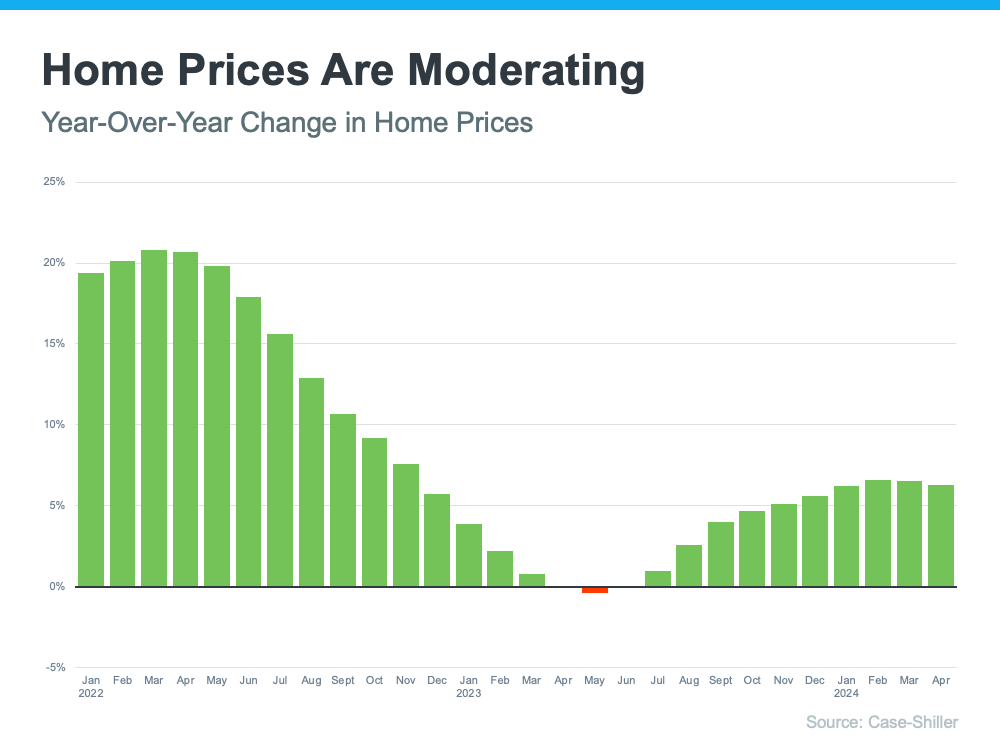
In today's context, a correction does not mean dramatic price drops. It means prices, which have been rising rapidly, are starting to grow at a slower pace. While prices vary by local market, a significant national drop is not happening.

The Real Estate Market Is Normalizing

From 2020 to 2022, home prices skyrocketed due to high demand, low interest rates, and limited inventory. That rapid growth could not last forever.

Now, price growth is slowing, signaling market normalization. Recent Case-Shiller data shows prices are still rising nationally, just not as quickly as before. This year's price growth is healthier compared to the pandemic's spike.

What’s Next for Prices?

Marco Santarelli, Founder of Norada Real Estate Investments, says: “Expert forecasts lean towards a moderation in home price growth over the next five years. This translates to a slower and more sustainable pace of appreciation compared to the breakneck speed witnessed in recent years, rather than a freefall in prices.”

Supply and demand are key. Increased inventory and limited buyer demand, due to higher mortgage rates, will continue to ease upward pressure on prices.

What This Means for You

If you are thinking about buying a home, slower price growth is good news. The pandemic's skyrocketing prices left many potential buyers feeling priced out. Slowing gains make buying more manageable. Odeta Kushi, Deputy Chief Economist at First American, says:

“While housing affordability is low for potential first-time home buyers, slowing price appreciation and lower mortgage rates could help — so the dream of homeownership isn’t boarded up just yet.”

Bottom Line

Nationally, home prices are not going down, and experts predict moderate growth moving forward. Prices vary by local market, so it is important to consult with a trusted real estate team like Scott and the Smolen Team. If you have questions about prices in your area, reach out to them today!


Aug. 4, 2024

Unlocking Your Dream Home: Transforming Aspirations into Reality

In the current real estate landscape, higher mortgage rates and elevated home prices compared to the previous year present challenges for potential buyers. Moreover, the scarcity of available homes further compounds the hurdles faced by those aspiring to become homeowners. Despite these obstacles, there are effective ways to navigate the market and turn your dream of homeownership into a tangible reality.

Approaching your purchase strategically is crucial in this environment. Evaluating your wish list and distinguishing between essential features and optional amenities is a key step to avoid stretching your budget or limiting your options excessively while searching for the perfect home.

According to Danielle Hale, Chief Economist at Realtor.com: “The key to making a good decision in this challenging housing market is to be laser focused on what you need now and in the years ahead... Another key point is to avoid stretching your budget, as tempting as it may be…”

To identify your true needs, compile a comprehensive list of desired features and categorize them effectively.

Here's a suggested way to organize your list:

1. Must-Haves: These are non-negotiable features that align with your lifestyle, such as proximity to work or loved ones, a specific number of bedrooms or bathrooms, etc.

2. Nice-To-Haves: Features you would love to have but can live without. While not dealbreakers, they add value to a home if present, such as a second home office or a garage.

3. Dream State: This category encompasses extravagant desires. Although not essential, if a home fulfills the must-haves, most nice-to-haves, and any dream features, it becomes a top contender (e.g., a pool, multiple walk-in closets).

Refusing to consider homes without all dream features may limit your options unnecessarily. Rather than fixating on specific details like granite countertops or a backyard pool, focus on aspects that cannot be easily changed, such as location or a desired number of rooms. Non-essential features can be added or upgraded post-purchase.

Sometimes, the perfect home is the one you enhance and perfect after buying!  Once you have organized your priorities, collaborate with your real estate agent to further refine your list. They can provide valuable guidance, ensuring you stay true to your priorities, and help you find a home that meets your essential needs in your desired location.

In Conclusion:

Adapting to affordability challenges and a limited housing supply requires strategic planning to find a home that aligns with your needs and budget. Connect with Scott and the Smolen Team to navigate this process effectively and transform your homeownership dream into a reality.


Aug. 1, 2024

Property Taxes Explained: What They Are and How They're Calculated

Owning a home comes with a range of financial responsibilities, and property taxes are among them. These taxes, paid annually to state and municipal authorities, are a significant aspect of homeownership. While the median yearly property tax bill in the U.S. stands at $2,578, individual bills vary based on location and property value. Given their unavoidable nature, grasping the fundamentals of property taxes is essential, particularly when crafting a household budget post-home purchase.

So, what exactly are property taxes?

According to a report by the Urban Institute, state and local governments collected a staggering $577 billion in property taxes in 2019. These taxes contribute to funding crucial community services like emergency services, public education, parks, libraries, and infrastructure maintenance. Understanding how property taxes are calculated is key. Your state and local governments determine the formula, typically based on your property's assessed value multiplied by the tax rate. This rate, often expressed as the "millage rate," signifies the tax amount per $1,000 of property value. For instance, if your home's assessed value is $300,000 with a millage rate of 29 mills, your property tax would be $8,700.

However, it's worth noting that not all states calculate taxes based on 100% of a property's value. Factors like homestead exemptions or taxation limits may reduce the taxable value. These variations underscore the importance of understanding your local tax laws.

Paying property taxes can be done directly to local tax authorities or through monthly mortgage payments. The latter option, often preferred for its convenience, involves setting aside funds in an escrow account, managed by your mortgage lender, to cover the tax bill when due.

Tax deductions can provide relief for homeowners. The state and local tax (SALT) deduction, for instance, allows taxpayers to deduct property taxes on their federal returns. However, the Tax Cuts and Jobs Act of 2017 capped this deduction at $10,000, changing the landscape for many homeowners.

Various exemptions and programs further aim to alleviate the burden of property taxes. These include the homestead exemption, circuit breaker programs for eligible individuals, and tax deferrals for seniors and disabled homeowners.

Navigating property taxes can be complex, but resources like local tax authorities or tax professionals can provide valuable guidance on available deductions and exemptions. By understanding these nuances, homeowners can better manage their financial obligations and plan effectively for the future.


July 29, 2024

Exploring Down Payment Assistance: How It Functions and Ways to Secure It

A significant percentage of prospective homeowners believe that accumulating enough savings for a down payment is an insurmountable hurdle. However, there are numerous forms of down payment assistance available, spanning various amounts, to help bridge this gap. Let's delve into these options and understand how to qualify for them.

Understanding Down Payment Assistance (DPA) Programs

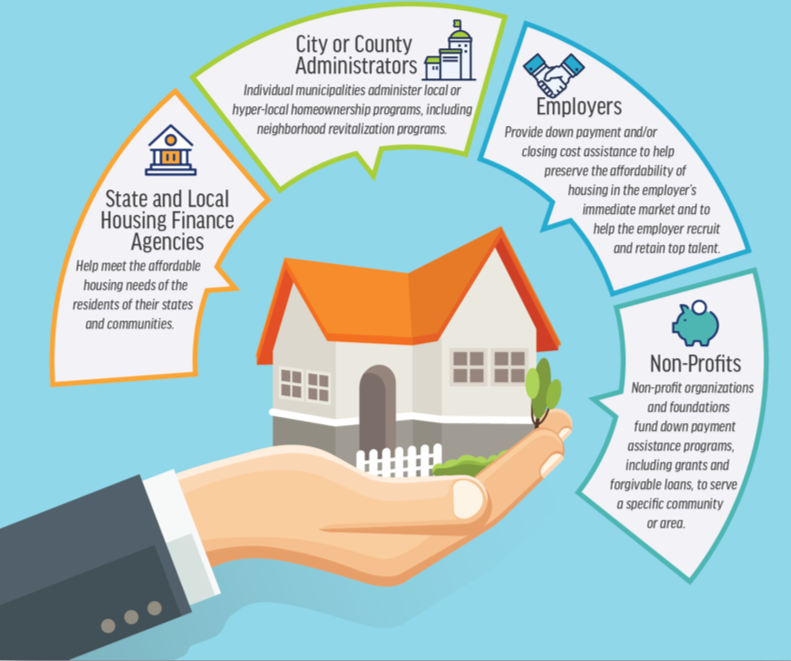
Down payment assistance (DPA) programs encompass loans and grants tailored to offer homebuyers financial support for their down payments, with some extending aid for closing costs as well. While a handful of federal programs exist, the bulk of down payment assistance originates at the local level, facilitated by state, county, and city government initiatives.

Eligibility Criteria for Down Payment Assistance

Most down payment assistance initiatives primarily target first-time homebuyers or individuals with moderate to lower incomes. Typically, first-time homebuyers are those who have never owned a home or haven't done so in the past three years. These programs typically cater to buyers seeking primary residences, excluding investment or rental properties. Eligibility often hinges on income falling below a specified threshold, known as the area median income (AMI), and residency within designated areas or professions.

Qualification typically necessitates securing a 30-year fixed-rate first mortgage, with some programs restricting the use of specific mortgage types. Moreover, creditworthiness and financial stability play a crucial role, often requiring a minimum credit score and potential contribution of personal savings toward the home purchase. Additionally, completion of a homebuyer education course is commonly mandated before closing.

Diverse Types of Down Payment Assistance Loans and Programs

1. Grants: These one-time cash sums, usually in the form of a no-interest second mortgage, need not be repaid and can cover part or all of the down payment or closing costs.

2. Forgivable Loans: Functioning akin to grants, these second mortgages are forgiven under specific conditions, such as timely mortgage payments and maintaining residence for a set duration.

3. Low-Interest Loans: While requiring repayment over a few years, these second mortgages feature more affordable interest rates, combining the down payment assistance amount with interest.

4. Deferred-Payment Loans: Typically interest-free, these loans necessitate repayment upon the loan's term expiration, relocation, or mortgage refinancing.

5. Individual Development Accounts (IDAs): These matched savings accounts require participants' contributions matched by private or public funds, often accompanied by financial literacy training.

6. Lender Down Payment Assistance Programs: Certain mortgage lenders extend their down payment assistance, including grants or matched savings opportunities, albeit tethered to obtaining a mortgage from the respective lender.

How to Access Down Payment Assistance

- State's Housing Finance Agency (HFA)

- City or County Website

- U.S. Department of Housing and Urban Development (HUD) Website

- Consultation with Your Lender - Utilization of Down Payment Resource Tool

In conclusion, while down payment assistance serves as a viable solution for aspiring homeowners facing financial constraints, understanding eligibility criteria and exploring diverse assistance avenues are pivotal steps toward realizing homeownership aspirations.


July 26, 2024

Selling Your Parents' Home After They Pass Away: Understanding the Tax Implications

When selling a home you've inherited from your parents, it's important to understand the tax implications involved. The government expects a share of any income generated, including proceeds from selling your deceased parents’ home.

“Potential tax implications include capital gains and estate taxes, which can be significant. Don’t try to navigate this alone,” says Ryan McKee, a California real estate agent specializing in selling inherited homes. “While your real estate agent can guide you in the right direction, always consult with your attorney and tax professional before selling your parents’ house to fully understand any tax obligations.”

The good news is that there are tax breaks available that may reduce or even eliminate what you owe. Here is an overview of the key taxes involved when selling an inherited home:

Inheritance and Estate Taxes

Inheritance and estate taxes are similar but differ in how and to whom they are paid.

  • Estate taxes are federal taxes applied to the total value of your parents’ estate. These must be settled before any proceeds are distributed to the heirs.
  • Inheritance taxes are state taxes you, as the beneficiary, must pay on the inherited proceeds.

Twelve states and the District of Columbia impose estate taxes, while six states levy inheritance taxes. Maryland has the distinction of having both. It is crucial to understand the laws specific to your state to avoid surprises during the sale process.

Capital Gains Tax

The capital gains tax applies to any profit you make from the sale of the home, which is calculated as the difference between the property’s original purchase price and its final sold price. Fortunately, a tax rule known as the step-up in basis helps reduce your tax burden.

Under the step-up in basis, the property is valued at its market price on the date of your parents’ death rather than the original purchase price. This means you are only taxed on any increase in value that occurs between your parents' passing and the sale of the home.

Here is a simplified example:

  • If your parents bought the home for $80,000, and it was worth $280,000 at the time of their passing, the stepped-up basis would be $280,000
  • If you sell the house for $300,000, you would only be taxed on the $20,000 difference between the stepped-up value and the sale price
  • If the home is sold at $280,000 or below, no capital gains tax would apply since there was no increase in value. In the event you sell the home for less than its stepped-up basis, you may be eligible for a capital loss deduction, assuming it was sold at fair market value

In Conclusion

Understanding the tax implications of selling your parents' home is an essential part of navigating the inheritance process. From estate and inheritance taxes to capital gains, proper preparation can help reduce your tax burden. Be sure to consult with a tax professional and attorney to ensure you are aware of any obligations and benefits. When you are ready to begin the process of selling the home, reach out to Scott and the Smolen Team for expert guidance. They will help you handle the complexities of selling an inherited property smoothly and efficiently.


July 24, 2024

Summer Homebuying: 3 Key Tips for a Smooth Purchase

Summer is here, and while you are soaking up the sun and enjoying vacations, it’s also a great time to embark on the homebuying journey. Here are three important considerations for those looking to buy a home this season.

1. Increased Inventory Offers More Choices

Summer usually brings more homes to the market. According to the latest RE/MAX National Housing Report, housing inventory jumped 40% in May 2024 compared to the previous year, with newly listed homes up by 15.1%. However, inventory levels vary by location. For instance, cities like San Diego and Phoenix saw significant increases, while markets like Cleveland and Coeur d’Alene experienced declines.

To navigate your local market effectively, connect with a real estate agent familiar with your area. They can help you understand current conditions and find the best opportunities.

2. Timing Can Impact Your Move

The homebuying process can take time, from making an offer to moving in. Consider your schedule and desired move-in date. Some buyers might close during the summer, while others could be looking at a fall move. Factors such as financing, inspection results, and the seller’s timeline can all affect the process. Getting pre-approved for a mortgage early can streamline the process and help you set a realistic budget. This step ensures you know your financial limits and can make more informed decisions as you search for your new home.

3. A Real Estate Agent Can Make a Difference

A skilled real estate agent is invaluable, providing expertise and guidance throughout the homebuying process. They can help you find the right property, negotiate on your behalf, and ensure a smooth transaction, allowing you to focus on enjoying the rest your summer.

Ready to start your homebuying journey? Contact Scott and the Smolen Team today to get expert assistance and find your perfect home!


July 22, 2024

A Complete Guide to Preventing and Resolving Property Line Disputes

A property line dispute can strain neighborly relationships and lead to legal complications if not handled promptly and appropriately. Whether it involves inadvertent encroachments or disagreements over boundaries, addressing these issues effectively is essential for maintaining peace and property rights. Let’s explore what property line disputes entail, key terms to understand, and steps to resolve them.

Understanding Property Line Disputes

Property lines, also known as boundary lines, delineate the limits of individual properties and determine ownership rights and responsibilities. Disputes often arise when structures, fences, or activities cross or infringe upon these boundaries, leading to legal and financial implications. Identifying and resolving these disputes promptly is crucial to avoid potential conflicts and protect property interests.

Types of Property Line Disputes

1. Encroachments: Occur when structures or improvements extend beyond property boundaries, such as fences, buildings, or driveways.

2. Trespassing: Involves unauthorized entry or use of another's property, which may result in legal action if not addressed.

3. Easements: Grant rights of access or use to individuals or entities over another's property, often for utility or transportation purposes.

4. Adverse Possession: Arises when individuals openly occupy or use another's property without permission, potentially leading to ownership claims over time.

5. Deed Errors: Stem from discrepancies or inaccuracies in property deeds, causing confusion or disputes over boundary lines and ownership.

Steps to Prevent and Resolve Property Line Disputes

1. Open Communication: Initiate a respectful dialogue with your neighbor to address concerns and explore potential resolutions amicably. Clarify property boundaries, share information, and seek mutual understanding to avoid escalating conflicts.

2. Verify Property Deeds: Review property deeds, surveys, and legal documents to confirm boundary lines and identify any discrepancies or errors. Collaborate with your neighbor to reconcile differences and clarify rights and responsibilities.

3. Conduct Property Surveys: Engage a qualified land surveyor to conduct accurate surveys and delineate property boundaries based on legal descriptions and physical markers. Obtain detailed survey reports and documentation to support your position in case of disputes.

4. Seek Legal Advice: Consult with a real estate attorney to assess your rights, obligations, and legal options for resolving property line disputes. Obtain expert guidance on potential courses of action, such as negotiating agreements, filing legal claims, or pursuing court proceedings.

5. Explore Alternative Dispute Resolution: Consider mediation or arbitration as alternative methods for resolving property disputes outside of traditional litigation. Facilitated by neutral third parties, these processes offer collaborative and confidential frameworks for reaching mutually acceptable resolutions.

6. Document Agreements and Actions: Maintain detailed records of communications, agreements, surveys, and any remedial actions taken to address property line disputes. Documenting interactions and outcomes can provide valuable evidence and protection in future disputes or legal proceedings.

7. Pursue Legal Remedies: If negotiations fail to resolve disputes, consider pursuing legal remedies through litigation or court intervention. File legal claims, petitions, or injunctions to enforce property rights, resolve boundary issues, or seek damages for losses incurred.

8. Maintain Positive Relationships: Preserve neighborly relations and goodwill by maintaining open communication, respecting boundaries, and resolving conflicts constructively. Foster a collaborative and respectful environment to minimize tensions and promote harmonious coexistence.

In Conclusion

Property line disputes require careful attention and proactive management to avoid conflicts and protect property rights. By understanding the nature of disputes, communicating effectively, and seeking timely legal advice, homeowners can prevent disputes from escalating and find equitable resolutions. Prioritizing cooperation, transparency, and respect fosters positive relationships and preserves the integrity of property boundaries.