Scott Smolen Maryland real estate blog with market updates, community spotlights, and home buying tips

Maryland Real Estate Blog

Scott Smolen's Anne Arundel County and Bowie, Md. Real Estate Blog

Local real estate updates, market insights, community spotlights, and practical home buying and selling advice for Odenton, Gambrills, Crofton, Bowie, Piney Orchard, Two Rivers, and the surrounding Maryland real estate market.

Latest Market Trends

Stay current on mortgage rates, local inventory shifts, pricing trends, and buyer demand across the Maryland real estate market.

Home Selling Advice

Learn how to prepare, price, market, and negotiate when selling a home in today’s local market.

Home Buying Tips

Get practical guidance on affordability, inspections, offers, financing, and buying with confidence.

Community Spotlights

Explore local neighborhoods, market reports, lifestyle features, and community insights throughout the area.

March 18, 2023

Mortgage Rates Drop Slightly as Mortgage Applications Rise

Mortgage rates dropped slightly last week as mortgage applications rose.  This is a good sign that more Buyers are entering the marketplace this Spring.  Although the numbers are down from the same time last year, this is good to see as the weather in our area is improving.

Freddie Mac's Primary Mortgage Market Survey for the week of March 16, 2023, reveals that the 30-year fixed-rate mortgage (FRM) averaged 6.60 percent, a decline from last week's 6.73 percent, but an increase from 4.16 percent at the same time last year.

The 15-year FRM averaged 5.90 percent, down from last week's 5.95 percent, but up from 3.39 percent at this time last year. Freddie Mac's Chief Economist, Sam Khater, advises homebuyers to shop for additional rate quotes during times of high mortgage rate volatility, as research suggests it can potentially save them between $600 and $1,200 annually.

The Mortgage Bankers Association (MBA) reports that mortgage applications increased 6.5 percent from the previous week, with the Refinance Index increasing by 5 percent from the previous week but remaining 74 percent lower than the same week one year ago. The unadjusted Purchase Index decreased by 8 percent compared to the previous week and was 38 percent lower than the same week one year ago. Joel Kan, MBA's Vice President and Deputy Chief Economist, attributes the decrease in mortgage rates to the decline in Treasury yields, but warns that financial market volatility may cause buyers to pause their decisions. Refinance activity remained more than 70 percent behind last year's level due to rates being more than two percentage points higher than they were a year ago.

Additional mortgage activity

The refinance share of mortgage activity decreased to 28.2 percent of total applications from 28.9 percent the previous week.

The adjustable-rate mortgage (ARM) share of activity decreased to 8.5 percent of total applications.

The FHA share of total applications increased to 12.9 percent from 12.8 percent the week prior.

The VA share of total applications decreased to 11.9 percent from 12.0 percent the week prior.

The USDA share of total applications remained unchanged at 0.5 percent from the week prior.

This week in mortgage rates

Rates decline. Here’s how average fixed rates broke down:

30-year fixed-rate loans: 6.60% (down from 6.73%)

15-year fixed-rate loans: 5.90% (down from 5.95%)

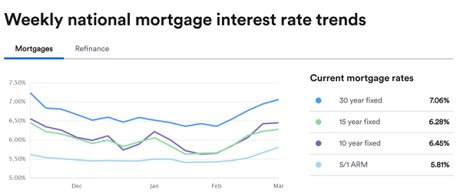
Keep an eye on mortgage rates and trends here: 👇

Weekly National Mortgage Interest Rate Trends

Posted in
March 17, 2023

Celebrate Saint Patrick's Day by Finding Your Dream Home

As Saint Patrick's Day approaches, it's a great time to think about finding your dream home. Whether you're a first-time buyer or looking to upgrade, there are plenty of opportunities to find the perfect home that fits your budget and lifestyle. Here are some tips to help you make the most of your home search this Saint Patrick's Day:

1) Get pre-approved for a mortgage: Before you start looking at homes, it's important to know what you can afford. Getting pre-approved for a mortgage can help you determine your budget and give you a better idea of what you can realistically afford.

2) Work with The Scott Smolen Team at RE/MAX Leading Edge:  Scott has over 24 years of real estate experience that can be a tremendous resource for you in the buying process.  Although Scott has not seen everything in 24 years, he has seen and experienced quite a bit while selling well over 1,000 homes.  The Scott Smolen Team can help you navigate the market, find properties that fit your criteria, and fiercely negotiate the best deal for you.  

3) Know your priorities: Make a list of your must-haves and deal-breakers before you start looking at properties. This will help you narrow down your search and ensure you find a home that meets your needs.

4) Spend some time online looking at photos and virtual tours.  It is a good idea to drive by homes that you think you might be interested in at different times of the day if possible in order to get a better feel for the neighborhood.  

5) Be flexible: While it's important to have a list of priorities, it's also important to be flexible. You may find a home that doesn't meet all of your criteria but still feels like the perfect fit.

6) Plan to get a home inspection: Once you find a home you're interested in, it's important to get a home inspection. This will help you identify any potential issues or repairs that may need to be made before closing.

Learn more about the The Home Buying Process with Scott. By following these tips, you can celebrate Saint Patrick's Day by finding your dream home. Happy House Hunting!

Posted in
March 16, 2023

7 Tips to Improve Indoor Air Quality in Your Home

Our post yesterday focused on the common indoor air quality pollutants and the importance of testing your air. Today we are giving you 7 tips on how you can improve the indoor air quality inside your home. Apart from controlling indoor pollutants, you should also focus on improving your home's filtration and ventilation systems to maintain healthy air quality. Below are some steps that can help improve indoor air quality:

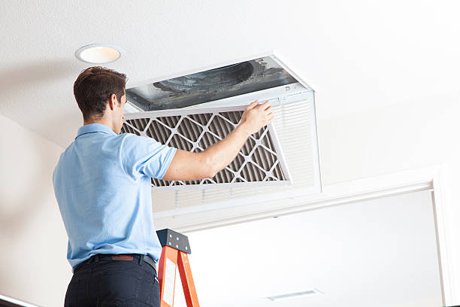
1) Use Quality Air Filters: Most heating and cooling systems in the home offer filtration to remove certain contaminants. Homeowners should use air filters with a minimum efficiency reporting value (MERV) of 9 to 12 or higher to collect dust and debris. Filters should be changed every three months, and more frequently for higher filtration options.

2) Ventilate Your Home: To remove harmful pollutants, homeowners should use different types of ventilation, depending on the need. For example, use a fan or open windows to circulate air and remove noxious odors. Ventilation above the range or a bathroom fan can remove heat, moisture, and fuel byproducts. Homeowners should also use the ventilation system built into their home's HVAC system to circulate air throughout the house and provide fresh, filtered air from outside.

3) Add House Plants: Certain house plants, such as Golden Pothos, Peace Lily, English Ivy, Aloe Vera, Spider plant, Snake plant, and Bamboo palm, can neutralize common contaminants and absorb pollutants such as carbon monoxide or VOCs. However, some plants may not be safe for pets or small children.

4) Keep Your Home Clean: Regularly cleaning the home helps minimize the accumulation of contaminants inside. Homeowners should wash bedding, sweep hard floors daily, vacuum carpets, minimize clutter, dust once a week, and clean surfaces with low-VOC cleaning products. They should also store harsh chemicals outside the home and eliminate excess pollutants in the home that are not needed.

5) Invest in Air Purifiers: Air purifiers can help filter out pollutants that ventilation alone cannot remove. Homeowners should invest in air purifiers containing a filter that can prevent particles from passing through, which should be replaced at least once every three months. Some air purifiers use activated carbon to filter out gases like VOCs, which also need to be replaced regularly.

6) Try a Dehumidifier: A dehumidifier can control humidity and minimize mildew and mold growth, especially in the kitchen or bathroom. Homeowners should choose a dehumidifier with the highest capacity and empty the drip pan as it accumulates water.

7) Buy the Right Cleaning Products: Using low-VOC cleaning products can help maintain indoor air quality by minimizing the release of harmful chemicals.

Here is more information from the EPA as well: EPA Indoor Air Quality

Posted in
March 15, 2023

Indoor Air Quality: Common Pollutants

Potential Determents to the Air Quality in Your Home

Indoor air quality is crucial for good health, but it often goes unnoticed until people start to experience health problems. Homeowners can take steps to identify and minimize potential indoor air pollutants. This article discusses the most common indoor air pollutants, such as asbestos, biological pollutants, carbon monoxide, formaldehyde, lead, nitrogen dioxide, radon, indoor particulate matter, smoke, and volatile organic compounds (VOCs). It also provides ways to improve indoor air quality, including using air filters, ventilating the home, adding house plants, keeping the home clean, investing in air purifiers, trying a dehumidifier, buying the right cleaning products, and more. By following these tips, homeowners can help ensure a healthy and safe living environment for themselves and their loved ones.

Why Indoor Air Quality is Important

People often look at outdoor pollution as a sign they need to take better care of their local air. However, the quality of indoor air is often much worse than it is outside. As such, homeowners may find their indoor air quality causes them various health problems, from throat or skin irritation to asthma, migraines, or even cancer. The problem is that people may not be aware of the severity of the problem until they are already facing health conditions. With the following information, homeowners will know the common causes of poor indoor air quality and things they can do to improve it.

Potential Indoor Air Pollutants

There are numerous indoor air pollutants, and many of them relate to material components of the structure or the function of the home's systems. By researching the most common contaminants, people may be able to minimize or prevent them.

Asbestos

Asbestos is a natural mineral that was a common component in many building materials until the 1970's and 1980's. It was popular due to its ability to minimize the spread of fires. At that time, health experts realized asbestos could release tiny fibers into the air when disturbed. If people breathe in those fibers, they may be at risk for various possible health problems. Homeowners can assume if their homes were built in the 1970's or earlier, the structure might contain asbestos in the following areas:

Insulation

Ceiling texture

Paint

Drywall

People unsure of the material makeup of these aspects of their homes may want to schedule a consultation with an asbestos remediation expert. These professionals can help identify existing sources of asbestos and determine the best course of action.

Biological Pollutants

Homeowners likely have to deal with several types of biological pollutants. Some of them may come from outside, tracked or blown in while doors and windows are open. Others may accumulate in the home due to environmental conditions or the presence of pets. Common pollutants include:

Pollen

Mold

Pet dander

Dust Insects or mites

Most of these are particles, although some such as pet saliva, can be liquid. In most cases, these contaminants will accumulate in soft materials throughout the home, such as carpets, drapes, or bedding. Test kits may be available for certain types of pollutants like mold or pollen. People should consider hiring an expert to inspect for insects or pests. Sometimes, people can only determine a contaminant's presence by testing themselves for an allergic reaction and identifying the most likely sources of the exposure.

Carbon Monoxide

Carbon Monoxide Pollution in Air. Unlike many other types of pollutants, carbon monoxide can be deadly without a long accumulation of exposure. This byproduct of combustion usually arises as a result of heat-producing equipment or appliances in the home like:

Gas furnace

Gas oven or range

Wood or gas-burning fireplace

Carbon monoxide can be tricky to identify in the home because it is colorless and odorless. Unlike natural gas, which has a distinct odor, people may have no warning that carbon monoxide is spreading in the home. It may not take long, only hours in some cases, for carbon monoxide to cause confusion, severe headaches, and even death. The best way to test for carbon monoxide is to purchase and use a carbon monoxide detector in the house. Experts suggest installing the detector several feet away from the fuel-burning appliance and consider installing more than one throughout the home.

Formaldehyde

Formaldehyde is a preservative commonly found in certain building materials like wood flooring. It is also a byproduct of certain types of combustion, such as cigarette smoke. Over time, formaldehyde trapped in building materials may eventually release into the air. This gas has an overwhelming odor that homeowners may notice at first, although it will dissipate over time.

Significant exposure to formaldehyde can cause skin or throat irritation and even increase the risk for certain types of cancer with heavy exposure. Homeowners may not know they have a high formaldehyde level in their homes unless they purchase a test kit. The kit involves placing a unit in the room for 24 hours, sealing it, and mailing it to a lab for testing. People can minimize their exposure by researching products that reduce formaldehyde usage and look for safe heat production methods with good ventilation in their homes.

Lead

Although lead is a heavier element, tiny particles of it can become airborne. The most common sources of lead exposure in the home relate to lead paint stirred up during renovation or cleaning and lead dust tracked inside from contaminated soil. In most cases, people will not realize that they have a lead problem unless they know how to look for it.

Typically, homes built in the 1970's or earlier may have layers of lead paint on:

Walls

Windowsills

Natural wood siding

Wood staircases

People with homes built in the 1940's or earlier may also have lead plumbing pipes or copper plumbing pipes soldered using lead. Lead exposure causes developmental problems in infants and children and cancers or other health problems in adults. Testing for lead usually involves obtaining a sample of paint for lab testing, which is a practical choice for homeowners looking to renovate older homes.

Nitrogen Dioxide

Much like carbon monoxide, nitrogen dioxide is a common byproduct of combustion. For example, people may be exposed to nitrogen dioxide outside when they stand around vehicles that are actively burning gasoline. Inside the home, nitrogen dioxide can accumulate when a fuel-burning appliance does not ventilate properly. If a homeowner runs a wood-burning stove with a chimney filled with salt and creosote, it may not vent to the outdoors correctly. Similarly, a furnace or stove with insufficient ventilation may force nitrogen dioxide back into the house instead of releasing it outside. Exposure to nitrogen dioxide can cause throat irritation, leading to chronic bronchitis or certain types of lung disease. The ideal method to minimize exposure to nitrogen dioxide indoors is to purchase and use ventilation equipment correctly.

Radon

Radon is a natural element that may be present in higher quantities in certain parts of the country. In homes with insufficient ventilation, radon outside may translate into higher exposure to radon inside. People may not know they have a problem with radon exposure until they are diagnosed with a serious condition. People who have a history of smoking are more likely to be at risk for lung cancer due to radon exposure.

When people buy a home, they may have the opportunity to test for the presence of radon. In areas where radon exposure is higher on average, people may want to request testing from a qualified professional. In many cases, reducing radon accumulation in the home is as simple as purchasing and using a specific ventilation device.

Indoor Particulate Matter

Indoor Particulate Matter in Your Home. The presence of contaminants affecting indoor air quality is not necessarily visible. In some cases, they are so small that humans cannot detect them. These pollutants, commonly referred to as particulate matter, vary in type, source, and long-term effects. The smallest particulate matter is sufficiently tiny and can be easily inhaled or enter the bloodstream. Sources include:

Incense

Smoke

Pet dander or saliva

Cockroach debris

Pollen or other common allergens

The problem with determining particulate matter is there are most likely many types in the home at any given point in time. The chief issue is the quantity and the mobility of these particles. In essence, the more particular matter releases into the air, the easier it is to consume. Homeowners can purchase test kits or hire professionals to test for many of these contaminants. Otherwise, they may prefer to move straight to mitigation of the problem.

Smoke

The presence of smoke in the home can be a significant indoor air pollutant. Smoke comes from a variety of possible sources, such as:

Cigarette smoking

Wood-burning fireplaces or stoves

Smoke that arises from cooking

In any of these cases, smoke inhalation can quickly become a problem. People will usually notice that smoke exposure immediately does not feel good, as smoke can irritate the eyes, nose, throat, and lungs. With long-term exposure to smoke from the sources, people may be at risk for developing long-term health conditions like bronchitis or lung cancer.

Although smoke in the home may be evident at the time of combustion, its presence lingers over time. For example, someone who regularly smokes inside the house or a buyer who purchases a home from a seller who smoked may have lower air quality — even if they are not actively smoking at the time. Minimizing the sources of smoke and increasing ventilation are the best ways to prevent these problems.

Volatile Organic Compounds (VOCs)

Volatile organic compounds are also present in things throughout the home. Homeowners may be aware they exist because many have a strong odor and may cause reactions very quickly. Others may take years to release these gases and will be less noticeable. People can look for VOCs in a variety of places, such as:

Building materials

Leather furniture

Cleaning products and solvents

Paint

Materials for hobbies, such as resin casting

Fuel, like stored gasoline or propane

The effect of VOCs depends on the type and amount. For example, someone who opens a bottle of paint thinner will immediately notice the noxious odor. On the other hand, someone who buys a home with freshly laid wood flooring may not notice the smell of wood preservatives. The best time to test for VOCs in the home is right after a remodeling project. Professionals can use tools to identify the presence of thousands of possible compounds, as well as their severity.

Read more about indoor air quality here: EPA Air Quality

Posted in
March 14, 2023

Silicon Valley Bank and Signature Bank Experience Bank Run and Failures

Over the weekend, Silicon Valley Bank and Signature Bank, the second and third-largest banks to ever fail, experienced a bank run, leading to their failures. While both banks are large, they are not deeply interconnected with the market, which is a relief for regulators. However, the failure posed a risk to depositors, particularly those with deposits exceeding the FDIC's insured limit of $250,000. To address this, the Treasury announced that it will employ special measures to ensure that depositors will receive 100 cents on the dollar, and they will allegedly have access to their money today. Additionally, the Treasury announced a new program, the Bank Term Funding Program, to provide additional liquidity to the banking sector and alleviate some of the strain associated with unrealized losses in bank portfolios.

The failure of these two banks, coupled with the February jobs report, which showed declines in manufacturing, IT, and other sectors, has led to a significant shift in rate future expectations. Fed Chair Powell's hawkish rhetoric has been contradicted, leading to uncertainty in the market regarding the Fed's future policies. The questions the market is grappling with now include how high the Fed is willing to go, what the terminal rate is, and how high the Fed needs to go to slow inflation but not crush the economy. The banking sector will be heavily scrutinized for a while, and asset/liability management is a significant risk that regulators may not have considered. Mortgage rates are better today but are lagging behind Treasuries, as mortgages do not like volatility.

Whenever a bank fails, it is usually considered significant, but there are a few noteworthy points to consider regarding SIVB. Firstly, unlike the bank failures that occurred 15 years ago, this was a result of old-fashioned asset/liability management. This type of failure was last seen in the 1970's, not the 2000's. Secondly, it is important to note that this was not strictly due to the creditworthiness of SVB's loan portfolio. While depositors were withdrawing funds, their businesses were not failing at the moment. This may change in the future, but for now, it does not appear to be the case.

Finally, it is worth considering the role of the Federal Reserve in bank regulation, as there seems to be a significant mismatch in assets and liabilities. It is surprising that this was not caught earlier. The situation with SVB escalated rapidly, as their CEO had given a routine investor presentation just a week prior without any questions about the bank's asset/liability mix.

In the short term, 30 year mortgage interest rates have dropped 14 basis points from last week.  Hopefully this trend toward lower rates continues as we me forward.  This link will provide you with a look at the 30-Year Mortgage Rates Today.


March 13, 2023

Understanding the Impact of Fort Meade on Real Estate Markets in Maryland

Fort Meade is located in Anne Arundel County, Maryland, and is situated between the cities of Baltimore and Washington, D.C.  Fort Meade is a major employer in the region, with more than 56,000 military, civilian, and contractor personnel working on the base. This has a significant impact on the surrounding real estate markets, particularly in terms of demand for housing.

One notable effect of Fort Meade's presence is the creation of a robust rental market. Many military personnel and contractors opt to rent homes rather than purchase, either due to temporary assignments or personal preferences. This can drive up rental prices in the surrounding areas and create a profitable opportunity for real estate investors who own rental properties.

Additionally, Fort Meade's expansion plans and ongoing construction projects can lead to increased demand for housing in nearby communities. As the base continues to grow, the need for more housing options may present itself, particularly for those who wish to live off base.

Overall, Fort Meade's impact on the surrounding real estate markets is a significant consideration for those looking to invest in the region. Understanding the base's growth plans and how they may impact the local housing market can help investors make informed decisions about where and how to invest.

The impact of Fort Meade's housing market can be felt in several nearby cities and towns, including, but not limited to:

Odenton: Odenton is a town located just outside the gates of Fort Meade and is home to many military families and contractors who work on the base.

Severn: Severn is a suburban town located just south of Fort Meade, and many of its residents work on the base.

Laurel: Laurel is a city located in Prince George's County and is home to many contractors and government employees who work at Fort Meade.

Crofton: Crofton is a town located just east of Fort Meade and is a popular area for military families and contractors.

Hanover: Hanover is a town located just north of Fort Meade and is home to many contractors and government employees who work on the base.

The impact of Fort Meade on the housing market can vary in each of these areas, depending on factors such as proximity to the base, local housing demand, and rental prices. However, it is clear that Fort Meade plays a significant role in the housing market for many nearby communities.

This link will allow you to search for Homes in the Fort Meade Area. 

Then you can come over to Buying with Scott to find out what you can expect when Scott Smolen is your Buyer's agent.

Posted in
March 12, 2023

National Housing Market Update - March 12, 2023

This is a national perspective on what is happening in real estate currently.  The market in the Fort Meade area is generally more healthy than other parts of the country.  This is not unusual as we have a strong job market with stable employment and good salaries.  However it is important to see what is happening in the country as a whole as many of the monetary policies are set based on national data as opposed to more isolated local data.  Fortunately for us, places like Anne Arundel County, Howard County, and the other Baltimore and Washington DC suburbs tend to be more isolated from national trends than other parts of the country. 

Despite a 1% year-over-year decrease in the typical U.S. home-sale price during the four weeks ending March 5, rising mortgage rates caused the average monthly payment for homebuyers to soar to an all-time high of $2,563, a 29% increase from $1,988 a year ago. This has resulted in reduced affordability for buyers, with a $2,500 monthly budget now only able to afford a $376,000 home, down from $400,000 just a month ago when rates were at 6%. Last year, when mortgage rates were at 3.85%, the typical U.S. homebuyer could afford a $480,000 home, indicating a significant decline in spending power.

As a result of these high payments, many potential buyers are being deterred from entering the market, while sellers are holding onto their properties to maintain their low rates. This trend is evident in the decline of pending home sales by 16.1% year-over-year, with a mere increase from the previous week, despite the usual March surge. New listings of homes for sale have also dropped 21.7%, a reversal from the slight easing seen in January and February. 

While there has been some improvement in homebuying demand from last Fall's lows, many indicators show a slowdown in activity. Mortgage rates have increased for five straight weeks, with the average 30-year fixed rate reaching 6.73% for the week ending March 9. Mortgage purchase applications have increased by 7% from the previous week but remain slow, with applications down 3.7% from their October low and 42% from last year.  Google searches for "homes for sale" have also decreased from previous weeks and years. However, touring activity has increased significantly since the beginning of 2023.

Experts are closely watching inflation rates, as they greatly affect mortgage rates and the housing market. The potential for the Federal Reserve to increase interest rates to combat inflation could cause mortgage rates to rise or fall depending on the official February inflation reading. If rates decrease, this could encourage more buyers and sellers to enter the market, while a rise in rates could have a negative impact.

Posted in
March 11, 2023

Home Statistics and Market Trends for Detached Homes, Townhouses, and Condominiums in Odenton, Md.

If you are curious about the home statistics for detached homes, townhouses, and condominiums in Odenton, Md. then you have come to the right place.  There are several charts below that provide a comparison to the data from last year.  These charts are updated on a monthly basis, so you will be able to keep an eye on the trends in the market.

This first chart shows the closed sales in Odenton month-by-month compared to the same time last year.


This next chart provides the data for the median days on the market for homes in Odenton.  


This chart provides a look into the Supply and Demand of homes located in the 21113 zip code.  This showing the monthly supply of homes in the city.  This Economists' Article explains what this data means in general.  The lower the number, the more skewed the market is to Sellers.  It is the opposite for a Buyer's market.


This last chart displays the median sales price to original list price ratio for homes located in Odenton, Maryland over the last year. 


Please feel to to send us a message if you have any questions about any of this data, or if you would like some additional information about the housing market in Odenton, or some other areas that interest you.  We will be happy to do anything we can to help!


Odenton, Md. 21113 - Recently Listed Odenton Homes for Sale

Posted in
March 10, 2023

How the Mortgage Market Was Affected by Powell's Comments on Tighter Monetary Policy

The mortgage market experienced a tumultuous week primarily due to Federal Reserve Chair Jerome Powell's comments. Powell cautioned in his semi-annual testimony to Congress that monetary policy might be tighter than expected to combat inflation. He suggested that if the economic data is stronger than anticipated, the federal funds rate may need to remain high for longer than anticipated, and future rate hikes could be 50 basis points instead of 25.

Despite investors increasing their outlook for the terminal federal funds rate and the length of time at that level, mortgage rates only slightly increased. The ISM Services Index released this week demonstrated that the services sector is growing despite tighter Fed policy, and JOLTS reported that the labor market remains tight with a high number of job openings and employees willingly leaving their jobs.

This graphic provides you with a good overall picture of where mortgage interest rates are below. These are just averages for informational purposes only. It is important to work with your own reputable lender in order to find the best program available for your specific situation.


Posted in
March 9, 2023

Pros and Cons of Buying vs Renting a Home | Factors to Consider

Are you considering whether to buy or rent a home? This article discusses the pros and cons of each option, including factors such as upfront costs, maintenance expenses, and flexibility. Read on to make an informed decision about your housing situation.

Pros of buying a home:

1) Equity: When you buy a home, you are building equity, which is the difference between the value of the home and the amount you owe on your mortgage. Over time, as you pay down your mortgage, you will have more and more equity in your home.  You also can build equity as your home appreciates in value over time.  

2) Long-term investment: Real estate generally appreciates over time, meaning the value of your home is likely to increase. This makes buying a home a long-term investment that can pay off in the future.  Use this link to check out home price changes over the last 20 years in every major City in the United States. Home Prices Since 2000

3) Stability: When you own your home, you have more stability and control over your living situation. You can make changes to your home without needing permission from a landlord, and you won't have to worry about being forced to move if your landlord decides to sell the property.

Cons of buying a home:

1) Upfront costs: Buying a can require a more significant upfront investment. You'll need to make a down payment, pay closing costs, and cover other expenses associated with the purchase.  There are programs that can help minimize this though.  This link provides you with some information regarding some frequently asked questions as well as some of the First Time Buyer programs that are available.  Answers to the Top 5 Questions that Buyers Ask

2) Maintenance costs: When you own a home, you are responsible for all maintenance and repair costs. This can be a significant expense, especially if unexpected repairs arise.

3) Limited flexibility: Owning a home can limit your flexibility to move to a new location, especially if you need to sell your home first.

Pros of renting a home:

1) Flexibility: Renting a home gives you more flexibility to move to a new location, especially if you are on a month-to-month lease. This can be a significant advantage if you need to relocate frequently for work or other reasons.

2) Lower upfront costs: Renting a home typically requires lower upfront costs compared to buying a home. You'll only need to pay a security deposit and usually the first month's rent.

3) No maintenance costs: When you rent a home, the landlord is responsible for all maintenance and repair costs.

Cons of renting a home:

1) No equity: When you rent a home, you are not building equity, so you won't have an asset that can appreciate over time.

2) Limited control: Renting a home gives you limited control over your living situation. You may not be able to make changes to the property without permission from your landlord, and you may be subject to rules and restrictions that limit your freedom.

3) Rent increases: Your rent can increase over time, especially if you are on a month-to-month lease. This can make it difficult to budget for housing expenses in the long-term.


Posted in