Scott Smolen Maryland real estate blog with market updates, community spotlights, and home buying tips

Maryland Real Estate Blog

Scott Smolen's Anne Arundel County and Bowie, Md. Real Estate Blog

Local real estate updates, market insights, community spotlights, and practical home buying and selling advice for Odenton, Gambrills, Crofton, Bowie, Piney Orchard, Two Rivers, and the surrounding Maryland real estate market.

Latest Market Trends

Stay current on mortgage rates, local inventory shifts, pricing trends, and buyer demand across the Maryland real estate market.

Home Selling Advice

Learn how to prepare, price, market, and negotiate when selling a home in today’s local market.

Home Buying Tips

Get practical guidance on affordability, inspections, offers, financing, and buying with confidence.

Community Spotlights

Explore local neighborhoods, market reports, lifestyle features, and community insights throughout the area.

Aug. 25, 2023

Mastering Home Buying: 6 Strategies for Securing the Ultimate Deal

Calling all discount aficionados, coupon clippers, and marketplace navigators! If you are a seasoned bargain seeker who believes in never paying full price, the notion of purchasing a home at, or even above, the asking price might send shivers down your spine.

Your thrifty instincts should not be abandoned when it comes to real estate—it's a colossal investment, after all. Isn't it only fair to apply your keen financial prowess to a purchase of such magnitude? Absolutely, and we are not talking about simply tossing out a low offer. We are here to introduce tactics that will elevate your real estate game to new heights.

1. Tailor the Offer to the Seller

When making an offer, delve into the seller's unique circumstances and needs. Are they urgently relocating due to a new job? Consider adjusting your closing date accordingly. Do they want to remain in their current home until the end of the school year? Offer a delayed move-out in exchange for a price reduction. Engage your agent to communicate with the listing agent and identify terms that might sway the seller to accept a lower offer.

2. Unearth the Potential in Kitchens

Rather than obsessing over an Instagram-worthy kitchen, focus on potential. A less-than-perfect kitchen can deter buyers, leaving a property unsold for extended periods. Prioritize functionality and layout. Assess the condition of appliances and envision manageable improvements. With a moderate investment, you can rejuvenate cabinets, lighting, faucets, and surfaces, transforming a lackluster kitchen into a space that resonates with your taste.

3. The Power of an All-Cash Offer

The phrase "all cash" holds immense sway, even if your offer slightly undercuts the asking price. Cash buyers often gain the upper hand in competitive scenarios. Sellers are reassured by the absence of mortgage-related hurdles that can derail deals. A rapid sale may be crucial to the seller, propelling your cash offer to the forefront. This strategy hinges on your financial resources.

4. The 20% Down Payment Advantage

While not groundbreaking, a substantial down payment remains an unparalleled advantage. Placing at least 20% down not only sidesteps costly mortgage insurance but also preserves manageable monthly mortgage payments.

5. 'As Is' Homes: Hidden Treasures

Properties listed "as is" often harbor issues the seller cannot address. These homes are typically priced lower to account for necessary repairs or enhancements. This situation can translate to a lucrative deal, especially when you could oversee repairs according to your preferences.

6. Savvy Mortgage Shopping for Savings

Initiate contact with multiple mortgage lenders three to six months before your intended home purchase. Compare rates and potentially boost your credit score. A FICO score exceeding 760 secures prime interest rates. An impressive credit score is synonymous with substantial savings, as it drives down monthly payments over the loan's lifespan. A credit score above 660 is necessary for mortgage approval. Seeking a reliable mortgage lender? Look no further—Scott and the Smolen Team can connect you with a reputable referral.

In conclusion, your bargain hunting prowess is not just applicable to consumer goods—it's an invaluable tool in the realm of real estate. Employ these strategies to wield your financial acumen and secure an exceptional deal on your journey to homeownership.

Aug. 24, 2023

Avoid These 5 Costly Missteps That Could Jeopardize Your Mortgage Approval

Congratulations on reaching the pre-approval stage, successfully finding your dream home, and having your offer accepted! It is a monumental achievement, yet the journey to homeownership isn't quite over, as Lenny Kravitz aptly reminded us with his lyrics, "It ain't over till it's over."

While the odds of encountering major setbacks are relatively low, it is essential to remain vigilant and cautious. A financial blunder at this crucial juncture could alter your mortgage terms, interest rate, or even lead to outright denial—regardless of a scheduled closing date. To ensure you navigate these final stages seamlessly, steer clear of these misguided money moves.

1. Caution with Moving Funds

Resist the urge to shift money around, particularly if you are contemplating moving cash reserves into stocks while awaiting closing. The intention might be to earn extra profit, but this shift can disrupt your loan approval process.

Casey Fleming, a mortgage adviser, emphasizes the importance of maintaining cash liquidity for the underwriter's assessment. Fluctuations in stock prices can lead to deductions in asset value. Instead of a seamless $100,000 in savings, a stock adjustment could present just $70,000. You need sufficient funds to cover the down payment, closing costs, and at least three months' worth of mortgage payments. A sudden dip in assets might trigger a denial.

2. Steer Clear of Work Leaves

Lenders rely on your consistent employment to ensure your ability to fulfill mortgage payments. While unforeseen circumstances can lead to leaves of absence, exercise caution unless necessary. A voluntary leave can jeopardize your mortgage approval timeline or even result in denial. Fleming recalls an incident where medical leave two weeks before closing led to a delay.

3. Controlled Approach to New Credit

New credit applications and inquiries should be approached with care. While a limited number of inquiries typically will not significantly impact your mortgage, accumulating numerous inquiries before closing can have negative repercussions. Lenders may perceive this as risky behavior, reflecting potential debt accumulation.

Avoid seeking excessive new credit or credit limit increases during this critical period. Prioritize stability to safeguard your mortgage prospects.

4. Prudent Spending Habits

The excitement of homeownership can trigger shopping sprees for new furniture, appliances, and more. While it's natural to indulge, exercise restraint, as excessive spending can disrupt your financial stability. Large credit purchases shortly before closing can alter your debt ratios, interest rates, and even cause lenders to reconsider your risk profile. While modest charges on credit cards may not pose an issue, defer significant purchases until you have successfully secured the property.

5. Thoughtful Job Changes

Changing jobs, especially during the home-buying process, can introduce complications to the paperwork and lender assessment. While some transitions are manageable, others are riskier. A switch within the same industry with similar functions might be acceptable, but major industry shifts could be perceived as unstable.

Transitioning into roles dependent on bonuses or commissions—even if they promise a higher annual income—can raise concerns. Lenders evaluate your ability to repay the loan, factoring in future earnings. Any changes should be discussed with your lender or broker to ensure a seamless transition.

Purchasing a home should always bring excitement, but it should also be tempered by caution and wisdom. By mastering the details and putting your faith in experts to provide you with the right advice, you can ensure that your path to homeownership goes as smoothly as possible. Knowledge is power; research thoroughly, understand all the key steps you need to take along the way, and avoid costly financial missteps.

When you are ready to explore loan options for your purchase, don’t hesitate to reach out to your mortgage lender or get in touch with Scott and the Smolen team today. They will help guide you through every step of the process so that you can make informed decisions and enjoy stress-free house hunting — so that when you finally sign on that dotted line, it'll be with exultant joy!

Aug. 23, 2023

Understanding Negative Equity: Implications and Strategies to Navigate It

Purchasing a home marks the initial stride toward building a solid financial foundation. This journey involves cultivating home equity—a key asset. Home equity is the disparity between a home's market value and its outstanding mortgage balance or liens. In essence, it reflects the cash you would accrue upon selling your home and repaying loans.

However, circumstances can lead to negative equity, an unwelcome situation where homeowners owe their lender more than their home's value. Commonly referred to as being "underwater" or "upside down" on your mortgage, negative equity warrants attention. This article delves into its causes, implications, and strategies to manage it.

Understanding the Risk of Negative Equity

It is rare that a homeowner initiates homeownership with negative equity, as mortgages are generally not extended beyond a home's value. Nevertheless, negative equity is a potential challenge for any homeowner with a mortgage. Given the recent increase in foreclosures, safeguarding against negative equity is paramount for all homeowners.

Those most susceptible to negative equity are homeowners possessing minimal property equity. Economic downturns or financial hardships coupled with declining home values can lead to an underwater mortgage. This scenario was prevalent following the 2008 financial crisis when the housing market plummeted.

However, current conditions make a recurrence of the 2008 crisis improbable. Stringent lending laws implemented in 2010 bolster borrower verification, minimizing subprime lending.

Understanding Negative Equity Triggers

Negative equity can emerge due to factors such as possessing multiple loans on a home, particularly when one of the loans carries an adjustable interest rate. For instance, if a homebuyer has both a first mortgage and a secondary mortgage or HELOC (Home Equity Line of Credit) with an adjustable rate, negative equity becomes more likely.

Jay Garvens, a business development manager for Churchill Mortgage, elucidates that negative equity frequently occurs when the first mortgage or subordinate financing operates with a variable interest rate. In a volatile interest rate environment, the monthly repayment may exceed the borrower's budget. Consequently, an inability to service the loan can lead to a growing mortgage balance, culminating in a value exceeding the home's worth.

Negative Equity Consequences

Negative equity necessitates homeowners to sell their properties to settle loans. Clients of Garvens exemplify this predicament, with variable-rate HELOCs witnessing substantial rate hikes, surpassing the homeowners' repayment capacity. Faced with limited options, they resorted to selling their property. While not ideal, selling the home preemptively is preferable to defaulting on the loan, which could lead to foreclosure and a tarnished credit rating.

Mitigating Negative Equity

While reversing negative equity is attainable, certain strategies might be inaccessible for homeowners in dire straits. Homeowners facing negative equity but maintaining employment, financial stability, and loan adherence can consider the following:

1. Continue making timely payments and await property value improvements.

2. Make additional monthly mortgage payments to expedite principal reduction.

3. Invest in home upgrades to enhance value in anticipation of a potential sale.

For those facing unemployment or struggling with adjustable-rate mortgage payments, the following options are worth considering:

1. Lease out your home to cover mortgage costs while residing elsewhere more affordable.

2. Place your home on the market to manage the situation proactively.

Mr. Garvens suggests selling the home with remaining equity and renting until financial stability is restored. Renting out your property is viable if the rental income sufficiently covers the mortgage, insurance, and related expenses.

Preventing Negative Equity

A significant down payment is the most effective approach to avoiding negative equity. A substantial initial payment translates to more manageable monthly mortgage installments. Alternatively, selecting a home well below your budget offers a financial cushion in times of crisis. Striking a balance between housing expenses and pre-tax income is crucial.

Understanding and planning for negative equity can mitigate its potential impact. By proactively implementing sound financial decisions, homeowners can navigate this challenge and secure their financial well-being.  If you have questions about your home's current equity position, feel free to reach out to Scott and the Smolen Team for a free, no obligation market analysis at anytime.

Aug. 22, 2023

Factors Impacting Property Value: Addressing Potential Concerns

Property values can experience fluctuations due to various influences, and as a homeowner, being aware of elements that might decrease home value is crucial. While some factors are beyond your control, such as market trends, interest rates, and economic conditions, others are within your grasp. From ill-conceived renovations to disregarding maintenance, certain projects or omissions can lead to a negative impact on property value. Understanding what could harm property value empowers you to safeguard your investment and optimize returns during a potential sale.

1) The Pitfalls of Misguided DIY Projects

Homeowners often embark on home improvement endeavors to enhance livability and value. Whether it's adding a bathroom, constructing a deck, or tackling a fixer-upper with profit potential, these projects often begin with the aspiration to boost property worth. While these initiatives are exciting, they can occasionally deviate from expectations and result in diminishing property value.

Should you consider extending your kitchen, remodeling the bathroom, or building a deck, it's prudent to entrust larger-scale projects to professionals. A mishandled project can compromise property value, emphasizing the importance of expert execution.

2) The Crucial Role of Curb Appeal

First impressions wield significant influence when selling a home. Therefore, the curb appeal of your property should captivate potential buyers and expedite sales. If you detect chipped exterior paint or overgrown shrubbery, prospective buyers are likely to observe the same issues. However, minor modifications can markedly enhance curb appeal.

Refreshing the exterior paint can notably improve curb appeal. The color of your house is among the first elements noticed by potential buyers. Faded or chipped paint detracts from curb appeal and property value. Collaborating with professional painters and opting for neutral colors can transform your home's exterior.

Upgrade outdoor lighting to amplify your property's allure. Adequate lighting along pathways and modern fixtures contribute to an inviting ambiance that complements landscaping. Options range from post lights and LED lights to solar lights and wall mounts.

Consider replacing worn fences, which can detract from the overall aesthetic. A new fence revitalizes your yard, showcases your commitment to maintenance, and elevates property value. A variety of materials, including wood, vinyl, aluminum, wrought iron, and composite, can enhance your yard's appeal.

Enlist professional landscapers to design an easy-to-maintain landscape. Simple adjustments like edging beds, mulching gardens, and pruning trees can significantly transform your property's appeal and enhance curb value.

Maintain windows and siding through regular cleaning to prevent dust, dirt, fingerprints, and algae buildup. Scheduling professional cleaning can prevent issues like paint damage, splintering, and mold growth, preserving your property's attractiveness and value.

Consider upgrading your front door to infuse new life into your home's exterior. Replacing a worn door is a swift and cost-effective method to enhance curb appeal.

3) The Impact of Interior Wall Paint

Interior paint quality, like exterior paint, can influence potential buyers. Streaky, chipped, or subpar paint might deter potential buyers and undermine property value. Applying a fresh coat of neutral paint to cabinets, walls, and trim can significantly alter perceptions. Relying on professional painters can avoid common painting mistakes homeowners might encounter.

Additionally, bright, or busy wallpaper, tiles, and flooring might divert attention from your property's attributes. Opting for neutral permanent elements and incorporating color through décor and furnishings is a prudent strategy.

4) The Necessity of Consistent Upkeep

Regular home maintenance is essential for preserving property value. Allowing your home to deteriorate and neglecting maintenance can diminish property value, potentially affecting your listing price. Neglected properties might prompt buyers to seek repairs and negotiate terms to avoid post-sale expenses. It is common for buyers to include inspection contingencies in their contracts.

Promptly address any malfunctions or damages to maintain your property's condition. Hiring professionals to fix issues you are unfamiliar with prevents situations from escalating. Delaying repairs often incurs greater expenses over time. Routinely inspect the roof, foundation, HVAC system, gutters, and address pest infestations promptly by enlisting professional assistance.

5) The Perils of Excessive Clutter

Accumulated belongings can gradually clutter your home over time. Excess clutter, like dirt, accumulates and influences property value negatively. An overcrowded room can be off-putting, making it advisable to declutter. Donate items you no longer need and designate storage for infrequently used belongings.

Decluttering is a cost-effective approach to enhancing property value. However, the task might be substantial for an individual. Consider collaborating with a professional organizer to tackle the project efficiently. Arrange for local junk removal services to dispose of unwanted items, ensuring a streamlined process.

6) The Role of Unpleasant Odors

Offensive odors create unfavorable impressions and lower property value. Cigarette smoke, pet odors, and mold can be sources of lingering smells. Identifying and eliminating the source of the odor is imperative. Rather than masking it with strong fragrances, address the root cause.

Consistent cleanliness plays a pivotal role in averting unpleasant smells. Regular cleaning, such as vacuuming, dusting, bathroom, and kitchen upkeep, promotes a fresh environment. If necessary, engage professional cleaning services tailored to your preferences and needs.

7) The Perils of Unnecessary Upgrades

While home renovations often enhance property value, some upgrades might be counterproductive. Consider climate and region-specific factors when undertaking projects. For example, adding a pool in cooler climates could deter potential buyers and harm property value. Similarly, removing closets or bathrooms to create larger bedrooms might not align with buyers' preferences.

Home ownership can be a fantastic experience that brings with it many opportunities. To make the most of it, ensure that your property is regularly maintained and that any necessary updates are done in a timely manner. With careful attention to detail, you can not only enjoy your home now, but preserve its value for years to come. Make sure you do your research when making decisions on specific renovations and repairs, so that you are making wise investments. Remember that even small improvements can add more value to your property and are something to consider when considering the cost-benefit of getting a return on an investment in one's residence.

Aug. 21, 2023

Addressing Affordability: Builders Respond to the Demand for More Affordable Homes

The current housing market is grappling with two significant affordability hurdles for prospective buyers: elevated mortgage rates compared to the past couple of years, and escalating home prices driven by limited inventory. To surmount these challenges, a growing number of individuals are collaborating with their real estate agents to locate more budget-friendly housing options. In this quest, newly constructed homes, which now make up a historically substantial portion of the overall available inventory, are emerging as a popular choice.

A Shift towards Economical Newly Built Homes

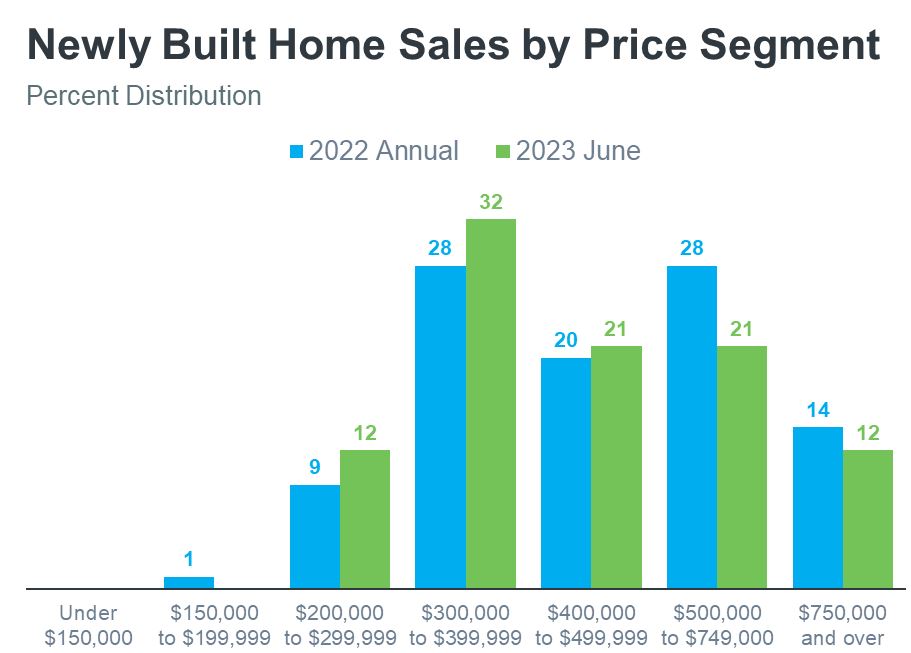
Recent insights from the Census reveal a noteworthy change in the landscape of newly built home sales in June 2023, as a larger proportion falls within lower price ranges compared to 2022.

In the previous year, merely 58% of newly constructed homes were sold for less than $500,000. However, in the latest figures for June, this percentage has risen to 65%. This indicates a growing preference for more affordable, newly built homes, even amid ongoing affordability concerns.

Builders Adapt with Affordable Alternatives

Builders have astutely recognized this shifting preference and are taking proactive measures to address it. George Ratiu, Chief Economist at Keeping Current Matters, provides insight into their response: "In light of this transition, builders are introducing slightly smaller homes to the market, aiming to cater to lower price points..."

Recent data from the Census corroborates this trend by revealing a decline in the median sales price of newly constructed homes in recent months. Mikaela Arroyo, Director of the New Home Trends Institute at John Burns Real Estate Consulting, further affirms that builders attuned to this trend are forging pathways to homeownership:

"...this shift is generating opportunities for individuals to afford an entry-level home within a specific locality... By reducing the size, the home naturally becomes more affordable. Builders who are making the most significant reductions in size are likely those who are striving to create a more economical product."

Leveraging Agent Expertise

Builders embracing the production of smaller, more affordable newly built homes offer a broader range of accessible options, especially during times when affordability is a pressing concern. If you're actively considering a home purchase, team up with a local real estate agent to gain insights into the available opportunities in your vicinity. An agent can assist you in exploring both newly constructed homes and those currently under development nearby.

Home buying can often seem like an arduous and overwhelming journey however with the expertise of a professional real estate agent such as those at Scott and The Smolen Team, this process can be a much more straightforward process. With their specialized knowledge of the latest real estate listings in your area, guidance through contract details, negotiation strategies, builder reputation insight, and more; their team will make sure you find yourself the perfect home that meets all your desired expectations. Therefore, if you are in search of building a home within your budget constraints do not hesitate to contact Scott and the Smolen Team! They will provide you with the guidance and service you need to make sure your dream home becomes a reality! Start discovering all the possibilities today and enjoy this exciting adventure!

Aug. 18, 2023

The Definitive Guide to Move-Out Cleaning: Expert Tips for a Flawless Transition

Moving to a new home is a whirlwind of excitement and stress. Amidst the chaos of packing, decluttering, and lifting heavy boxes, it is crucial not to overlook the essential task of cleaning your old dwelling before handing over the keys. Leaving a clean and organized space is not only considerate for the new occupants but can also play a role in safeguarding your security deposit if you are a tenant. To guide you through this process, we have curated an expert-approved move-out cleaning checklist for anyone bidding farewell to their home or apartment. Whether you are transitioning to a new house or leaving a rental condo, our comprehensive cleaning guide ensures you cover every inch of your former space, leaving it in impeccable condition.

Mastering Move-Out Cleaning: A Step-by-Step Approach

1. Prioritize Key Areas

Carl Christian of Atlanta Green Maids suggests focusing on the main areas that the new tenants are likely to notice. Instead of spending excessive time scrubbing baseboards and windows, prioritize ensuring the interiors of appliances and cabinets are spotless. This approach prevents new occupants from encountering dirt or belongings left behind by the previous inhabitant during the moving-in process.

2. Clean all of Your Floors

When selling a house in Maryland, our contract calls for the home to be broom swept.  This means that all of the carpets should be vacuumed and floors should be mopped.  You are not required to have the flooring professionally cleaned, or the carpets to be shampooed.  

3. Organize Your Wardrobe

Josh from Morris Cleaners suggests focusing on organizing your clothing. Sort clothes by season and family member and consider donating or selling items you no longer wear. To save space, vacuum-seal packed clothes in suitcases and protect them with poly bags or garment bags from your local dry cleaners.

4. Allocate Adequate Time for Cleaning

Plan for more time than you expect. Even though move-out cleaning may seem simpler without furniture and belongings, exposed surfaces reveal hidden areas that need attention, including walls and ceilings.

5. Change Your Perspective

Daniel Olin from Easyway Maid Service recommends scanning your rooms from right to left. By reversing your scanning direction, you will notice overlooked details, such as light switches and dirty blinds, making the cleaning process more thorough.

6. Begin with Significant Tasks

Starting with substantial cleaning tasks, like windows or tiles, can provide a psychological boost. Accomplishing these tasks early generates renewed energy and motivation for tackling the rest of the cleaning process.

7. Tend to Your Refrigerator

Ensure your move-out cleaning checklist includes cleaning the fridge. Remove all items, discard expired products, and wipe down shelves and drawers with warm water and mild detergent. Do not forget to clean the top of the fridge, as dust and grime can accumulate there.

8. Thoroughly Clean Your Dishwasher

Clean your dishwasher inside and out to eliminate residue and odors. Remove debris from the bottom and drain, run cycles with vinegar and baking soda, and wipe down the exterior.

9. Thoroughly Clean Cabinets

The inside of cabinets is frequently forgotten during move-out cleanings. Vacuum and wipe them down to remove leftover debris, dust, and grime.

10. Sanitize High-Touch Areas

High-touch areas like doorknobs and faucets require thorough sanitization, especially during times when cleanliness is crucial.

11. Consider Professional Help

If needed, enlist professional cleaners to ensure a seamless transition. Hiring experts for move-out cleaning is a considerate gesture for the next residents and increases the likelihood of a full security deposit refund. Ensure your home is empty before the cleaning service arrives by removing furniture, décor, and personal items, emptying closets, cabinets, and drawers, and clearing out the refrigerator and freezer.

Moving out can be a freeing and exciting experience—but it always pays to leave the old life behind with a clean slate. Using these tips for move-out cleaning, you can ensure that your former home looks its best when you hand over the keys and start fresh somewhere new. Aim to maintain a positive attitude throughout the cleaning process; soon, you’ll have lots of new memories to make in your next place. After all, there’s nothing quite like creating a haven for yourself to look forward to coming home to each night!

If you are not sure about how clean something should be, the best rule to follow is the Golden Rule.  If you leave your home in a condition that you would like to find it, then you should be in excellent shape.  Good luck and have fun as you embark on this transition into something new.

Aug. 17, 2023

A Comprehensive Guide to Building a Budget-Friendly DIY Shed - Part 2

Are you excited to construct your very own DIY shed without exceeding your budget? Whether you are situated in an urban setting or blessed with a spacious yard, this step-by-step guide is here to assist you in crafting a shed that perfectly aligns with your requirements and location. We've got you covered with a variety of shed models, ensuring your build is a resounding success that caters to your lifestyle and financial constraints.

Creating a Budget-Friendly DIY Shed: A Step-by-Step Approach

1. Planning and Design

Effective planning and thoughtful design are the cornerstones of a successful budget-conscious shed project. Begin by evaluating your specific needs for the shed, whether it is additional storage space, a workshop, or a sanctuary for your hobbies. By clarifying the intended purpose, you can determine the optimal size and layout, minimizing unnecessary expenditures. Outline the shed's design, paying attention to practical aspects like door and window placements to ensure ample light and ventilation. Embrace cost-effective construction techniques, such as straightforward roof designs and standard dimensions, to minimize material wastage and costs.

When considering cost-effective construction, opt for uncomplicated shed designs that do not require intricate angles or specialized tools. A rectangular or square shape with a single-pitched roof is not only simpler to build but also kinder on your wallet. Moreover, explore the use of salvaged materials, like old doors, windows, or reclaimed lumber, to add a distinctive touch to your shed while saving on costs.

For those seeking an even more streamlined and budget-friendly option, DIY shed kits present an attractive solution. Shed kits typically come with pre-cut and pre-measured materials, accompanied by detailed instructions. These kits are especially helpful for beginners, offering various sizes and styles to suit your preferences and budget. While DIY shed kits may involve a slightly higher initial cost, they can ultimately save you time and effort, translating into potential cost savings.

*Bonus Tip: Before purchasing materials or embarking on construction, consult local authorities regarding building permits and regulations. Complying with local codes is essential to prevent potential fines or delays during the building process.

2. Acquiring Materials

Opt for pressure-treated lumber, which provides durability and resistance to decay at a more affordable price compared to premium lumber. Salvaged or reclaimed materials can serve as excellent choices for siding, roofing, and finishing touches, infusing your shed with character while trimming expenses. Explore local classifieds, online marketplaces, or salvage yards to discover discounted or secondhand building supplies. Furthermore, consider reaching out to friends, family, or local community groups – they might possess unused materials they would be willing to contribute. Demonstrating resourcefulness in material sourcing can significantly contribute to cost-effectiveness.

Here is a checklist of basic tools essential for shed construction:

- Measuring tape and level for precise measurements

- Circular saw or hand saw for cutting lumber

- Power drill with various bits for drilling holes and driving screws

- Hammer and nails for traditional fastening

- Screwdriver for assembling components

- Safety equipment (gloves, safety glasses, ear protection) for construction safety

- Ladder for accessing higher areas during the build

- Carpenter's square for ensuring accurate angles

Equipping yourself with these essential tools will empower you to handle construction efficiently and avoid costly interruptions or last-minute trips to the hardware store.

3. Preparing the Site

Commence by selecting a level area with proper drainage to avert water pooling around the shed. Clear the site of debris, rocks, or vegetation that might hinder construction. In case the ground is uneven, utilize a shovel or rent a plate compactor to achieve a level surface. Establishing a base or foundation is pivotal, elevating the shed above the ground to safeguard it against moisture. For budget-friendly alternatives, contemplate a gravel or concrete block base, which necessitates less material and labor compared to a complete concrete slab. Adhere to local building codes and regulations concerning setbacks and property boundaries.

Before construction, ensure to identify the location of local utility lines and mark them to prevent accidental damage during excavation. Additionally, think about incorporating landscaping fabric beneath the foundation to prevent weed growth and enhance drainage. If your site is prone to heavy rainfall or flooding, contemplate constructing a raised platform or using pressure-treated lumber for the foundation, safeguarding the shed against moisture. Meticulous site preparation establishes a stable foundation for the shed while averting potential issues and costly repairs in the future.

4. Constructing the Foundation

Depending on your budget and site conditions, a range of cost-effective foundation options is available. Among the simplest and budget-friendly choices are concrete blocks or pressure-treated lumber piers, elevating the shed above ground level to thwart direct contact with soil and moisture. Alternatively, a gravel foundation, consisting of compacted gravel or crushed stone, offers solid drainage and stability. Adhere to the shed's design and local building codes to ascertain the number and arrangement of piers or gravel pads. Once the foundation is in position, double-check its levelness and stability before proceeding to subsequent stages.

Consider integrating cross-bracing or additional support beams to reinforce the foundation's stability, particularly if your region experiences strong winds or seismic activity. If employing concrete blocks as piers, guarantee their evenness and uniform spacing to distribute the shed's weight uniformly. For gravel foundations, it's imperative to establish a robust and well-compacted base to avert sinking or shifting over time.

5. Constructing the Frame

The frame functions as the backbone of your shed, furnishing structural support and influencing the overall strength of the structure. Employ pressure-treated lumber or other cost-effective materials for framing components like joists, studs, and beams. Ensure the frame adheres to the shed's design and dimensions precisely and confirm that all connections are secure. Cut the lumber with precision in accordance with your measurements and unite the elements using nails, screws, or appropriate hardware. Verify that the frame is both square and level to prevent any future structural challenges.

For those new to carpentry, exercise care when measuring and cutting lumber to guarantee precise dimensions. Implement a carpenter's square to verify right angles and think about measuring diagonally to confirm the frame's squareness. Additionally, opting for galvanized or weather-resistant fasteners will enhance the frame's endurance and shield it from rust or corrosion.

6. Installing Roofing and Siding

When selecting roofing and siding materials for your budget-conscious shed, prioritize options that provide durability without exceeding your financial limits. Asphalt shingles represent an affordable roofing solution, delivering adequate protection against the elements. Similarly, metal roofing constitutes another budget-friendly alternative offering extended longevity and straightforward installation. For siding, T1-11 plywood, or oriented strand board (OSB) present economical choices that can be painted or stained for enhanced protection and aesthetic appeal. Alternatively, contemplate the use of salvaged materials or repurposed wood to fashion an exterior that exudes rustic charm without straining your budget. During installation, pay attention to weatherproofing and sealing to ensure your shed remains dry and impervious to moisture.

To maximize cost savings, contemplate a blend of new and salvaged materials for both roofing and siding. Explore local salvage yards or building material recycling centers for discounted or reclaimed materials suitable for your shed. Additionally, integrate weather-resistant barriers like roofing felt or house wrap beneath the roofing and siding to amplify protection against moisture and drafts.

7. Adding Doors and Windows

When considering doors, explore economical options such as pre-hung exterior doors or repurposed doors from other projects. For windows, single pane or salvaged windows can prove more budget-friendly compared to high-end, energy-efficient models. During installation, apply weather stripping and proper sealing around doors and windows to minimize air leakage and optimize energy efficiency. Furthermore, strategically position doors and windows to harness natural light and ventilation within the shed.

In the case of salvaged doors or windows, ensure their quality and confirm they provide adequate security and insulation for the shed. Applying a fresh coat of paint or stain can rejuvenate their appearance and extend their lifespan. To augment security, contemplate installing simple and budget-friendly locking mechanisms or latches on doors and windows.

8. Finishing Touches and Interior

Complete your shed's aesthetic with trim and moldings to conceal exposed edges and cultivate a refined appearance. Shield the exterior from the elements and forestall premature degradation by applying a weather-resistant paint or stain. To beautify the interior, consider employing leftover or salvaged materials for finishing touches – reclaimed wood for shelving or repurposed cabinets for storage. Organize the interior to optimize space and practicality, supplementing the layout with hooks, pegboards, or wall-mounted racks to keep tools and equipment arranged. Incorporating adequate lighting, whether via natural light from windows or cost-effective LED fixtures, guarantees a well-illuminated and functional workspace.

For additional savings, brainstorm creative DIY solutions for shelving and storage. Transform old crates, pallets, or cinder blocks into personalized storage units. Additionally, reflect on utilizing recycled materials or budget-friendly substitutes for flooring, such as gravel or rubber mats, to create a comfortable and economical surface.

9. Safety and Security

Engage in regular inspections of the shed to identify any structural issues, such as loose nails or deteriorating wood, and promptly address them to prevent further deterioration. In regions prone to extreme weather, contemplate bolstering stability by installing hurricane straps or anchors. Secure doors and windows with budget-friendly locks or latches to discourage potential intruders and safeguard your possessions. If your area faces pest concerns, employ weather stripping and sealants to seal gaps and block potential entry points.

Incorporate additional safety precautions such as smoke alarms or fire extinguishers, particularly if the shed is destined for activities involving heat or flammable materials. For sheds with electrical outlets or wiring, ensure proper installation adhering to code standards to prevent potential fire hazards.
 

Aug. 16, 2023

A Comprehensive Guide to Building a Budget-Friendly DIY Shed - Part 1

This is a 2 part blog post relating to building your own shed on a budget.  Part 1 of the blog will go over the types of sheds you may want to consider.  Part 2 will address the process of building the shed you would like to have.

Types of Shed Models: Tailoring to Your Needs

1. Storage Shed

A storage shed serves as a dedicated space for stowing various items, ranging from gardening tools and lawn equipment to bicycles and seasonal decorations. Characterized by a simple design, storage sheds often feature single or double doors for effortless access. They may incorporate shelving, hooks, or pegboards to streamline organization and maximize storage capacity.

2. Garden Shed

A garden shed is tailored for gardening activities, offering a designated area for potting plants, storing gardening tools, and housing supplies like soil and fertilizers. Equipped with workbenches or planting tables, garden sheds facilitate potting and transplanting endeavors. They might also boast windows or skylights to introduce natural light, essential for nurturing your plants.

3. Workshop Shed

Workshop sheds are purpose-built to accommodate DIY projects, woodworking endeavors, or hobbies that necessitate a dedicated workspace. Outfitted with robust workbenches or workstations, workshop sheds incorporate ample storage for tools and materials. They may boast multiple electrical outlets and well-placed lighting to support diverse projects.

4. Home Office Shed

A home office shed provides a tranquil and isolated workspace, separate from the distractions of your primary residence. Ideal for remote work or personal projects, home office sheds are insulated and climate controlled. Featuring windows for natural illumination and ventilation, they often furnish space for a desk, chair, storage, and electrical outlets for electronic devices.

5. She-Shed

The she shed serves as a personal sanctuary for relaxation, hobbies, or solitary retreats. This customizable space allows you to unwind or engage in creative pursuits in a tranquil and private environment. Tailor the decor and furnishings to your tastes and interests, furnishing she shed with cozy seating, bookshelves, art supplies, or even a mini fridge for refreshments.

Whichever shed model aligns with your needs and vision, this comprehensive guide equips you with the knowledge and insights to embark on a successful DIY shed-building journey without compromising your budget. Get ready to create a space that is uniquely yours while staying within your financial means!

Aug. 15, 2023

Current Trends in Residential Relocation: Where and Why Are People Moving?

In the dynamic landscape of modern migration, a substantial number of individuals are embarking on journeys to new locales. If you find yourself contemplating such a move, the current state of the housing market's inventory and affordability might be on your mind. A fresh study conducted by Gravy Analytics offers illuminating insights into the geographic preferences of prospective homeowners and the factors that guide their decisions. Let's delve into the key trends shaping today's relocation choices and how they might inform your own plans.

1. Embracing Affordability: A Shift to Lower-Cost Urban Centers

The driving force behind many relocations is undoubtedly affordability—a factor that comes as no surprise. With housing options often falling outside the budgetary reach of numerous buyers, people are seeking out regions where living costs are more modest. This trend is fueling the growth of smaller cities, as Hannah Jones, an Economics Data Analyst at Realtor.com, aptly explains:

"The prominence of affordability remains undeniable... Numerous available properties lie beyond the financial means of a substantial portion of potential buyers. As a result, they cast their gaze elsewhere to obtain more value for their investment."

Should you find yourself struggling to identify a home that aligns with your financial parameters, exploring nearby areas with more reasonable price points could be a prudent strategy.

2. Residential Paradises: Fusing Living Spaces with Vacation Destinations

If your search criteria have expanded, you might now consider areas that mirror your favorite vacation spots—a coastal suburb or a tranquil mountain enclave, for instance. Evidently, many others are gravitating toward such locales, as data from Gravy Analytics illustrates:

"Communities once synonymous with leisure and getaways are now beckoning permanent residents. Whether it's basking in mountaintop vistas or waking up to the serenity of a lakeside sunrise, people are relocating to regions that were once reserved for vacations."

In the current market landscape, with its property prices and mortgage rates, such a transition could be within your grasp. If you're an existing homeowner, the equity accrued from selling your present abode could serve as the catalyst for your dream home's down payment.

3. Liberating Work Dynamics: Remote Employment Drives New Relocation Patterns

The prevalence of remote work has significantly influenced relocation choices. A recent report by the McKinsey Global Institute outlines this evolving phenomenon:

"The surge in relocations can be attributed to a paradigm shift among employees, no longer bound by the constraints of daily commutes. Proximity to the workplace has diminished in importance."

For individuals engaged in remote or hybrid work arrangements, the confines of residing in close proximity to the office no longer hold sway. This newfound flexibility allows for considerations such as proximity to loved ones to take precedence in the home-buying equation. The report further reveals that 55% of those who relocated during the pandemic moved farther away from their workplaces. Given the enduring appeal of remote work, prospective homeowners are likely to continue leveraging this flexibility to their advantage.

The currents of residential migration continue to flow unabated. Should you seek guidance through the complexities of today's housing inventory and affordability hurdles, enlisting the support of a reliable real estate agent like Scott and the Smolen Team can prove invaluable. Their expertise can help steer you toward your ideal home amid these transformative trends.

Aug. 14, 2023

A Comprehensive Guide to Purchasing a Condo

If you are in the market for a new home, you might be considering a condominium, or condo. Condos have become a popular choice for first-time homebuyers, downsizers, and city dwellers. However, before you take the plunge into condo ownership, there are important factors to consider. In this guide, we will walk you through everything you need to know before buying a condo, including:

1) Understanding Condos: Key differences between condos and other property types.

2) Costs Associated with Buying a Condo: Monthly homeowner's association (HOA) fees and other expenses.

3) Buying a Condo: The process and how it differs from buying a single-family home.

4) Pros and Cons of Condo Ownership: Weighing the advantages and drawbacks.

5) Questions to Ask: What to inquire about before deciding.

6) Spotting Red Flags: Identifying potential issues during the buying process.

By the end of this guide, you will have a better understanding of whether a condominium is the right choice for your lifestyle and financial goals. Let's dive in.

What is a Condo?

A condominium is an individual housing unit within a larger multi-unit complex. The complex can vary in size, ranging from just a couple of units to over a hundred. Each condo unit is owned separately, and owners are responsible for maintaining their own space. One key aspect of condo ownership is the monthly homeowner's association (HOA) fees. The HOA takes care of maintaining shared spaces, such as parking lots, landscaping, roofs, and recreational facilities. They may also initiate improvement projects, funded by assessment fees. The HOA also establishes rules and regulations for the condo community. Being part of the HOA allows you to have a say in the community's management. Condo owners can get involved in the decision-making process through annual elections.

Typical Condo Association Fees

Monthly HOA fees typically range from $200 to $400, but they can be higher or lower depending on various factors, such as location and amenities. In high-rise buildings with luxurious amenities, the fees can exceed $1,000 per month. It is essential to consider the fees carefully. Extremely low HOA fees may indicate inadequate financial management, leading to unexpected assessment fees for major projects. Always research the HOA's financial health before buying.

Types of Condos

When buying a condo, you will encounter different types:

1) Condo Home: The traditional type, where owners own the interior of the unit while the exterior and common areas are managed by the HOA.

2) Timeshare Condo: A vacation home owned by several individuals who each have designated occupancy dates, paying maintenance fees and taxes.

3) Detached Condo: Stand-alone condos without shared walls, common in planned communities or retirement areas.

Pros and Cons of Condo Ownership

Condo ownership offers both advantages and disadvantages:

Pros:

- Exterior maintenance is taken care of by the HOA, freeing you from yard work.

- Lower upfront costs and down payment compared to a single-family home. - Often located in desirable urban areas with city amenities at a more affordable price.

- Easier budgeting with predictable HOA fees covering maintenance and improvements.

- Built-in community, fostering social connections.

- Smaller square footage means less cleaning and lower interior maintenance costs.

- HOA rules maintain a certain standard of living and reduce neighbor-related issues.

- Additional security features like locked entries and nearby neighbors.

- Access to amenities like fitness centers, pools, and clubhouses.

Cons:

- Mismanaged HOAs can result in inadequate maintenance and unexpected expenses.

- Condo fees add to monthly expenses, potentially making them more costly than other options.

- Slower appreciation compared to single-family homes.

- Limited control over maintenance projects and upgrades.

- Smaller living space compared to single-family homes.

- Restrictive HOA rules may not suit everyone's preferences.

- Mortgage rates for condos can be higher.

- Less privacy due to shared walls and common areas.

When considering the pros and cons, due diligence is crucial. Research the HOA, location, and community to make an informed decision.

How to Buy a Condo

Before purchasing a condo, ensure that condo living aligns with your lifestyle and financial plans. Once you have decided on a condo, hire a real estate agent experienced in condo sales for assistance. Get preapproved for a mortgage to determine your price range.

When finding a potential condo, follow these steps:

1) Understand HOA fees and coverage.

2) Review HOA documents and financial stability.

3) Assess if HOA rules align with your needs.

4) Check for special assessments and past HOA fee increases.

5) Research the management company's reputation.

6) Speak to current residents for insights into the HOA and community life.

Questions to Ask When Buying a Condo

During the buying process, thoroughly review the HOA documents, including rules, bylaws, and financial information. Ask yourself these key questions:

- Do the rules and conditions suit your lifestyle?

- Are there limits on HOA dues increases? How often have dues increased?

- How substantial is the reserve fund for future repairs?

- What decisions can residents vote on, such as special assessment projects?

- Do HOA meeting minutes indicate a well-functioning organization?

Be cautious if the HOA cannot provide documentation, as transparency is essential in condo ownership.

Frequently Asked Questions

1) Buying a Condo vs. House: The main difference is that a condo is part of a multi-unit complex, while a house is a stand-alone property. Condos typically require lower maintenance, but houses tend to appreciate faster.

2) Condo vs. Apartment: The primary difference is ownership. Condos are owned by individuals, while apartments are rented or leased.

3) Condo vs. Townhouse: Both have shared common areas, but townhouses offer more space and usually have smaller HOA fees.

Buying a condo can be a rewarding investment, but it requires thorough research and understanding of condo living. Consider the advantages and drawbacks carefully before making your decision. Working with an experienced Realtor like Scott Smolen will help you navigate the condo market and identify potential red flags. With the right approach, you can find the perfect condo that suits your lifestyle and financial goals.