Scott Smolen Maryland real estate blog with market updates, community spotlights, and home buying tips

Maryland Real Estate Blog

Scott Smolen's Anne Arundel County and Bowie, Md. Real Estate Blog

Local real estate updates, market insights, community spotlights, and practical home buying and selling advice for Odenton, Gambrills, Crofton, Bowie, Piney Orchard, Two Rivers, and the surrounding Maryland real estate market.

Latest Market Trends

Stay current on mortgage rates, local inventory shifts, pricing trends, and buyer demand across the Maryland real estate market.

Home Selling Advice

Learn how to prepare, price, market, and negotiate when selling a home in today’s local market.

Home Buying Tips

Get practical guidance on affordability, inspections, offers, financing, and buying with confidence.

Community Spotlights

Explore local neighborhoods, market reports, lifestyle features, and community insights throughout the area.

May 29, 2024

Selling Your Parents' Home After They Pass Away: Sorting Through the Financials

Inheriting your parents' home also means inheriting the financial responsibilities tied to the property, including any outstanding debts and ongoing bills. If these financial matters are not managed early, they can complicate the process of selling the house.

Address the Financials Early

"Figuring out the financials of the house needs to be dealt with early on," advises Ryan McKee, a California real estate agent and probate specialist who helps clients sell their parents’ homes after they pass away. "Your agent can assist you in determining if there’s an existing mortgage, who the lender is, and how payments are being made, whether by direct debit, online payment, or check."

Secure Access to Financial Accounts

If your parents' bills were set up on automatic payment, it is crucial to ensure there’s enough money in their bank accounts to cover these charges until the house is sold. Gaining access to these accounts can be challenging if you are not a joint account holder or a named beneficiary. You will also need to gather login information for any online accounts and arrange to have your parents' mail forwarded to you so that you can stay on top of their monthly bills, especially those related to the upkeep of the property.

Conduct a Title Search if Needed

In some cases, a home may have liens or judgments, such as overdue property taxes, a home equity line of credit (HELOC), or a reverse mortgage. If any of these financial obligations exist, you might need to run a full title search to identify and resolve them before the house can be sold.

Notify Creditors and Submit the Death Certificate

Once your parents pass away, it is essential to notify creditors and submit copies of the death certificate to relevant parties, including the credit bureaus and the Social Security Administration. Doing so will help prevent any miscommunications or unexpected debts from arising during the probate process.

Key Accounts to Track

As you sort through your parents' finances, be sure to locate and manage the following accounts and bills:

  • Checking and savings accounts, retirement funds (401K, CDs, etc.)
  • Property and personal tax records
  • Mortgage payment records
  • Home Equity Line of Credit (HELOC) or reverse mortgage statements
  • Utility bills (water, electricity, sanitation)
  • Medical bills and credit card statements
  • Insurance policies (home, life, auto)
  • Communication services (landline, cell phone, internet, cable TV)
  • Household service expenses (gardener, housekeeper, healthcare providers)
  • Homeowners association dues

Some services, such as cable and internet, can be canceled immediately, but most other bills will need to be paid until the home is sold and the accounts are closed.

In Conclusion

Sorting through your parents’ finances after their passing is an essential step in preparing to sell their home. By taking care of these financial matters early, ensuring bills are paid on time, and resolving any outstanding liens or mortgages, you can prevent delays and complications in the sale process.

Staying organized and working with a probate specialist and an experienced agent will help you navigate this challenging time with greater ease and efficiency. When you are ready to start the process, don’t hesitate to reach out to Scott and the Smolen Team. With their experience, they will guide you through every step, ensuring a smooth and successful transaction.

 

May 27, 2024

Deciphering PITI: How It Influences Your Mortgage Financing

When delving into the world of mortgages, homebuyers often encounter a slew of acronyms and jargon that can be confusing. One crucial term to grasp is PITI, which stands for the four major elements that constitute a typical home loan payment: Principal, Interest, Taxes, and Insurance.

PITI Explained: The Four Components


  1. Principal: The principal refers to the initial loan amount before any interest is added. It's the base sum of your home purchase price minus the down payment you make. For instance, if you purchase a home for $450,000 and put down 20% ($90,000), your mortgage principal will be $360,000. This amount is crucial in determining your loan eligibility.
  2. Interest: Interest is the cost of borrowing the funds to buy your home and is calculated as a percentage of the outstanding principal. Initially, most of your monthly payment goes toward interest rather than reducing the principal. However, over time, this balance shifts, and more of your payment goes toward the principal, helping you build equity in your home.
  3. Taxes: Property taxes are fees paid to the local government to maintain public services such as roads, schools, and emergency services. Often overlooked by buyers, property taxes can be a significant recurring cost. They are typically estimated as around $1 for every $1,000 of your home's value, paid monthly.
  4. Insurance: The "insurance" component includes homeowner's insurance and, if required, private mortgage insurance (PMI). PMI is necessary if your down payment is less than 20% of the home's value, protecting the lender in case of default. Homeowner's insurance covers catastrophic events like fire or theft. The cost of insurance can vary based on factors like home value, location, and insurance history.

Calculating PITI and Its Impact:

Before embarking on your home search, it is essential to calculate PITI to determine a suitable price range and find a mortgage that fits your budget. To calculate PITI, you can use online mortgage calculators that include principal, interest, taxes, insurance, and PMI (if applicable).

PITI and the 28% Rule:

A general guideline for managing mortgage payments is the 28% rule. This suggests that your housing costs, including PITI, should not exceed 28% of your monthly household budget. If it does, your lender might require additional mortgage insurance.

Debt-to-Income (DTI) Ratio:

The mortgage principal, when combined with other recurring debt payments, affects your DTI ratio. Lenders use DTI to assess your ability to manage payments. A DTI ratio exceeding 43% may make you appear riskier to lenders.

Considering Additional Housing Costs:

Beyond PITI, homeowners must account for other costs, including HOA or condo fees, maintenance expenses, and utility bills, when planning for homeownership.

Before committing to a mortgage, it is crucial to understand PITI. By knowing the different parts of your mortgage payment and factoring in other housing expenses, you will be able to make better decisions and have a smoother homebuying experience.


Posted in Mortgage Tips
May 25, 2024

Navigating Challenges When Your Home Doesn't Sell

Experiencing disappointment and frustration after an expired listing without a successful sale is a common sentiment. Naturally, you may find yourself pondering the reasons behind this outcome. Here are three crucial considerations to ponder as you contemplate your next steps.

1. Access Matters:

One significant error when selling a house is limiting the days and times available for potential buyers to tour it. While it may be stressful to be flexible with your schedule, restricting access equates to limited exposure to potential buyers. ShowingTime recommends being as accommodating as possible: "Do your best to be as flexible as possible when granting access to your house for showings."

Recognize that determined buyers may travel from afar and offering limited showing times may hinder their ability to view your property. The more available your house is, the higher the chances of it catching the eye of a potential buyer.

2. Make Your Home Memorable:

The importance of first impressions cannot be overstated in the real estate market. Enhancing your home's curb appeal by sprucing up the exterior is just as vital as staging the interior. U.S. News emphasizes the significance of creating an inviting exterior: "If people drive by but aren’t interested enough to walk through the front door, you’ll never sell your house."

Extend this impact beyond the front door by decluttering and depersonalizing the interior. Simple enhancements, such as a fresh coat of paint or a thorough floor cleaning, can significantly contribute to making your home more appealing to potential buyers.

3. Strategically Price Your Home:

Setting the right price is a critical factor. While the temptation to maximize profits may lead you to set a higher price, overpricing can deter buyers and prolong the selling process. Forbes cautions against this: "Pricing a home too high could lead to a slower sale or force the seller to drop their price."

Pay attention to feedback from open houses and showings. Consistent comments about pricing may indicate the need for a reassessment. A well-priced home attracts more interest and stands a better chance of a timely sale. In seeking solutions to these challenges, enlist the guidance of a trusted real estate agent. An experienced agent will provide valuable insights and strategies for relisting your property effectively.

In Conclusion:

It is natural to feel disheartened when a listing expires without a successful sale. To understand the reasons behind this outcome and make informed changes, collaborate with Scott and the Smolen Team. Their expertise will guide you in navigating the complexities of relisting and increasing the likelihood of a successful sale.


May 23, 2024

Is it Wise to Delay Moving Until Mortgage Rates Drop?

Considering whether to wait for mortgage rates to decrease before making your move? Here is some insight to guide your decision.  Traditionally, mortgage rates and buyer demand share an inverse relationship in the housing market. Higher rates tend to dampen buyer enthusiasm, as potential movers may hesitate to commit to a higher mortgage rate for their next home. Consequently, they delay their plans until rates become more favorable.

Conversely, when rates begin to drop, buyer demand typically picks up. Those who had postponed their moves due to high rates now re-enter the market, eager to seize the opportunity. Lisa Sturtevant, Chief Economist for Bright MLS, explains this dynamic, noting that the current high rates are likely dissuading prospective buyers, who may opt to wait for rates to decline.

However, waiting might not be the optimal choice. Experts predict that mortgage rates will decrease later this year, albeit slightly later than initially anticipated. When rates do drop, the influx of buyers will intensify competition in the market.

This surge in demand could lead to multiple offer situations and faster price increases, potentially complicating your move if you delay. Therefore, if you are prepared to sell now, it might be advantageous to do so. Acting promptly could help you avoid heightened competition and secure a smoother transition.

In essence, when deliberating whether to wait for lower rates, consider the impact of fluctuating buyer demand. Waiting might mean facing fiercer competition down the line. To explore your options further, reach out to Scott and the Smolen Team today!


May 21, 2024

Exploring the Benefits of Downsizing During Retirement

As you embark on your retirement journey, managing expenses becomes a key focus. One savvy strategy gaining popularity is downsizing to a smaller home, offering a plethora of financial benefits.

When contemplating cost-cutting measures, the spotlight often falls on everyday expenditures like groceries. However, downsizing your living space can significantly reduce bills associated with homeownership, such as mortgage payments, energy consumption, and maintenance costs. According to insights from Realtor.com, opting for a smaller abode not only translates to decreased expenses but also presents the opportunity for a financial windfall upon selling your larger property.

This windfall stems from the accumulated home equity over the years. For many retirees, home equity represents a substantial portion of their overall net worth. As Daniel Hunt, CFA at Morgan Stanley, highlights, leveraging home equity is a crucial aspect of retirement planning that should not be underestimated.

When the time comes to utilize this equity for a new chapter in life, a trusted real estate agent, like Scott Smolen, becomes an invaluable ally. From pricing your current home competitively to finding the perfect fit for your evolving lifestyle needs, a knowledgeable agent guides you through every stage of the downsizing process.

Considerations for Downsizing:

1. Reflect on whether the original motivations for purchasing your current home still align with your current lifestyle or if your needs have evolved.

2. Assess whether the space you currently occupy is essential or if downsizing to a smaller dwelling would better suit your requirements.

3. Evaluate your current housing expenses and determine the potential savings achievable through downsizing.

Once you have contemplated these factors, seek guidance from a reputable real estate agent to explore your options in the market. By understanding your current home equity position and the opportunities it presents, you can make informed decisions to optimize your financial situation.

In Conclusion:

Downsizing presents a compelling opportunity to enhance your financial well-being during retirement. To embark on this journey with confidence, connect with Scott and the Smolen Team to align your housing goals with your retirement aspirations.


May 19, 2024

Avoiding Predatory Lending: Understanding and Protecting Yourself

Understanding and Avoiding Predatory Lending

While predatory mortgage lending isn’t as widespread as it once was, there are still individuals who take advantage of the financial vulnerability of others. Here’s what you need to know about predatory lending and how you can safeguard yourself from unscrupulous lenders.


What is predatory lending?

Predatory mortgage lending encompasses any unfair practice that impedes a borrower’s ability to repay debt while benefiting the lender. These loans often have dire consequences, damaging credit, finances, and making debt repayment challenging.


Examples of predatory lending practices:

Here are some common predatory lending practices to watch out for:

- High interest rates: Compare mortgage rates to identify unusually low or suspiciously good offers. Scrutinize the loan estimate for discrepancies.

-  Excessive or hidden fees: Beware of vague-sounding fees like "administrative fees" and ensure transparency regarding all charges.

- Prepayment penalty: Clarify the presence of prepayment penalties in your loan and understand their implications.

- Balloon payments: Be cautious of lump-sum payments that could lead to financial strain. Refinancing may involve additional fees.

- Loan packing: Watch out for unnecessary financial products bundled with your mortgage.

- Loan flipping: Refinancing may not always be advantageous; be wary of lenders pushing for multiple refinances.

- Negative amortization: Ensure your monthly payments cover both interest and principal to avoid compounding interest.

- No credit check: Avoid lenders offering loans without credit checks, as it could lead to unaffordable debt.

- Access to your bank account: Be cautious of automatic payment setups that could leave you vulnerable to unauthorized withdrawals.


How to avoid predatory lending

Take proactive steps to protect yourself:

- Compare rates and fees: Shop around for competitive rates and fees.

- Seek expert advice: Consult certified housing counselors or take homebuying classes for guidance.

- Recognize warning signs: Be wary of high interest rates and undisclosed fees.

- Research lenders: Check complaint databases and reviews for insights into lenders' reputations.

- Verify licenses: Ensure your loan officer is licensed to operate in your state.

- Review documents carefully: Avoid signing incomplete documents and never rush through the process.


Reporting predatory lending

If you suspect predatory lending practices, report them to the Consumer Financial Protection Bureau (CFPB) and your state consumer protection organization. Stay vigilant when obtaining loans, and educate yourself about predatory lending signs to safeguard your financial well-being.


May 17, 2024

A Reassuring Outlook: Housing Market Stable Amid Recession Concerns

In recent years, recession concerns have loomed large, triggering worries reminiscent of the 2008 housing crisis. However, a closer examination of current expert analyses paints a more reassuring picture, dispelling apprehensions of an imminent economic downturn.

Jacob Channel, Senior Economist at LendingTree, offers an optimistic assessment of the economy's resilience: "Despite occasional setbacks, the underlying fundamentals of the economy remain robust. While not without challenges, the current economic landscape is stronger than commonly perceived."

This sentiment is echoed in a recent Wall Street Journal survey, where only 39% of economists anticipate a recession within the next year, marking a significant decline from the 61% projection recorded just twelve months prior. The prevailing consensus among experts is that a recession is unlikely in the coming year, with various factors contributing to this outlook.

One such factor is the current unemployment rate, which remains notably low when compared to historical data from reputable sources like Macrotrends, the Bureau of Labor Statistics (BLS), and Trading Economics. This sustained low unemployment rate suggests a stable labor market, a critical indicator of economic health.

Projections for the future trajectory of unemployment, derived from the same Wall Street Journal survey, indicate a divergence from the long-term average. Economists foresee the unemployment rate remaining below historical norms over the next three years, dispelling concerns of a sharp increase akin to the levels observed during the previous market crash.

While it is inevitable that some individuals may face job losses in the coming year, projections indicate that the unemployment rate will remain below historical averages. Consequently, fears of a surge in foreclosures, which could destabilize the housing market, appear unfounded. In summary, expert analyses suggest a stable economic outlook with minimal risk of recession in the near term. Similarly, projections indicate a steady unemployment rate, mitigating concerns of a housing market crash driven by foreclosure floods.

In Conclusion:

With most experts forecasting a recession-free year and anticipating a modest uptick in unemployment, there is little cause for alarm regarding the housing market's stability. For personalized insights into navigating the real estate landscape amidst evolving economic conditions, reach out to Scott and the Smolen Team today.


May 15, 2024

Record Highs: Home Prices Surge in Mid-Atlantic Markets as Increased Listings Bolster Inventory

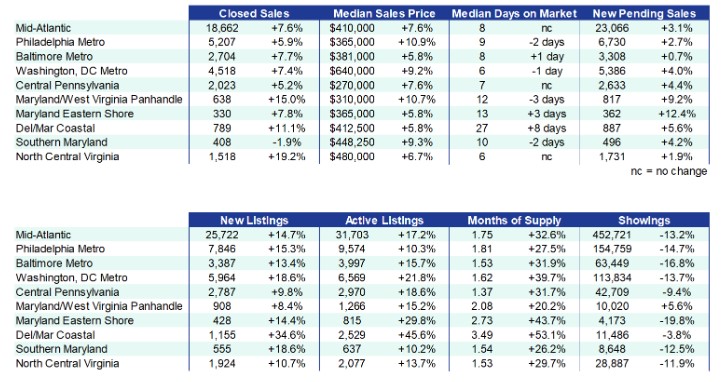
In 2024, buyers eagerly awaiting more housing options have seen their desires fulfilled. April 2024 witnessed a notable 14.7% surge in new listings, marking a 4.4% increase year-to-date compared to the same period in 2023. This influx of new listings has notably bolstered housing supply throughout the Mid-Atlantic region compared to the previous year. Across all metropolitan areas, active listings by the end of April 2024 surpassed those of April 2023, showing a robust 17.2% increase from last year. Some areas even showcased more substantial improvements.

Dr. Lisa Sturtevant, Chief Economist at Bright MLS, remarked, "While the rise in supply is encouraging, achieving a balanced housing market remains a distant goal. Affordability issues persist, evident in subdued showing activity despite the uptick in new listings."

April saw the median sale price reaching a new pinnacle at $410,000, underlining the persistent strength in the market. However, competition remains fierce, with half of the homes sold in just eight days or less, indicating continued tightness.

Nevertheless, buyers have remained active throughout the Mid-Atlantic. April 2024 witnessed closed sales surging by 7.6% compared to April 2023. Year-to-date figures for closed sales and new pending sales show only marginal decreases of 0.9% and 0.4%, respectively, compared to 2023.

April Mid-Atlantic Housing Market by Region

Baltimore Metro: Increased Inventory Yet Swift Sales Persist

As of April 2024, inventory in the Baltimore metro area surged by 15.7% compared to April 2023, boasting nearly 4,000 homes on the market. This marks the highest inventory level for the month of April in the Baltimore metro region since 2020. Despite the augmented choices available, homes continue to swiftly leave the market. Almost half of the homes sold in April 2024 spent eight days or less on the market, just a day longer than in April 2023.

Moreover, prices continue their upward trajectory. The median sold price in the Baltimore metro area reached $381,000, reflecting a 5.8% increase from April 2023. Remarkably, this current median is merely $4,000 shy of the peak recorded in both June and August 2023, standing at $385,000.

Washington, D.C. Metro: Increased Inventory Fuels Heightened Activity

In the Washington D.C. metro area, the rise in inventory has corresponded with a surge in transactions. Active listings have consistently outpaced last year for three consecutive months. As of April, the region boasted 6,569 active listings, marking a substantial 21.8% increase from April 2023.

Buyer activity remains robust, with closed sales surpassing last April by 7.4%. Additionally, pending sales witnessed a notable improvement, rising by 4.0%. Notably, this marks the first year-over-year increase in new pending sales since February 2022.

April 2024 saw the median price in the metro area soaring to $640,000, setting a new record. Detached homes and townhomes both hit record highs in median sales prices, while condo prices hovered slightly below the peak recorded in February 2024.

As the housing market in the Mid-Atlantic region continues to evolve, it's crucial to stay informed and explore your options. Whether you're considering buying, selling, or investing, navigating these dynamic conditions requires expertise and guidance. Don't hesitate to reach out and call Scott and the Smolen Team today to discuss the current market trends and how they impact your individual goals. With their wealth of experience and dedication to client satisfaction, you can trust them to provide the insight and support you need to make informed decisions in this competitive landscape.

May 13, 2024

Unlocking Potential: Why Newly Constructed Homes Could Transform Your Spring Home Search

Excited about buying a home this spring but feeling the pinch of affordability and limited options? Well, here's some good news that might just change the game for you: newly built homes could be the answer you've been searching for!

In the current housing landscape, where existing home inventory is still tight despite some increase, turning your attention to newly constructed properties opens up a whole new realm of possibilities. Danielle Hale, Chief Economist at Realtor.com, highlights this shift, stating that the scarcity of existing homes has made new-home construction a viable option for a broader range of buyers.

The availability of newly built homes is on the rise, with more construction starts and completions happening lately. Whether you prefer a move-in ready option or the chance to customize your dream home from scratch, there's a growing array of choices waiting for you.

But wait, there's more! Builders are rolling out enticing incentives to make the prospect of buying a new home even sweeter. From mortgage rate buy-downs to other perks, these offerings can help alleviate some of the affordability challenges you might be facing. Mark Fleming, Chief Economist at First American, emphasizes that builders are motivated to sell and are willing to sweeten the deal, especially given the flexibility they have compared to individual sellers.

With incentives gaining momentum, it's essential to have a trusted real estate agent by your side. Buying from a builder involves navigating through complex contracts, evaluating construction quality, and making informed decisions about upgrades. Your agent will serve as your advocate throughout the process, ensuring you get the best possible deal and guiding you every step of the way.

So, if you're feeling the frustration of the current market conditions, it's time to explore the potential of newly built homes. Connect with Scott and the Smolen Team to see how they can help you find the perfect home that fits both your budget and your dreams.


May 11, 2024

Maximizing Your Home Sale in a Growing Market


In today's dynamic real estate landscape, the number of available homes plays a pivotal role in the decision-making process for both buyers and sellers. If you are contemplating listing your property, the current scarcity of inventory offers a significant advantage. Your home becomes more conspicuous amidst the limited supply, particularly when priced appropriately.

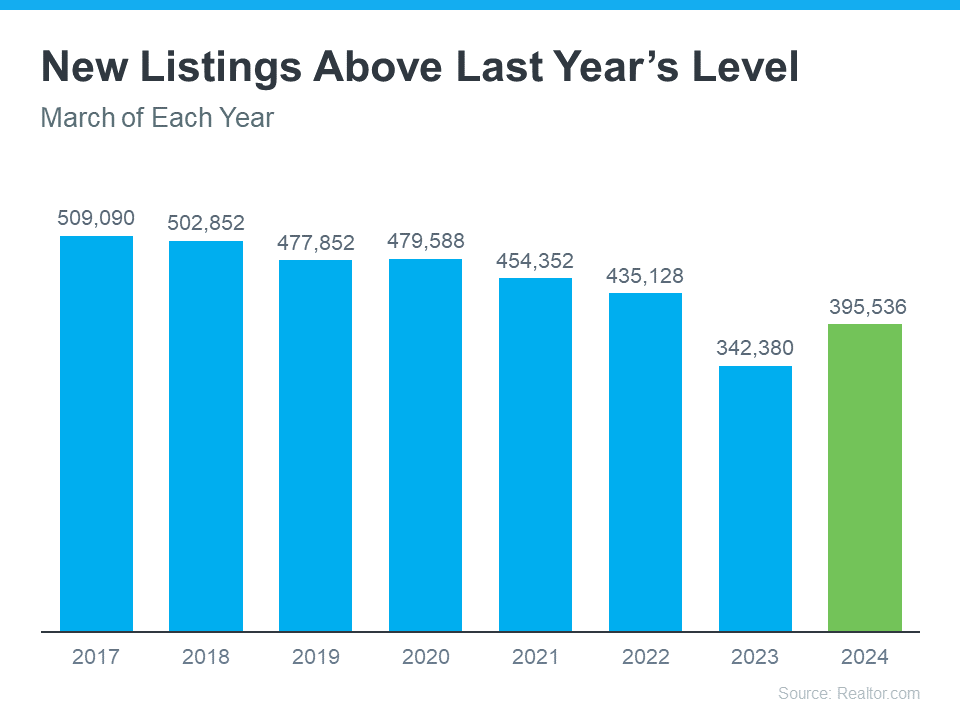
However, it's crucial to acknowledge the evolving trends in listing activity. Recent data from Realtor.com indicates a noteworthy increase in new listings, reflecting a growing number of homeowners putting their properties up for sale compared to previous periods.  This surge in listing activity, as noted by Realtor.com, marks a notable shift:

".... sellers have shown a greater presence this March, with newly listed homes surging by 15.5% compared to last year's figures. This surge follows a 17-month downward trend in listing activity."


What Does This Mean for You?

If you have been contemplating selling your home, now might be the opportune moment to reconsider, especially before your neighbors beat you to it. While an imminent surplus of homes for sale is not anticipated, each new listing in your vicinity poses the risk of diverting buyer attention away from your property.

Consider this scenario: if your neighbor decides to list their home concurrently, you will suddenly find yourself in direct competition. The last thing you want is for potential buyers to tour your property only to fall for another nearby listing. You want your home to command attention and stand out from the crowd.

The key lies in leveraging the expertise of a skilled real estate agent. A competent agent will assist you in preparing your home for listing, accentuating its features to align with contemporary buyer preferences, and ensuring it's priced competitively. By doing so, your listing becomes a magnet for prospective buyers, enticing them to envision it as their future residence.

If you are ready to take the plunge and sell, seize the opportunity now to enjoy the best of both worlds. With the inventory of homes for sale on the rise, you will have a broader spectrum of options for your next move. Simultaneously, you can capitalize on the current market dynamics, ensuring your home retains its allure amidst the burgeoning supply.


In Conclusion

Despite the prevailing low inventory, procrastination is not advisable, as waiting could invite heightened competition in your neighborhood. Reach out to Scott and the Smolen Team to explore the advantages of listing your property before additional homes flood the market.