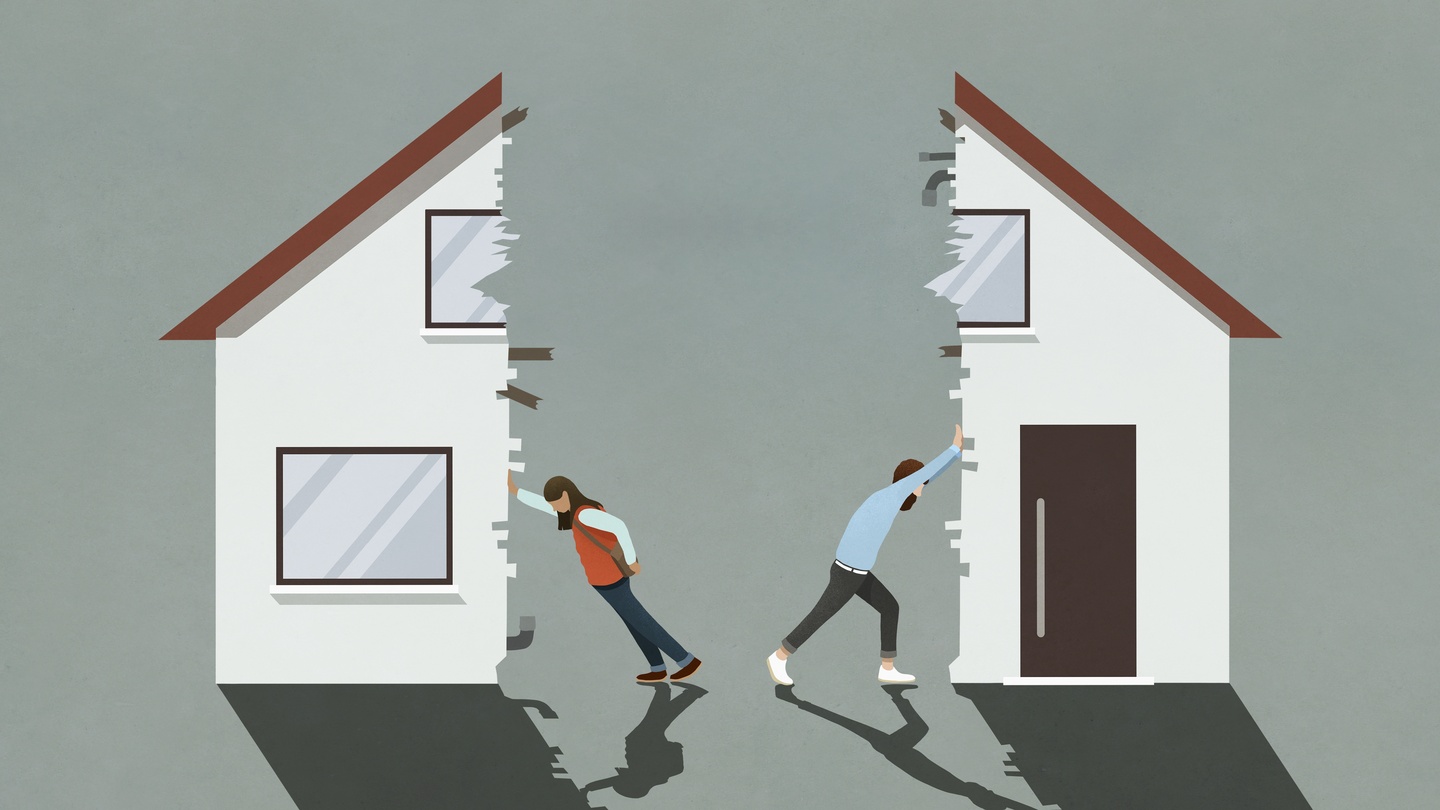
Divorce is not just about emotional separation; it also involves significant financial separation, especially when it comes to shared property like a home. Often the most asset a couple owns, deciding the fate of a home during a divorce can be one of the most challenging aspects. Determining each party’s ownership stake, or equity, adds to the complexity.
Understanding Equity Division in Divorce
“Coming together can be the hardest part,” says Stephanie Fields, a loan officer at Mortgage Investors Group in Knoxville, Tenn. “In divorce situations, there’s generally adversity.”
If the home is owned outright, splitting the equity can be straightforward. However, things get complicated when the property has a mortgage or other liens, like a home equity loan. It's crucial to distinguish between ownership of the property and the outstanding mortgage.
Options for Dividing Home Equity
The options for dividing home equity during a divorce are numerous. Should you sell the home and split the proceeds? Should one spouse buy out the other? Or perhaps maintain joint ownership for a specified period? Understanding your options, having a clear plan, and being open to compromise can make the process smoother.
How Home Equity is Divided in Divorce
Equity refers to the portion of a property owned free and clear, calculated as the property’s value minus any outstanding mortgage or liens. Dividing this equity depends on several factors, including prenuptial or postnuptial agreements, state laws, and specific circumstances.
In community property states, the home and its equity are typically split 50/50. In equitable distribution states, property acquired during the marriage is divided based on fairness, not necessarily equally. If one spouse owned the house before marriage, it’s usually considered separate property, but if the non-owner spouse contributed financially, the house might be viewed as a commingled asset.
Determining the Value of the Home
Assessing the property’s value is crucial for dividing equity. This can be done through:
- Comparative Market Analysis (CMA): Estimates the home’s value based on recent sales of similar properties.
- Broker Price Opinion (BPO): An estimate prepared by a qualified real estate agent or broker.
- Home Appraisal: An independent, professional determination of the property’s worth.
- Online Valuation Tools: Provide ballpark figures but are less accurate than professional appraisals.
Both parties must agree on the valuation method and accept the results.
Options for Splitting Equity in Divorce
After determining the home’s value and each partner’s stake, you can choose from several options to split the equity:
1. Sell the House and Split the Equity: “Financially, it often makes sense to start fresh,” says Adam Coleman, a CDLP and branch manager at Loan Pronto. Selling the house and splitting the proceeds can be the simplest option. However, high home prices, mortgage rates, and rising rents may make this less desirable.
2. Buy Out One Spouse: One spouse can become the sole owner by compensating the other for their equity share. This typically requires refinancing the mortgage, which involves qualifying for a new loan with one income.
3. Co-Ownership/Deferred Sale: Sometimes, especially if children are involved, one spouse may stay in the home for a specified period. This arrangement can help maintain stability for the family but should be temporary to avoid complications.
Final Thoughts
Splitting home equity in a divorce can be challenging both emotionally and financially. Whether you sell the house, buy out your spouse, or agree to co-own it temporarily, each option has its pros and cons. Consulting with divorce attorneys and real estate agents can help you navigate these complexities. If you find yourself in this situation, reach out to Scott and the Smolen Team. We are here to help!