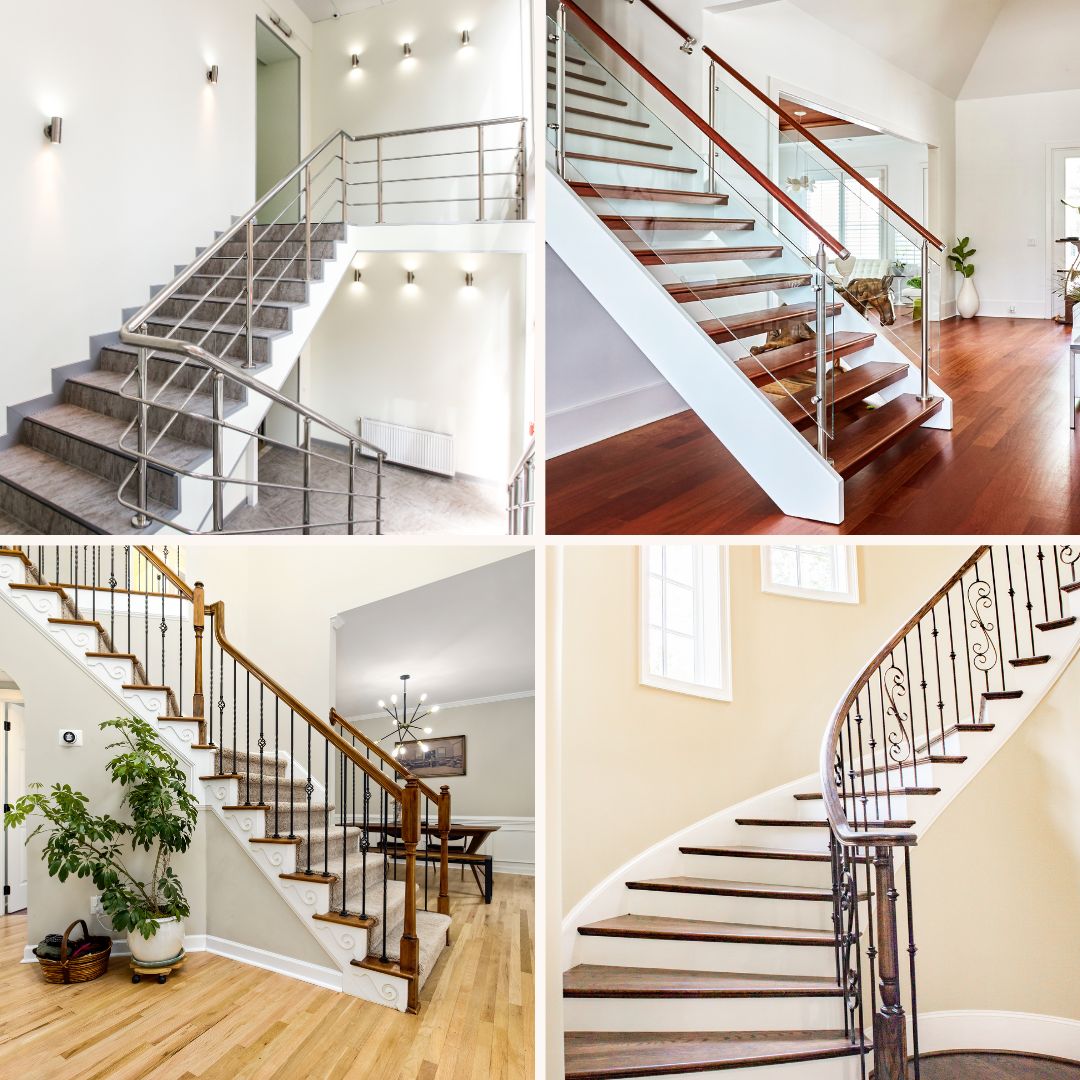
In the world of interior design, the staircase is often overlooked, relegated to the bottom of the priority list when it comes to home remodeling or décor. However, giving the staircase the attention that it deserves, can set the tone for the entire design of your home.
While prospective homeowners seldom reject a house based on the style or construction of its staircase, these architectural elements are more than just functional; they can make a significant aesthetic difference. Designer Tom Segal of Kaufman Segal Design aptly notes that a staircase can become a striking vertical feature, setting the stage for what lies ahead. Architect Bob Zuber, AIA, Principal of Morgante Wilson Architects, agrees, emphasizing that the staircase is often the most important three-dimensional element in a home, offering an opportunity to make a sculptural statement.
The beauty of staircase design lies in its versatility. Recent examples showcase the diversity of options available. For instance, in a recent issue of Elle Décor magazine, editor and homeowner Ingrid Abramovich installed a classic striped runner on the stairs of her family's 1870s vintage brownstone. In the same issue, designer Darryl Carter incorporated a sweeping curved staircase with fully exposed pale wood treads in a client's new Georgian Revival-style house in Washington, D.C. Both designs harmoniously blend functionality with style, tailored to each home's unique character.
Architect Alexander Zilberman, AIA, Principal of Alexander Zilberman Architecture P.C. (AZA), prefers to give staircases their own identity by placing them in a dedicated space. Pilasters and soffits can help define this space, separating it while maintaining its distinct presence.
Investing extra attention in your staircase and its surroundings can significantly enhance a buyer's first impression, according to broker Alicja Skibicki of Baird & Warner. While not as critical as a new kitchen or bathroom, the staircase can still make a difference. For example, modern floating staircases with clean lines are highly appealing to younger buyers. It is a design element that can turn heads and influence decisions.
Consider Proportions
Staircases come in various shapes and sizes, but it's essential that the staircase's design aligns proportionately with the space around it. Safety standards dictate the riser height and tread width, but the aim is to ensure that ascending and descending the staircase is a graceful experience. Elements such as the balustrade, railing, newel post, and nose should be in proportion with one another. For more detailed measurements and guidelines, websites like Houzz provide valuable insights under "Key Measurements for a Heavenly Stairway."
Opt for Continuity
Selecting the right wood color can be a challenging decision, as it should ideally complement any exposed flooring. Designer Tom Segal advises clients to first decide on the species and color of their flooring. Once this foundation is established, the staircase and its components should match in terms of stain color, promoting a cohesive look. Designers often have their preferences regarding wood color, shade, and material. For instance, Segal favors walnut and oak for their durability and opts for darker or medium stains. However, in very contemporary homes, a lighter stain might be more suitable. The key is to prioritize long-term factors such as durability and the overall style of the home over fleeting trends.
Mix It Up
While many staircases feature wood balustrades and spindles that match, some designers opt for variety. For instance, designer Marina Case of The Red Shutters frequently paints the handrail with Farrow & Ball's "Railings" color, creating a rich blue-black appearance. Segal often adds white paint to the risers and spindles to brighten the overall look. Even wrought-iron railings, considered dated in older homes by some, can be retained if they are not overly ornate. Quality materials and meticulous attention to detail can effectively enhance the staircase's appeal, according to Zilberman.
Embrace Contemporary Styles
In contemporary-style homes, designers are introducing cable railings or glass walls on the outer side of the staircase. These modern choices are favored by many homeowners for their ability to bring in light and offer captivating views. Janet Bertin of Janet Bertin Decorating Den Interiors transformed a traditional suburban home by adding metal cable railings and pairing them with oak treads stained a medium gray. A carpet runner in tightly woven blue wool further freshened up the space, delivering an impactful transformation at a reasonable cost.
Designer Ioana Tzatcheva of Ioana Todorova Designs, Decorating Den Interiors, modernized her Colonial-style home by adding tempered glass panels and steel handrails and posts. These contemporary elements elevated the entire staircase's aesthetic and made it a focal point. To align with the newly whitewashed floors, the stairs were capped with white oak treads and risers.
Stair Modules for Efficiency
Many specialized stair companies now build staircase parts as modules off-site and assemble them in the home. This approach saves time and minimizes errors. Viewrail, for example, manufactures not only traditional stair parts but also cable railings and glass walls. The company is known for its floating staircases, which meet safety standards set by the International Code Council.
Carpet Choices
Fully carpeted stairs are now a rarity in interior design. Instead, runners are favored in certain cases. Depending on the wood underneath, designers may stain and finish the boards, paint them if they're in poor condition, or leave them exposed and add a runner. For safety, wire-brushing stairs can be recommended to prevent slips. However, some designers, like Zuber, prefer leaving stairs uncarpeted for a modern look. Zilberman is also in the "no carpet" camp, believing that a well-designed staircase stands out on its own.
Designer Marina Case is among those who advocate for adding a runner for both safety and sound-dampening purposes. She prefers flat, tight weaves in nylon or wool and classic patterns like stripes or plaids.
If homeowners choose to add carpet, hiring an experienced installer is crucial to ensure pattern alignment. Most runners are installed using the waterfall method, where the carpet flows down the stairs. Another, more expensive option is the Hollywood or Chicago style, where each stair and riser has a separate piece of carpet.
Accessorize Your Staircase
While staircases often serve as focal points, especially in or near the foyer, homeowners can enhance the surrounding space for added impact. Wallpaper and paint can infuse color and style into the staircase's vicinity. A generously sized light fixture relative to the foyer's dimensions can add drama and draw attention to the staircase, as suggested by Segal.
Traditional additions, including a table or chest, mirror, seating, artwork, and area rugs that echo the staircase or floor patterns, can further enhance the space. Skibicki suggests applying faux-wood panels along the stairwell to add texture, while noting that any additions are an excellent way to express individual style.
In essence, your staircase can be a powerful design element, setting the stage for your home's style. Do not underestimate its potential to make a lasting impression and shape the character of your living space.