


Should You Get a Sewer Line Inspection During a Home Inspection?
For Maryland home buyers, underground sewer line problems can become one of the most expensive surprises after settlement. Many buyers assume sewer concerns only apply to septic systems, but homes connected to public sewer lines can also develop hidden underground issues that may not appear during a standard home inspection.
Established Maryland communities, including neighborhoods in Davidsonville, Crofton, Bowie, and Odenton, may have aging underground infrastructure or mature tree growth that can contribute to sewer line concerns over time.
When buyers schedule a home inspection, they often focus on the roof, HVAC system, windows, foundation, plumbing fixtures, electrical systems, and appliances. Those are all important, but one area that is frequently overlooked is the underground sewer or septic line serving the property.
A sewer line inspection, sometimes called a sewer scope inspection or camera line inspection, uses specialized camera equipment to evaluate the condition of the underground drain line. This inspection can help identify hidden issues that may not be visible during a standard home inspection.
How Does a Sewer Scope Inspection Work?
A sewer scope inspection typically takes approximately 30 to 60 minutes depending on the property, accessibility, and length of the line being evaluated. During the inspection, a specialized camera is inserted into the drain line through an accessible cleanout or, in some cases, through a removed toilet connection.
The camera allows the inspector to visually evaluate the condition of the underground sewer or septic line and identify potential concerns such as root intrusion, cracks, blockages, offsets, or deteriorating piping materials.
In many Maryland real estate transactions, the sewer scope inspection is performed either by a licensed plumbing contractor or as an add-on service offered through some home inspection companies.
What Can a Sewer Line Inspection Reveal?
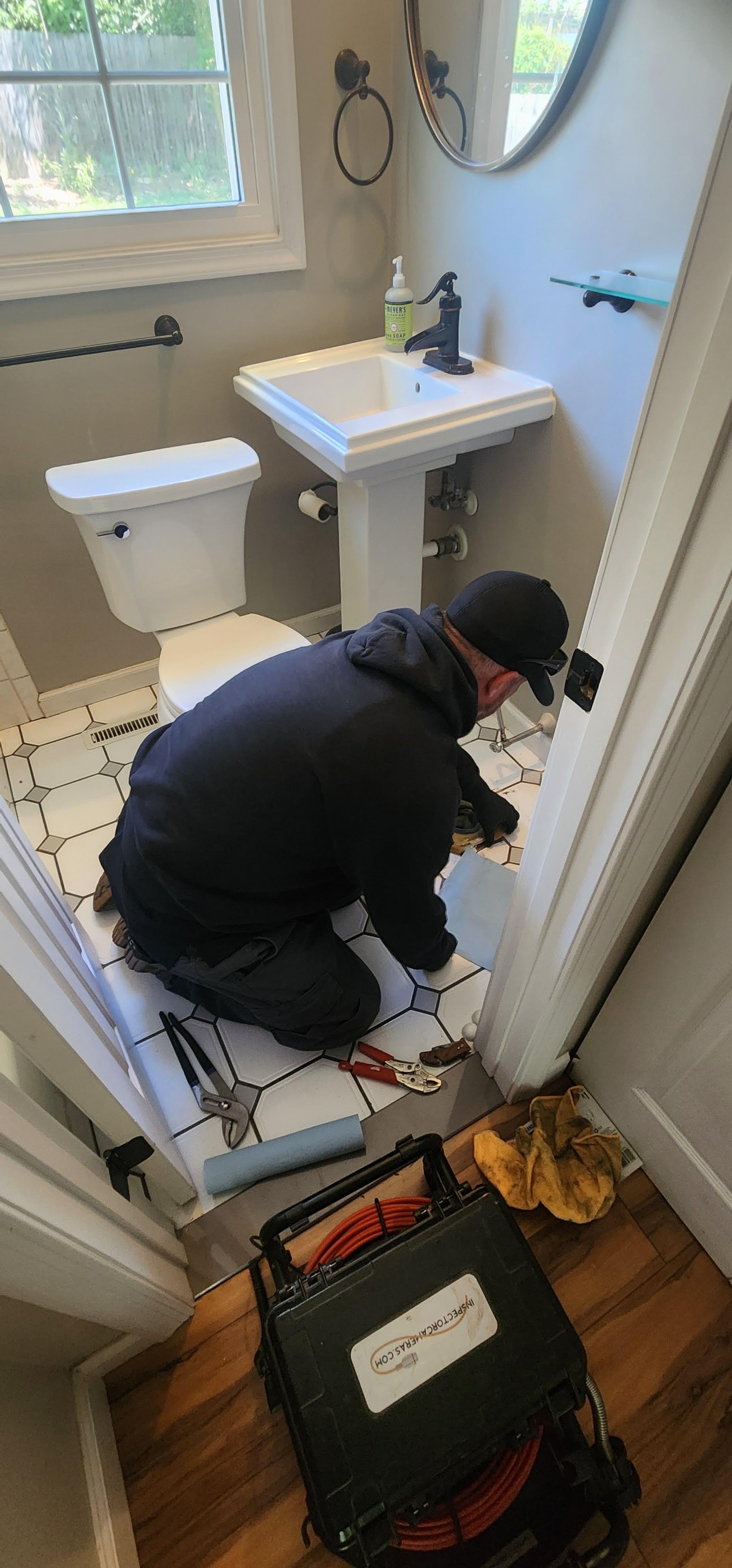
A sewer line camera inspection can help identify underground line issues that may not be visible during a standard home inspection.
A sewer scope inspection may uncover issues such as:
- Tree root intrusion
- Pipe cracks or partial collapses
- Grease, sludge, or debris buildup
- Offset pipe joints
- Low spots or “bellies” in the sewer line
- Old deteriorating piping materials
- Drainage restrictions
- Evidence of prior repairs or recurring backups
Some sewer line repairs can become expensive, particularly when excavation is required, hardscape must be disturbed, or long sections of underground piping need replacement.
This Applies to Public Sewer Homes Too
One common misconception is that sewer line inspections only matter for homes with septic systems. In reality, homes connected to municipal sewer systems can still develop underground line issues between the home and the public sewer connection point.
In many cases, the homeowner remains responsible for the private lateral sewer line running from the house toward the street connection. In established Maryland communities such as Bowie, Crofton, Odenton, and parts of Davidsonville, older underground infrastructure, mature trees, and long utility runs can contribute to root intrusion, shifting, or underground pipe deterioration over time.
Because these issues may not be visible during a standard home inspection, some buyers choose to add a sewer scope inspection for additional due diligence before settlement.
Should You Get a Sewer Line Inspection?
The answer depends on the property, age of the home, visible conditions, inspection access, and the buyer’s comfort level. The following decision matrix can help buyers think through when a sewer line inspection may be especially worthwhile.
| Situation | Recommended? | Reason | Potential Risk if Skipped |
|---|---|---|---|
| Older home, especially 20+ years old | Yes | Older underground piping may have deterioration, root intrusion, or prior repair concerns. | Unexpected underground repair issues after settlement. |
| Home with mature trees | Strongly Recommended | Tree roots are one of the most common causes of sewer line damage. | Drain backups, root intrusion, or line blockages. |
| Home connected to public sewer | Often Yes | Buyers may still be responsible for the private lateral line. | Hidden underground defects not discovered until ownership. |
| Home with septic system | Strongly Recommended | Can help identify hidden drainage or piping concerns. | Unexpected septic or drain line repairs after closing. |
| New construction or newer home | Sometimes | Construction debris or installation defects can occasionally occur. | Undetected installation or drainage issues. |
| Prior plumbing backups or slow drains | Strongly Recommended | Previous drainage concerns may indicate larger line problems. | Recurring sewer backups or worsening underground issues. |
In many Maryland transactions, a sewer scope inspection may cost roughly $150 to $350 depending on the property, access, inspector, and scope of work. While that is an additional expense during the transaction, it is often far less than the cost of unexpected underground repairs after settlement.
Pros of a Sewer Line Inspection
- Can identify hidden underground defects before closing
- May help buyers negotiate repairs or credits
- Provides additional peace of mind during the inspection period
- Can reveal deferred maintenance issues
- Helpful for both public sewer and septic system homes
- May uncover concerns not visible during a standard home inspection
Potential Cons or Limitations
- Additional inspection expense during the transaction
- Not every issue is visible at the time of inspection
- Some sewer or septic lines may not be fully accessible
- A clean inspection does not guarantee future performance
- Further specialist review may still be recommended if concerns are identified
What Buyers Should Ask Before Ordering One
- Can the line be safely and fully accessed?
- Will the inspection include video documentation?
- Can the report identify the location and severity of any defects?
- Can the inspector determine whether the line serves public sewer or septic?
- Will further evaluation by a plumber or septic contractor be recommended if issues are discovered?
Common Sewer Line Inspection Questions
Does a seller have to repair sewer line issues in Maryland?
Not necessarily. Repair negotiations depend on the contract terms, inspection contingency, severity of the issue, and the agreement reached between buyer and seller.
Can newer homes still have sewer line issues?
Yes. Even newer homes can occasionally experience installation defects, construction debris, drainage problems, or underground shifting.
Can a sewer scope inspection be performed on homes with public sewer?
Yes. Sewer line camera inspections are commonly performed on homes connected to public sewer systems as well as homes with private septic systems.
Bottom Line
A sewer line inspection is not automatically necessary for every home purchase, but it can be a smart due diligence step when a property has mature trees, older plumbing infrastructure, septic components, prior drainage concerns, or an unknown sewer line history.
The goal is not to create unnecessary concern. The goal is to better understand the property before settlement. While a standard home inspection evaluates many visible systems and components, underground sewer and septic line issues often require specialized camera equipment to identify properly.
Before deciding, buyers should discuss inspection options, timing, access, and risk factors with their home inspector and real estate professional.
Use the Inspection Period Wisely
Whether you are buying in Davidsonville, Crofton, Bowie, Odenton, or another Maryland community, the inspection period is your opportunity to better understand the property before settlement. Sewer line inspections can sometimes reveal issues that affect repair negotiations, credits, or your comfort level moving forward.
Review Our Maryland Buyer Resources