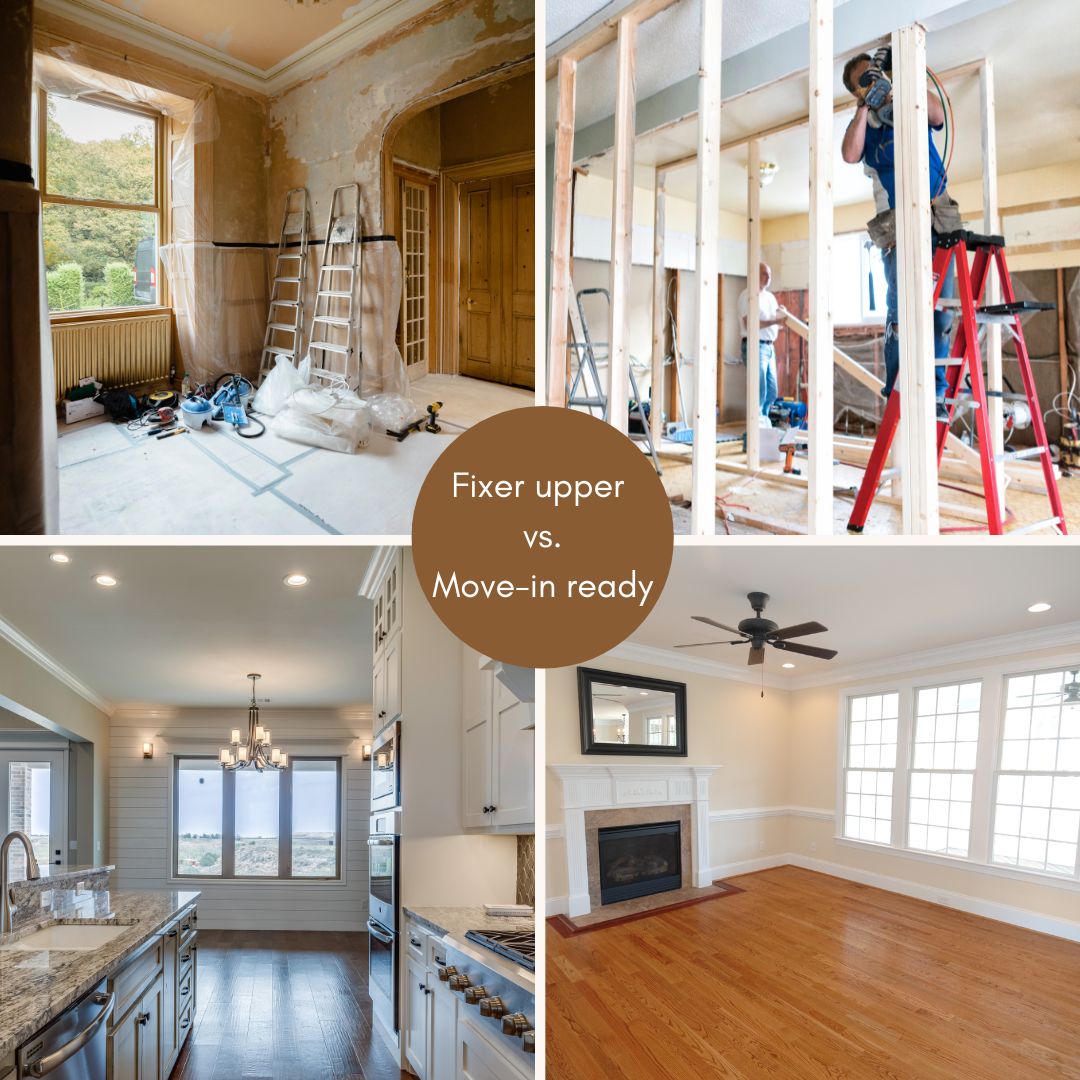
House hunting in Maryland involves making significant decisions, and one of the most critical choices is between a move-in ready home and a fixer-upper. Each option comes with its own set of advantages and disadvantages, making the decision challenging. To help you determine the best fit for your needs, we have created this comprehensive guide, breaking down the definitions, pros, and cons of both types of homes, along with tips on finding them in your area.
Understanding Fixer-Upper Homes
If you've ever stepped into a house with outdated décor and visible signs of wear and tear, you've encountered a fixer-upper. These homes are typically habitable but require significant maintenance, such as redecoration, redesign, or even reconstruction. The extent of the work varies; some fixer-uppers need only cosmetic updates, while others may have more severe issues like mold or structural flaws.
Defining Move-In Ready Homes
The term "move-in ready" may vary depending on who you ask, but it generally means the house is immediately ready for occupancy. Move-in ready homes usually do not require major renovations or aesthetic updates before you can settle in. Turnkey properties often come equipped with sought-after features like modern appliances, updated flooring, and stylish interior design.
Pros and Cons of Move-In Ready Homes
Before opting for a move-in ready home, consider the following advantages and disadvantages:
Pros:
1. Immediate Move-In: You can avoid the hassle of remodeling projects and start enjoying your home right away.
2. Fewer Surprises: Proper inspections help you avoid unexpected issues that could be time-consuming and costly to fix.
3. Stick to Your Budget: With no major renovations needed, it's easier to stay within your budget.
4. Easier Loan Qualification: Mortgage lenders view move-in ready homes as less risky, simplifying the loan application process.
Cons:
1. Higher Cost: The convenience of a move-in ready home often comes with a higher price tag.
2. Limited Customization: Beyond interior design, significant modifications to the floor plan may be challenging and expensive.
3. High Competition: Many homebuyers seek move-in ready properties, leading to intense competition.
4. Limited Availability: Finding a move-in ready home that perfectly meets your preferences may prove difficult.
Pros and Cons of Fixer-Upper Homes
For those considering fixer-uppers, here are some significant pros and cons to keep in mind:
Pros:
1. Better Value: Fixer-uppers are usually more affordable than turnkey homes, offering a chance to own a larger house in a desirable neighborhood.
2. Personalization: You have the freedom to customize the home according to your preferences and style.
3. Lower Property Taxes: The lower purchase price may result in reduced property taxes.
4. Investment Potential: Transforming a fixer-upper into a move-in ready property can be a lucrative investment opportunity.
Cons:
1. Temporary Housing: Living in your home during renovations may not be possible, necessitating temporary housing solutions.
2. Unknown Problems: Demolition may reveal unforeseen issues that can strain your budget.
3. High Risk: Some mortgage lenders may view home renovation as a risky investment, leading to financing challenges.
Both move-in ready and fixer-upper homes have their merits, and your decision should be based on your budget, time constraints, and willingness to undertake renovations. The Scott Smolen Team can help you find the perfect home that aligns with your vision and needs. They also have plenty of great contractors in the area that are able to tackle any projects that you decide to take on.